Modal Unveils Multi-Node Training, New GPU Options, and Client 1.0 Release
- Gate
- Machine Learning
- Departs
- Crew
- John Jones
- Passengers
- 555
Modal introduces multi-node training clusters, new NVIDIA B200 and H200 servers, and updates its client, enhancing efficiency for developers.
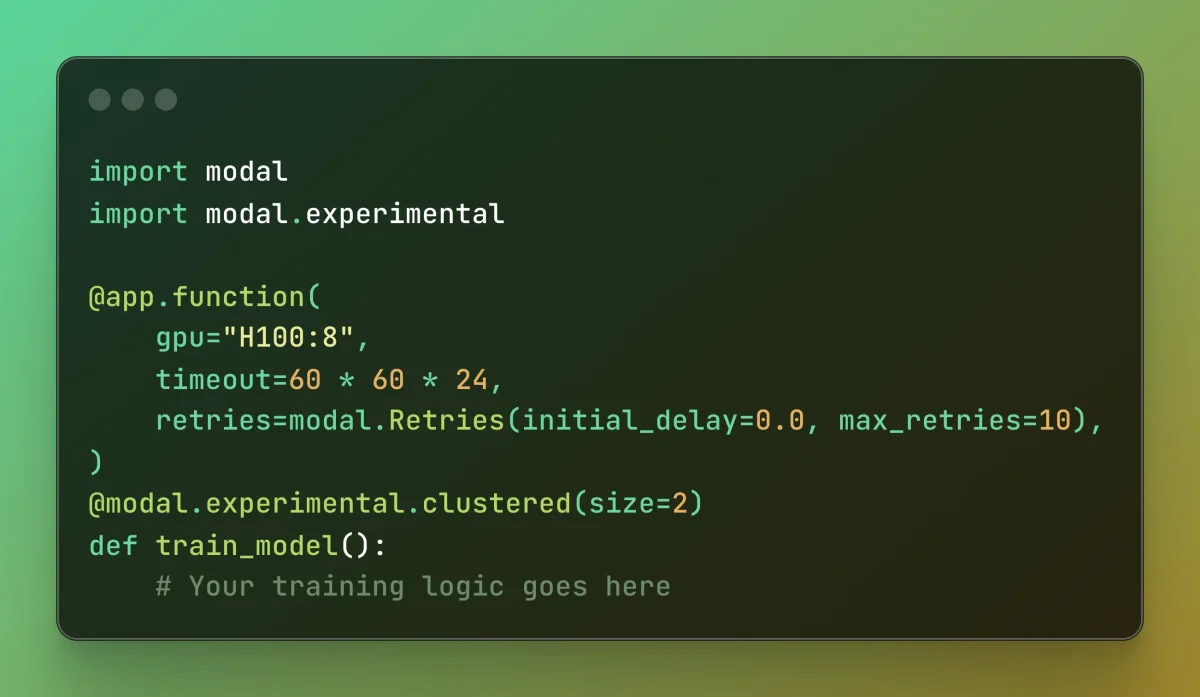
🏋️ Multi-node Training Clusters Now in Beta
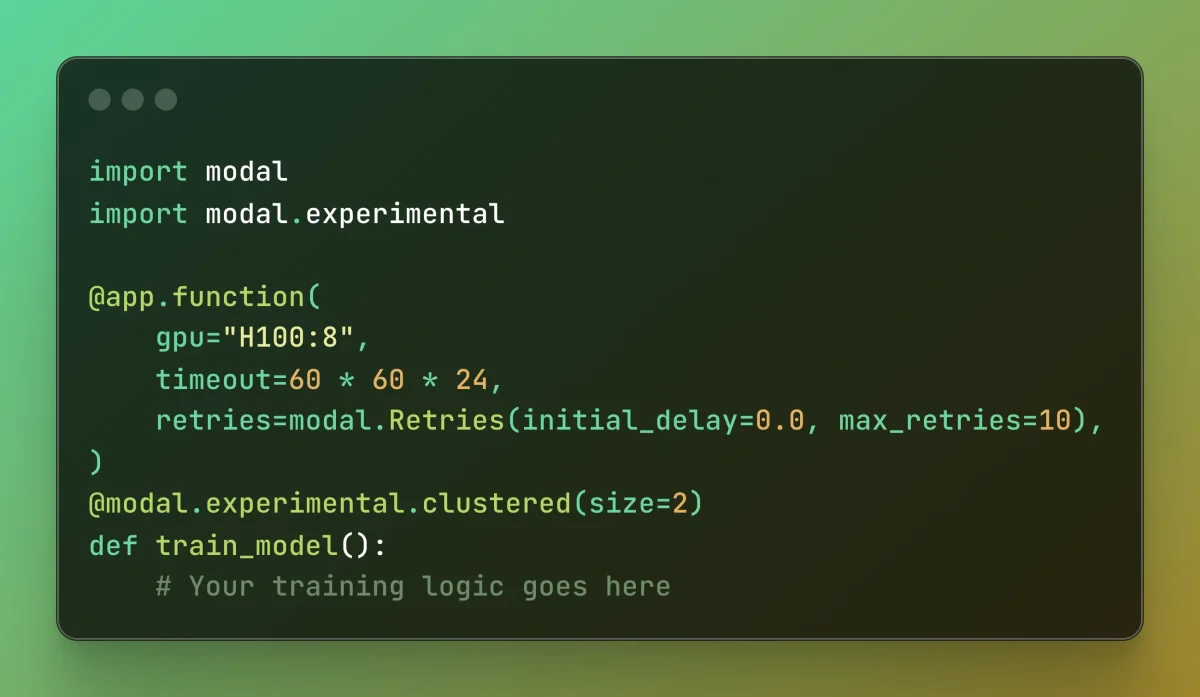
Modal has simplified multi-node training, allowing users to harness the power of multiple GPUs across various hosts with remarkable ease. By incorporating the @clustered decorator within their code, developers can quickly scale their training processes, which is essential for machine learning projects of any significant size. The simplicity of this method is a response to a common bottleneck in AI development: as models increase in complexity and data sets grow, the need for scalable solutions becomes evident.
This capability is bolstered by a high-speed RDMA interconnect that boasts a massive bandwidth of 3.2 Tbps employing Infiniband technology—an advantage that provides efficient communication between GPUs. This opens up new possibilities for researchers and developers who are often constrained by hardware limitations. The result? Users can achieve linear scalability in their training operations as more nodes are added, which is a significant improvement over traditional setups where scaling often leads to diminishing returns.
For those interested in beta testing this feature, Modal encourages users to explore details in their guide and reach out on Slack for additional information. Engaging in the beta phase will provide developers first-hand experience with features that could significantly streamline their workflow.
🚀 Introduction of B200 and H200 GPUs on Modal
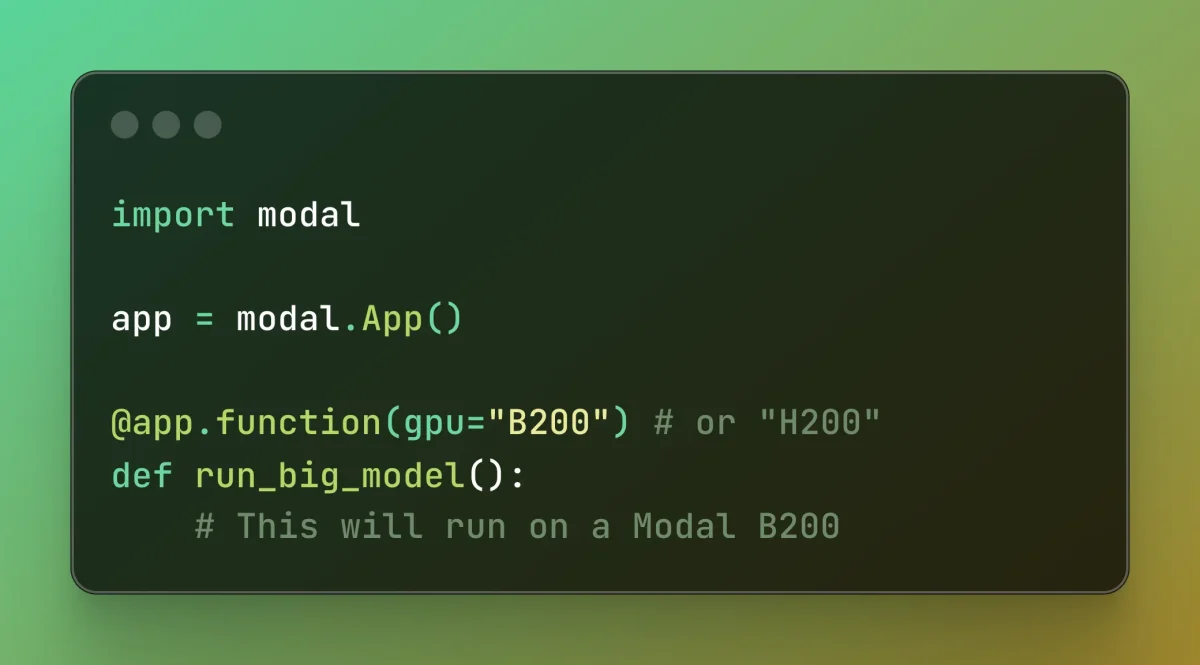
Modal has also launched serverless options for NVIDIA B200 and H200 GPUs, making it easier for developers to access high-performance hardware without the burden of managing infrastructure. Users can integrate these GPUs into their functions with just a line of code, which considerably lowers the entry barrier for machine learning applications. The pricing is structured on a pay-as-you-go basis—$6.25 per hour for B200 and $4.54 per hour for H200—making these powerful resources more accessible to a broader range of users.
Early benchmarks indicate that these new GPU offerings can deliver performance that’s 2 to 4 times faster in LLM inference compared to the H100 GPUs. This performance leap positions them as an attractive option for developers focused on high-performance machine learning tasks, especially in fields where rapid inference is critical, such as real-time data processing or interactive applications. However, the actual performance experienced by end-users can vary based on a multitude of factors including workload type and complexity.
For more details, the full announcement is available here. If you're working in this space, consider how these developments might influence your current projects or future initiatives.
🗞️ Modal Client 1.0 Release
Modal has introduced version 1.0 of the Modal client, which marks a significant step toward enhancing the reliability and predictability of its API. This release aims to assure users that their interaction with Modal’s services will be more consistent, which is paramount for developers relying on robust APIs for smooth operations. With technology evolving at a rapid pace, stability in client interfaces is an increasingly sought-after feature.
This update includes crucial migration instructions to assist users in transitioning to the new version. Migration might seem minor at first glance, but it often reveals underlying complexities that can alter how applications operate with dependencies. Users can find detailed information in their migration guide.
Further insights into the design principles that guided this update can be accessed in their blog post here. Knowing the rationale behind changes adds value for developers as they adapt their projects.
👩💻 Client Updates
To access the latest features in the Modal client, users can run pip install --upgrade modal. Recent updates are significant as they address common developer pain points:
- An introduction of
modal.Volume.read_onlymethod in version 1.05 allows developers to enforce read-only access to volumes, enhancing data security. - The addition of a
--secretoption tomodal shell, permitting users to include environment variable definitions from named Secrets, represents an ongoing commitment to improving security practices (version 1.04). - Support for specifying time zones on
Cronschedules has been added, which is critical for applications operating in multiple regions. This ensures consistent execution times across different locales (version 1.03). - A new
--timestampsflag formodal app logsappends timestamps to logs, improving log clarity. Clear logs are often overlooked yet can make debugging significantly easier (version 1.01).
📊 LLM Engineer’s Almanac: SGLang vs. vLLM
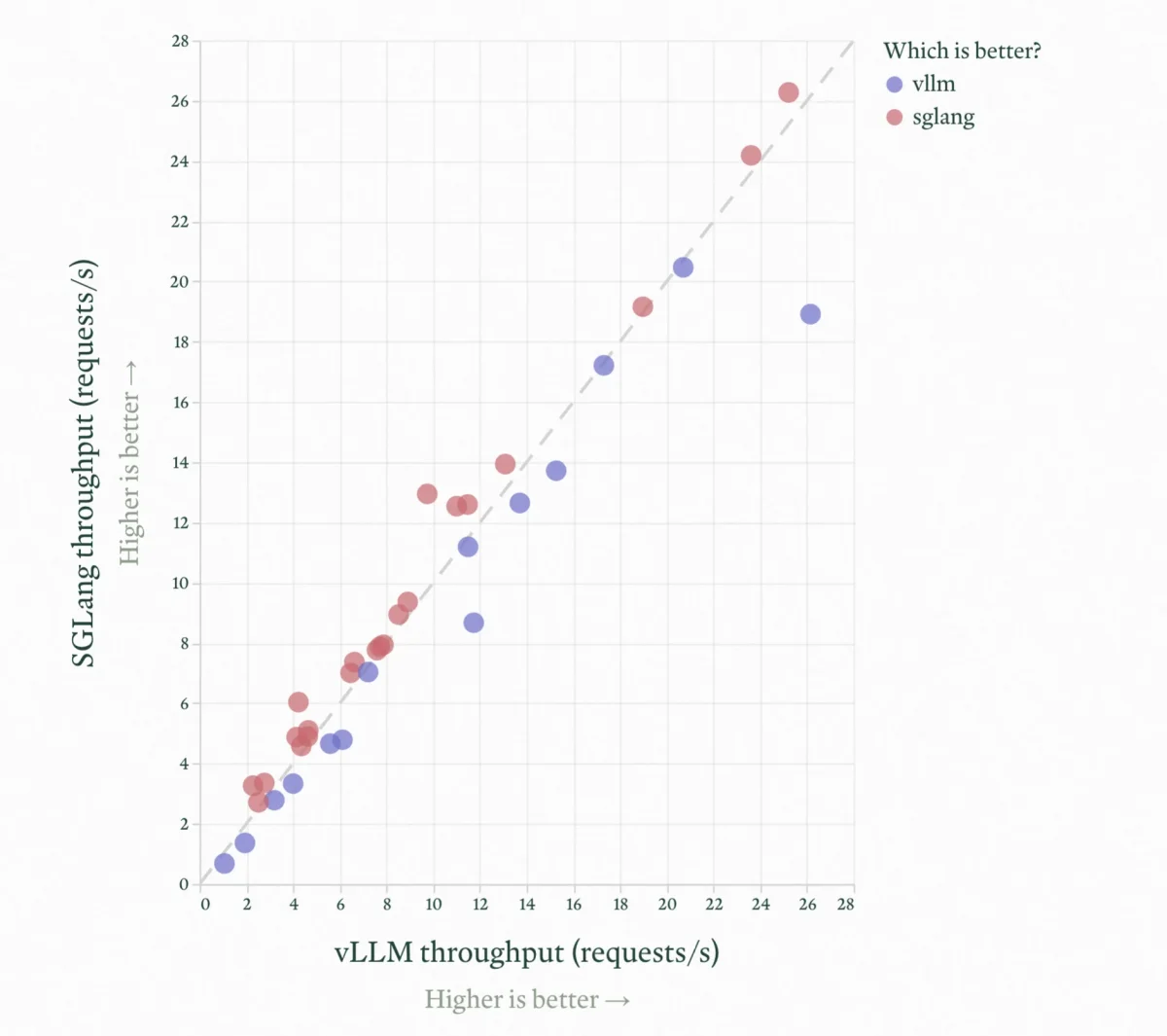
The rise of open AI models, including LLaMA, ERNIE, and DeepSeek, has generated discussions on the most effective engines for deploying models. Modal has undertaken extensive benchmarking of over a thousand LLM engines, an effort that showcases the growing importance of choosing the right engine for various applications. The performance differences can be stunning, which can dramatically affect the outcomes of machine learning tasks. This category of issue often surfaces when working on production-level model deployment.
To assist users, Modal has created an interactive tool that helps identify the most suitable engine for self-hosting their RAG (retrieval-augmented generation) chatbots. The insights drawn from this benchmarking can guide developers in making informed decisions about their AI infrastructures. The thoughtful approach Modal has taken here is commendable and acknowledges that not all engines are created equal. Insights into performance metrics can be accessed here.
🖼️ FLUX.1 Kontext [Dev] on Modal
![FLUX.1 Kontext [Dev]](/articles/112/RWDWDmcBjvZ4UrUrMkodyddAgYYGKv2B.webp)
Black Forest Labs has unveiled weights for FLUX Kontext [dev], a new model that excels in open-weight image generation. It’s notable for its capabilities in contextual editing across various renderings, which has implications for industries ranging from e-commerce to game development. The demand for flexible and context-aware image generation tools is increasing, as visual content becomes more central to user engagement.
Demonstrations detailing how to run this model on the B200s are available in Modal’s example guide. Understanding how to implement such models can help developers make the most of available technology, pushing the boundaries of creative applications.
🏎️ Enhancements to Run FLUX.1-dev 3x Faster
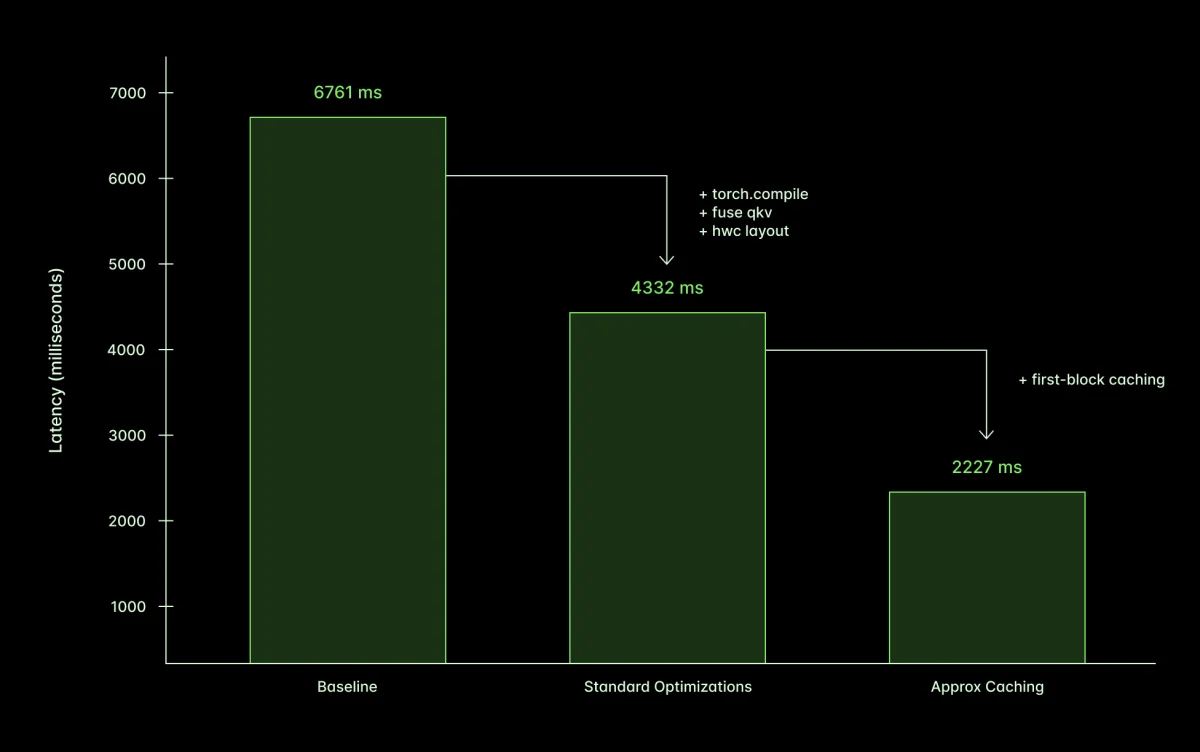
Modal has documented methods to optimize the FLUX.1-dev, promising performance improvements of up to 3 times faster through various optimizations. This claim raises eyebrows, as performance boosts in machine learning can be highly variable and context-dependent. Users can now enjoy the flexibility of self-deployments while benefiting from the speed and price competitiveness of API platforms—this is an appealing proposition for developers keen on maximizing ROI.
Detailed strategies for achieving these enhancements are discussed here. Everyone wants speed, but the balance between speed and accuracy is an age-old debate in machine learning.
❓ Quora's Use of Modal Sandboxes at Scale
Quora has effectively integrated Modal to enhance its sandboxed code execution for Poe, its chatbot platform. This achievement has enabled a remarkable capacity of up to 1,000 sandboxes per second. Such efficiency is illustrative of how far sandboxing technology has matured, and it reflects on the increasing need for developer agility in AI chatbot deployments. Moreover, this implementation has reportedly reduced engineering time by more than 15% compared to building an in-house sandbox solution. While this statistic is compelling, organizations must also consider long-term maintainability and scalability.
To learn more about this case study and its implications for code execution in large-scale environments, check out the details here. This case serves as a reference point for organizations contemplating similar integrations.
🔮 Future Outlook: Implications and Significance
As these advancements continue paving the way for enhanced machine learning capabilities, the implications extend far beyond ease of use. The ability to efficiently scale training and deployment can dramatically reduce time-to-market for AI applications, which is critical in highly competitive sectors. For businesses utilizing AI for customer interaction and data analysis, these technologies could redefine operational standards.
Moreover, the ongoing integration of toolsets such as the Modal client and benchmarking engines highlights the growing need for reliable infrastructures that support development. If you're an AI practitioner, these changes are clearly significant. The trend is moving towards abstraction of complexity, empowering developers to focus more on building innovative solutions instead of getting bogged down in configuration and management tasks. Yet, the sustainability of these claims remains to be seen as many similar offerings have faltered under real-world usage conditions.


