The Rise of AI Content: Opportunities and Challenges in the Digital Landscape
- Gate
- Machine Learning
- Departs
- Crew
- Azeem Azhar
- Passengers
- 392
The surge of AI-generated content raises crucial questions about quality, audience engagement, and the future landscape of media consumption.
As AI technology advances, the volume of content generated across various media forms is skyrocketing, from music to articles and social media posts. This surge leads to an important discussion: what does a future with AI-generated content look like, and how will it impact both creators and consumers?
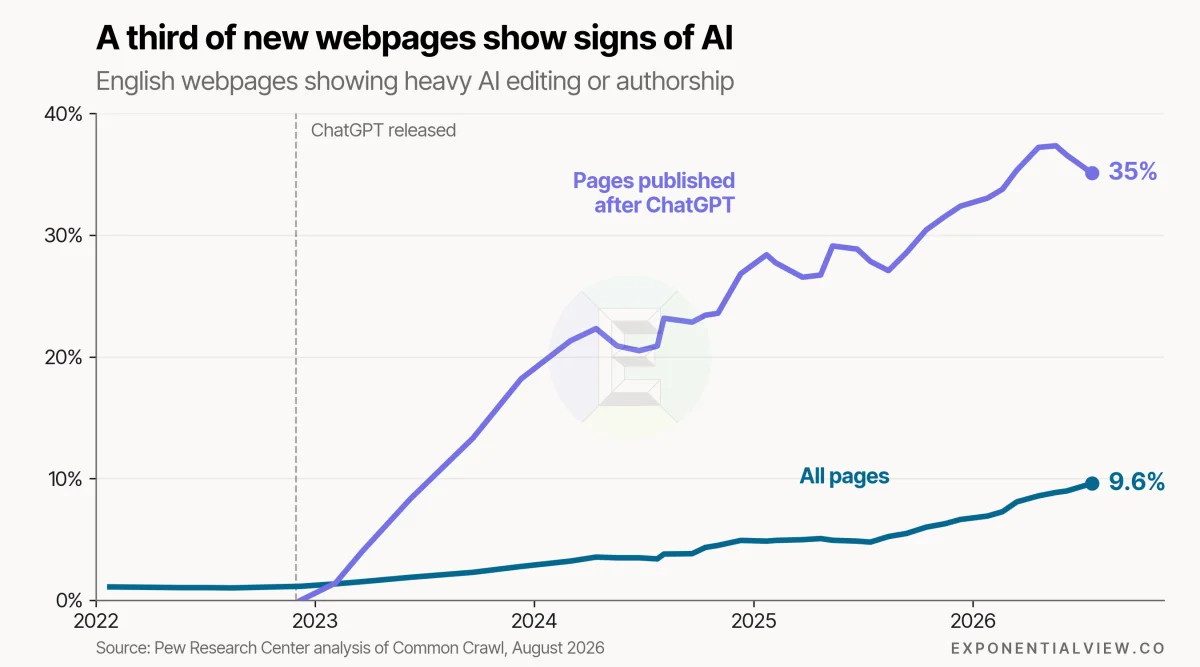
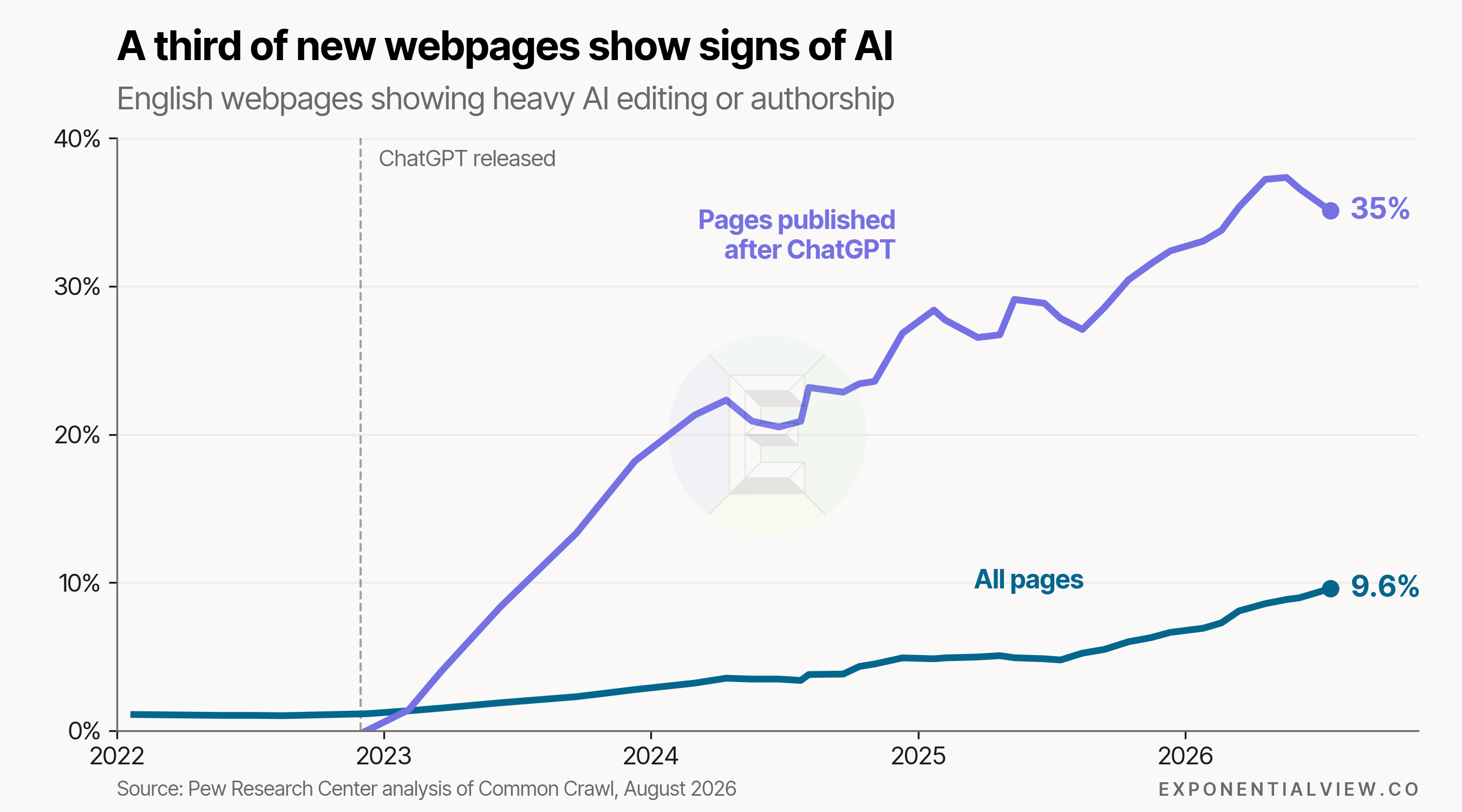
Since the beginning of 2023, the influence of AI in content creation has become increasingly apparent, with research indicating that approximately one in every three webpages now contains some form of AI-generated text. This expanding presence is challenging traditional content creation norms and altering how information is distributed and consumed.
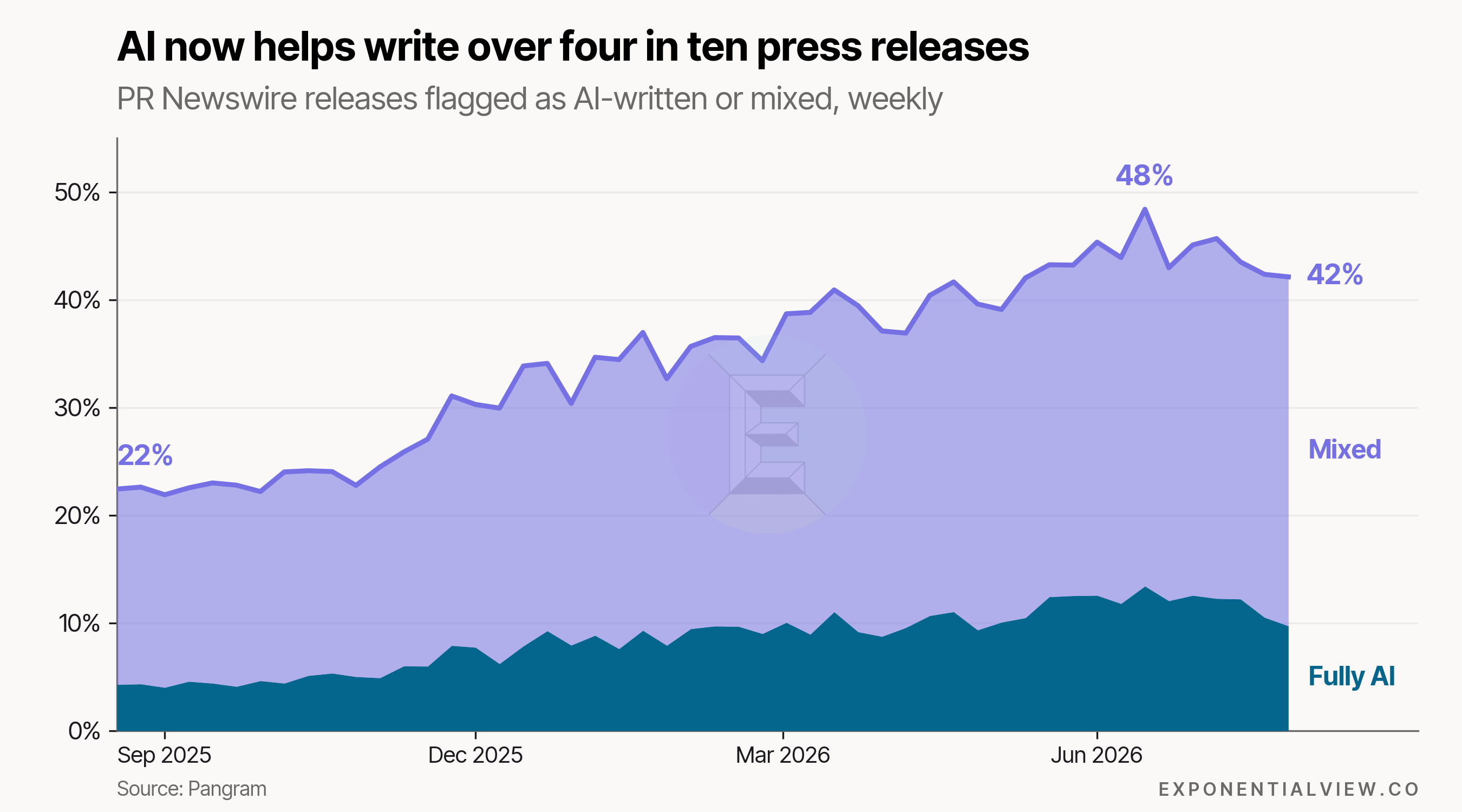
A particularly surprising statistic is the rise of AI-generated text in press releases, where it's estimated that nearly half of such documents could incorporate AI-generated content, marking a significant increase in just one year. This trend indicates that reliance on automated assistance is rapidly normalizing, reshaping what has traditionally been viewed as authoritatively crafted communication.
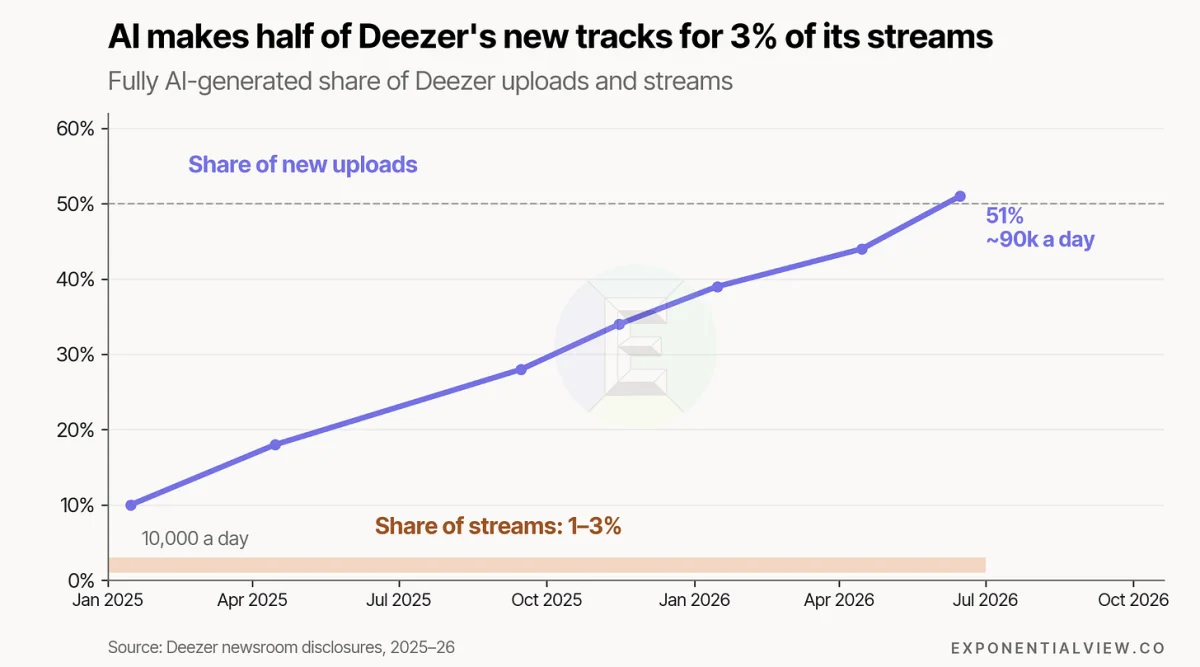
However, while the supply of AI-generated content is expanding exponentially, demand appears to struggle to keep pace. For instance, AI's foray into music has shown that although over half of the new uploads on streaming platforms like Deezer were created by AI in June, these tracks account for only 1-3% of total streams. This disparity prompts further inquiry: is the lack of audience engagement a matter of taste, or is it rooted in discovery challenges?
In a different domain, the engagement with AI-generated content demonstrates greater promise. The Indian audio-drama app Pocket FM, for instance, reports that a striking 93% of its content is AI-driven. Over the past two years, the app has scaled production from 100,000 hours to over 2.5 million hours annually, with certain titles crossing the $1 million revenue mark.
Initial struggles in revenue growth following Pocket FM’s pivot toward AI-led production have given way to increased listener engagement and content retention. This success seems to hinge on the ability to integrate audience data continuously into the content production process, enhancing relevancy and user satisfaction over time.
Nonetheless, not every AI-driven project yields success. The coming year will be critical to understand how AI-generated content in creative industries influences listener preferences and whether the medium of production—human or AI—affects viewer satisfaction when the storytelling is compelling.
Market Dynamics: The Impact of AI on News Consumption
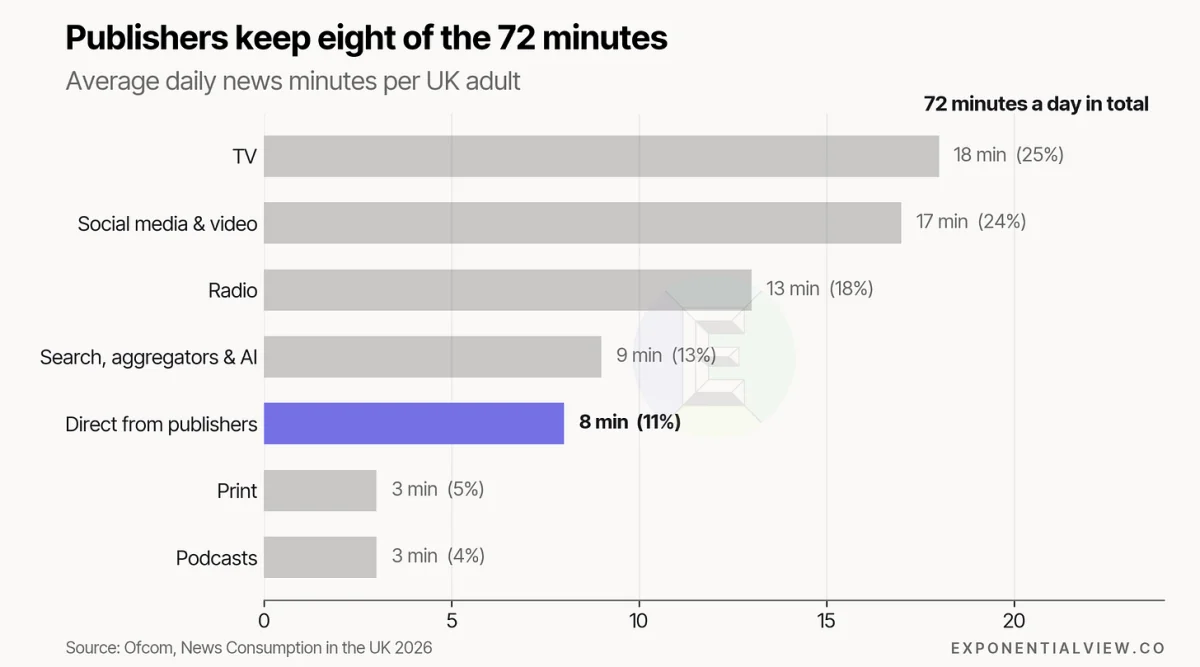
In the UK, adults spend an average of 72 minutes daily consuming news, but a mere 8 minutes are spent accessing news directly from publishers' websites. Instead, a significant 37% of news consumption occurs through search engines, aggregators, social media, and video-sharing platforms. This shift could signal a further decline in direct publisher engagement.
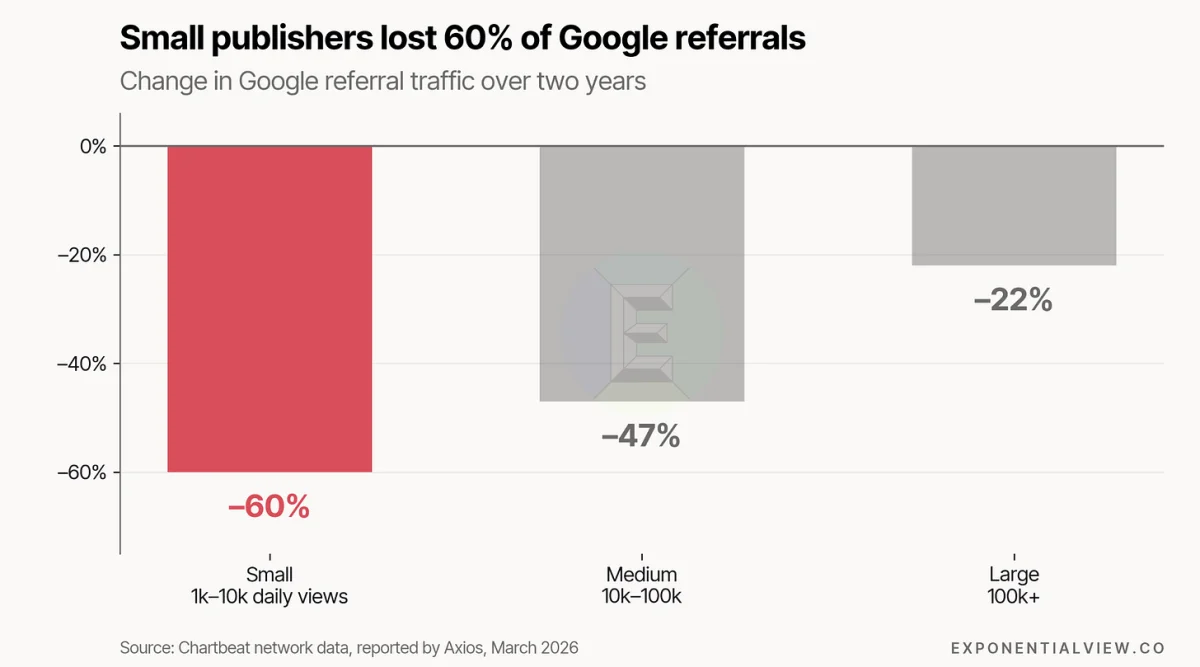
The introduction of Google's AI Overviews has compounded the issue, disproportionately affecting smaller publishers by dramatically reducing referral traffic—up to 22% for even the largest sites. This trend suggests that distribution channels increasingly dictate visibility and accessibility to audiences, making it essential for publishers to adapt their strategies in light of these developments.
Distributors, such as DistroKid, control a significant market share, managing around 40% of all new music submissions. However, their recent actions have raised concerns, particularly regarding the proliferation of low-quality, AI-generated content. With major players like Universal Music Group taking legal action against DistroKid for allegedly misleading listeners through the distribution of mass-generated music, the industry is forced to reckon with authenticity issues.
In 2025, Deezer identified that a staggering 85% of streams from AI-generated tracks were fraudulent, leading them to pivot towards licensing AI-detection technology as a viable business strategy. This transition highlights the growing need for verification measures in content and the potential for AI-generated materials to unintentionally mislead audiences.
The Verification Challenge
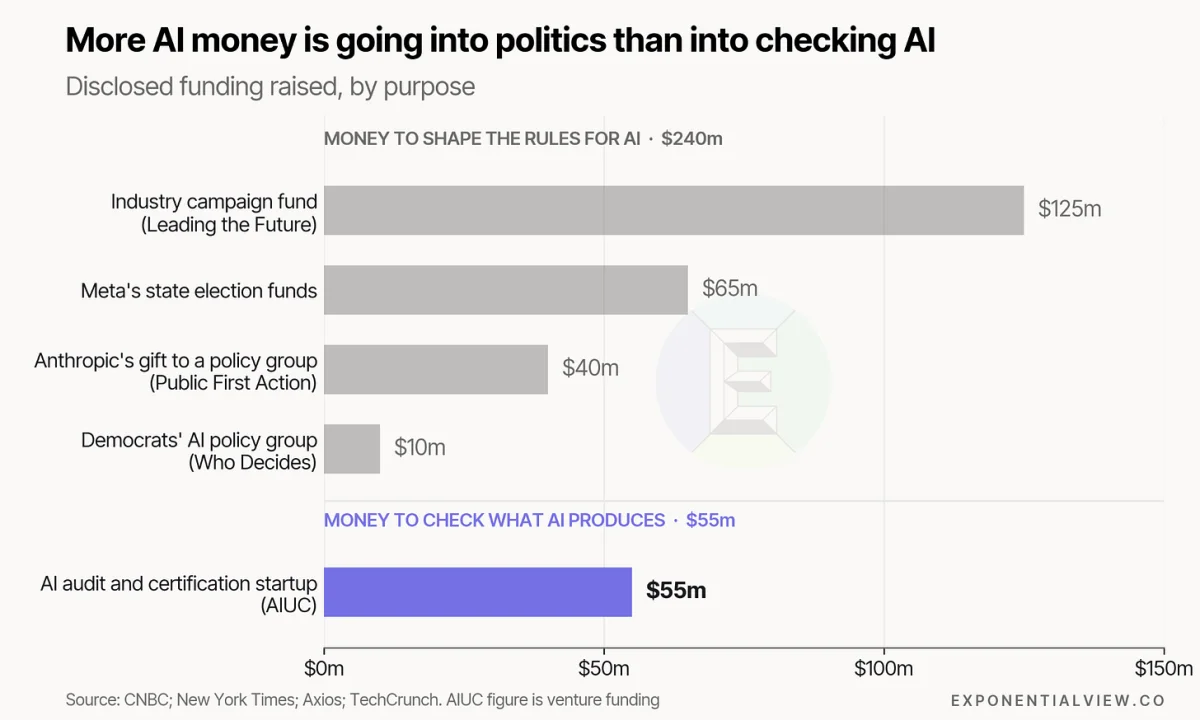
The music industry is among the first to grapple with the challenge of establishing standards for acceptable AI practices. As the global investment in AI governance surpasses $240 million within various funds, only a fraction of that is allocated towards auditing and certification—an area critical for establishing trust in AI content.
As the flood of AI-generated material expands, questions surrounding the accountability of content verification become increasingly pressing. Responsibility may lie with the content creators and distributors, necessitating a new budget allocation for verification measures as an essential preventative step.
Interestingly, an industry expert recently emphasized that sectors should bear the costs of their liabilities, which could include the integration of verification processes. As we head into a future where AI-generated content is an integral part of our information ecosystem, understanding how to manage and verify such content will define the quality of our engagement with it.
Ultimately, the coexistence of AI-generated content is a certainty, and how we adapt to maintain quality and authenticity will shape the future human experience of digital media.


