Understanding the Role of Validation Engineering in NVIDIA's AI Hardware Scalability
- Gate
- Machine Learning
- Departs
- Crew
- Matthew Leib
- Passengers
- 664
Sakeena Fiza's role as a validation engineer at NVIDIA showcases the critical processes ensuring AI hardware performance before market deployment.
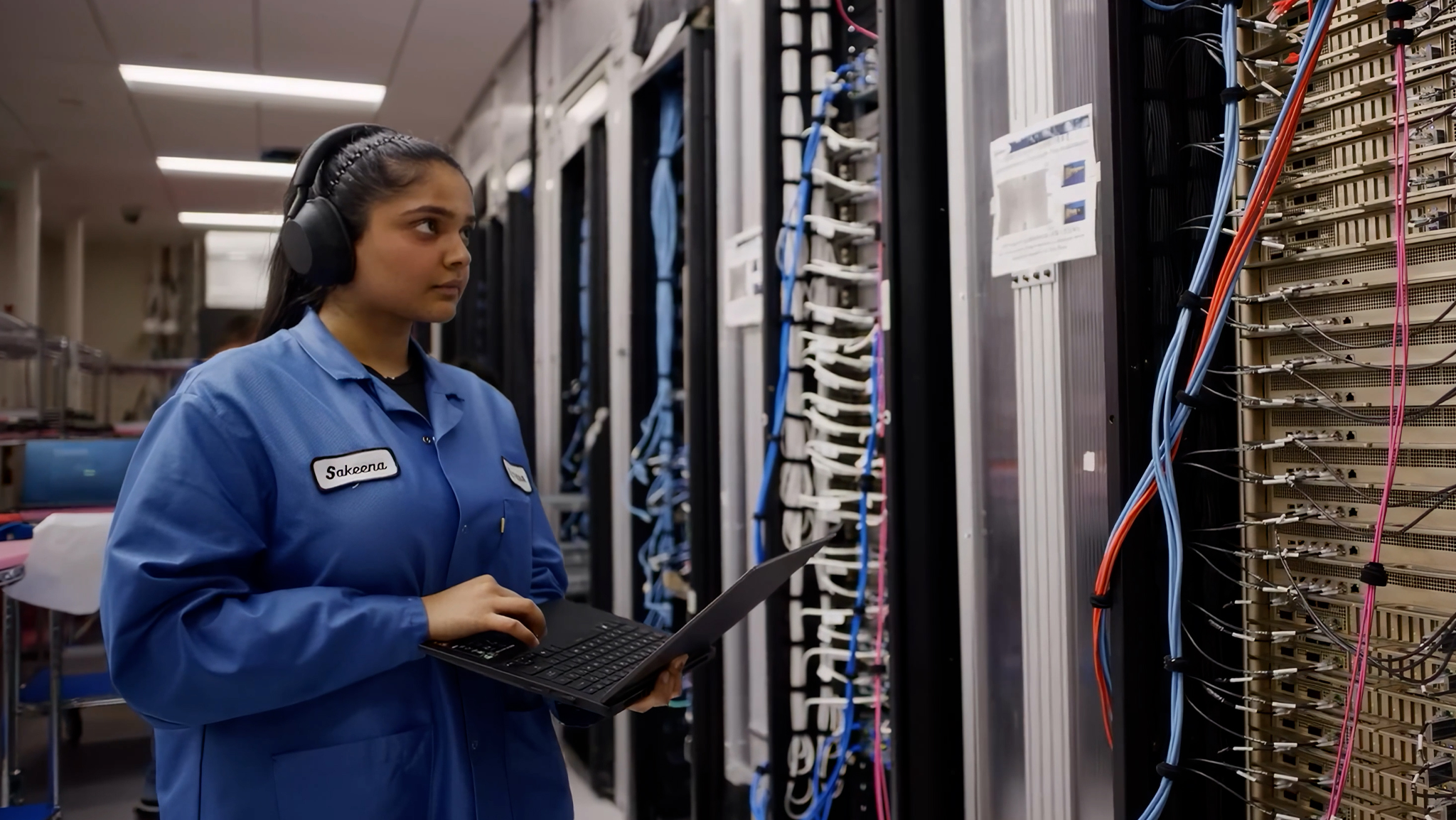
Sakeena Fiza, a validation engineer at NVIDIA, views her role as akin to that of a detective. In her words, "Validation engineers look in the shadows and shine a light into every corner.” This perspective underscores the proactive nature of her work which focuses on identifying potential failures before products reach their customers.

The significance of Fiza's work lies in its timing; she engages with systems long before they are released to the public. At NVIDIA, she and her colleagues begin their validation processes the moment a new system is powered up in the lab. Their detailed approach involves bringing components online incrementally, integrating boards, while firmware and software teams collaborate closely to ensure everything functions correctly. Fiza recalls a pivotal moment when they successfully powered on the NVIDIA Rubin GPU, leading to a spontaneous celebration when it first identified itself at the system level. “It literally just said, ‘NVIDIA Corporation Device,’” she reminisces.
Yet, this initial triumph is just the beginning. After the first power on, the real work begins: validating the hardware to ensure it can endure the rigors of production and ultimately perform in real-world applications. Fiza describes the validation process as becoming “the first customers for the product,” where her team places systems under various conditions to uncover potential issues before they impact end users. “The goal is to always catch issues before customers catch it,” she states, emphasizing her commitment to preemptive troubleshooting.
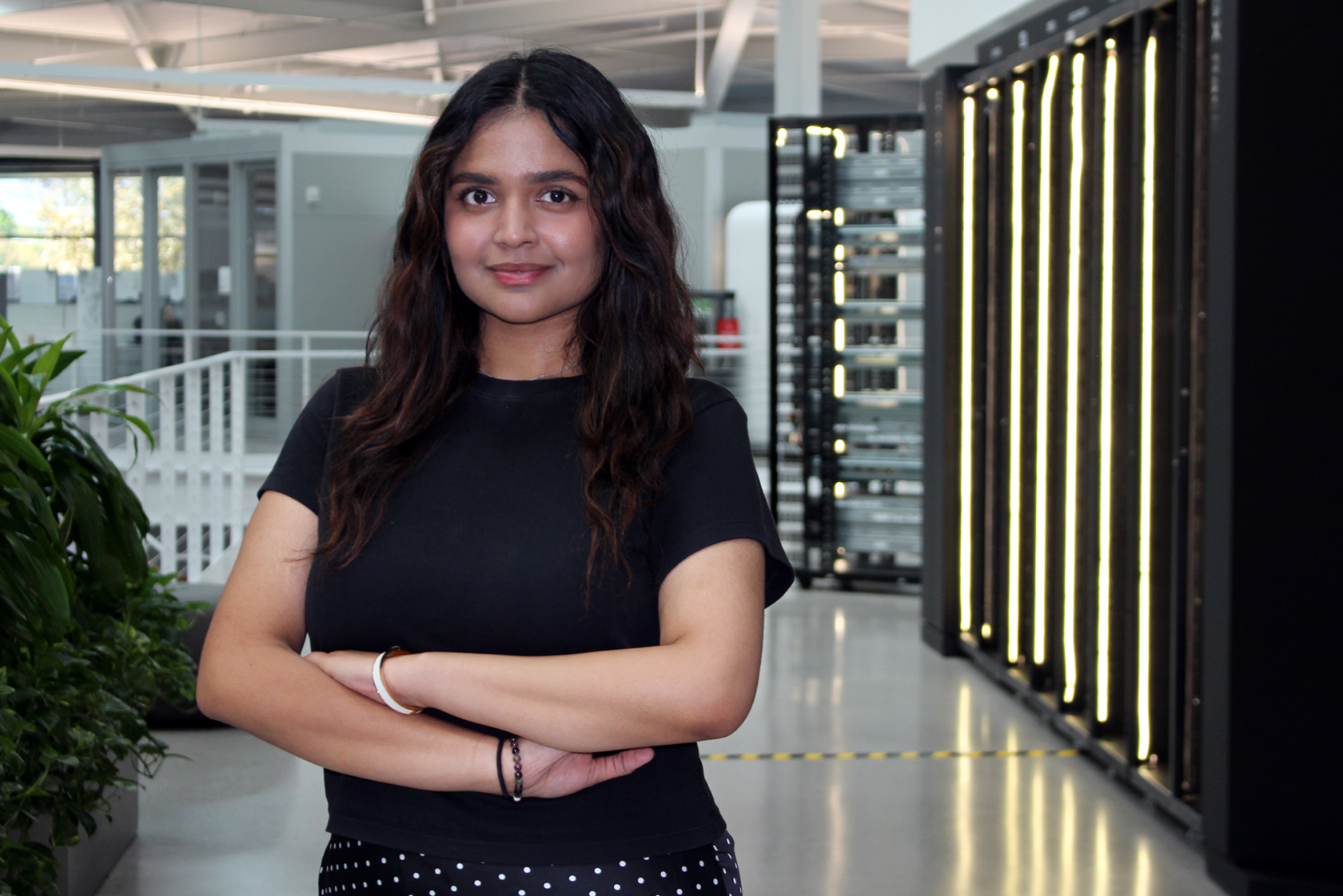
Fiza's journey to NVIDIA began at the University of California, Irvine, where she earned her degree in computer science and engineering. Her passion for systems developed early on while growing up in Dubai, where she was first exposed to programming through Logo. This spark led her to explore systems design, notably through experiences like building Mars rovers during high school mentorship programs and working on unmanned aerial vehicles during her undergraduate years.
Interdisciplinary Challenges in Validation
Fiza’s work at NVIDIA represents a unique intersection of disciplines. In her role, she seamlessly navigates between mechanical engineering, electrical engineering, firmware engineering, and customer experience. “I get to be a mechanical engineer when I want to be,” she notes. This interdisciplinary role allows her to develop a holistic understanding of how complex systems function together, particularly as AI hardware scales. The failures she investigates can be due to numerous factors, from high-speed signaling and thermal margins to something as simple as a screw that’s been tightened too much or environmental conditions like dust.
“The solution can be elusive,” Fiza remarks, highlighting the investigative nature of her work. Each failure requires a systematic approach to trace its origins. Logs provide essential clues, but Fiza and her team must reproduce issues, vary conditions, and analyze firmware alongside probing signals. The complexity is profound; a single circuit board can have tens of thousands of components, while an entire rack may house hundreds of thousands. This means each component must work harmoniously, especially under stress in varied deployment settings across different AI infrastructures.
Fiza emphasizes that understanding the hardware complexity behind AI operations is often underappreciated. “I wish people understood how complex the hardware is that AI needs to run on,” she declares, bringing attention to the intricate relationships between components that are crucial for optimal performance.
The Joy of Collaboration in Engineering
The dynamic environment at NVIDIA is invigorating for Fiza, who finds joy in the collaborative atmosphere of the bring-up phase. Describing it as “like the Avengers assembling,” she paints a picture of engineers across various disciplines—architects, designers, software developers, and others—working in unison to achieve a functional system. “One thing I know when I come to work is I’m never alone,” she shares, underlining the strength and support of her team.
Validation engineering requires a mix of skepticism and creativity; Fiza develops a hypothesis that a system can function effectively and then seeks out every conceivable failure mode. The role melds the stubbornness of an investigator with the analytical skills of a doctor. It’s a blend of enjoyment and challenge, where each new project presents unique puzzles requiring tailored approaches to enhancing future systems.
Looking forward, Fiza is enthusiastic about the upcoming NVIDIA products. “With the products we have in the pipeline, I’m so excited,” she expresses hope and conviction that these innovations will significantly impact the AI landscape, reinforcing her belief in the transformative potential of the technology.
Fiza’s insights reveal not only her personal journey but also the larger narrative of validation engineering's role in shaping resilient AI hardware systems, all while emphasizing the collaborative spirit that drives her work at NVIDIA.


