NVIDIA RTX Spark Launch Brings Local AI, Creative Apps and Gaming to Events Worldwide
- Gate
- Machine Learning
- Departs
- Crew
- Shreevar Rastogi
- Passengers
- 548
NVIDIA RTX Spark arrives with hands-on events and early reviews highlighting local AI, creative workflows and gaming, alongside practical questions about performance.
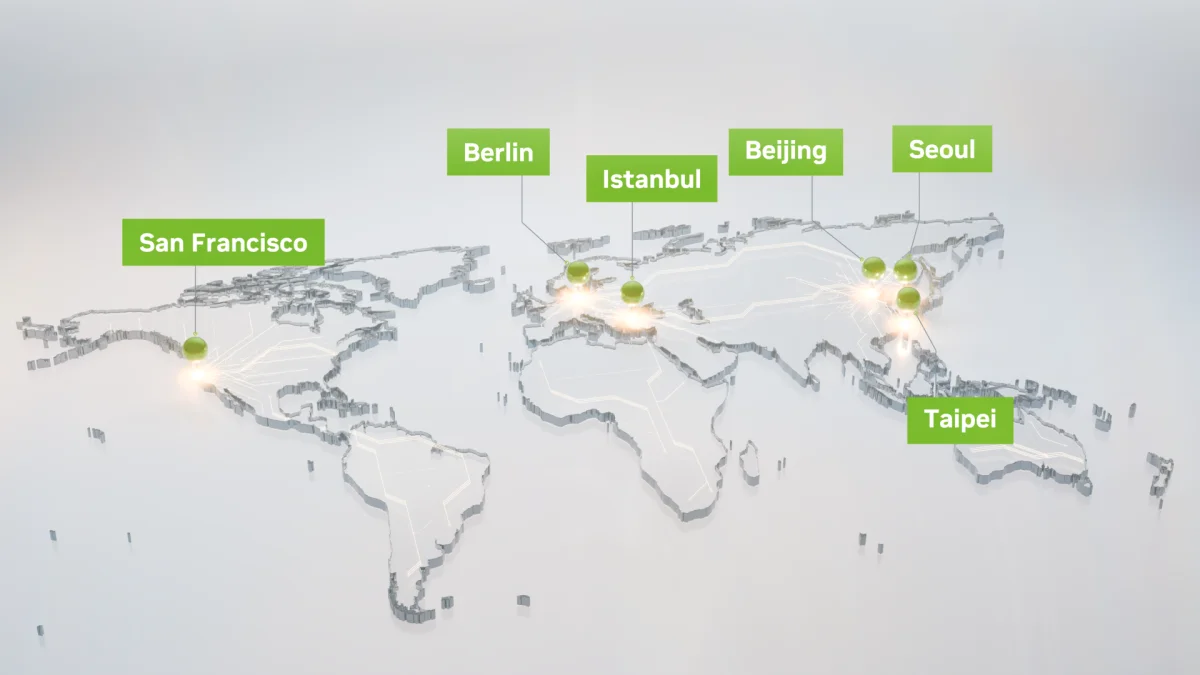
NVIDIA is putting the RTX Spark’s first public showing in the hands of reviewers and event visitors, with local AI, creative software and gaming as the central demonstrations. The company says the PC launches Friday, Oct. 16, and is holding events in six cities. The announcement offers strong reviewer reactions but few comparable test figures, so the launch is best read as an early look at a new Windows PC platform rather than a settled performance verdict.
The product is presented as one machine for creators, gamers and AI agents. That combination sets a high bar: each workload stresses a PC differently, and strong results in local AI do not automatically translate into top gaming performance. The reviews quoted by NVIDIA point to promise across several uses, while also hinting at tradeoffs that prospective buyers will want to examine in independent testing.
Early reviews suggest breadth, with caveats
Tom’s Hardware describes the platform as capable and compatible in its first iteration, while noting that gaming is not its strongest area. TrustedReviews reports testing the system for gaming and local AI and says the performance was surprising. Microcenter likewise gives a positive assessment of AI, gaming and creative work. These are favorable impressions, but the launch material doesn’t provide the underlying benchmark scores, test settings or comparisons needed to quantify the claims.
Tom’s Guide frames the device as a departure from familiar laptop categories, emphasizing portable, autonomous AI workloads accelerated by CUDA. Its description is an interpretation of the product’s direction, rather than a measured comparison with other systems. Creative Bloq focuses on software support, saying NVIDIA worked with a range of apps to optimize them for Spark. That matters in practice: a capable processor is only useful to a creative workflow when the tools people rely on can run well on the platform.
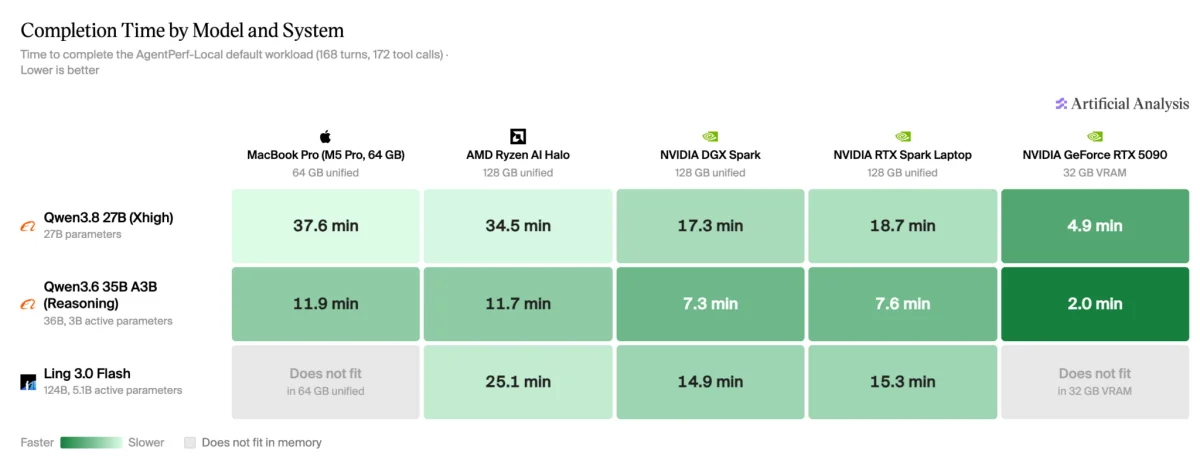
For developers and researchers, the most consequential question is what “local AI” means for the workloads they actually run. The event announcement points to demos and cites independent testing from Artificial Analysis as an early view of laptop AI performance, but it supplies no scores or details about models, memory use, power limits or test duration. Without those details, the material supports interest in the system, not a firm conclusion about which models or development tasks it can handle.
Buyers should also distinguish software compatibility from software performance. An application may be available while still differing in speed, feature support or behavior from its version on another PC architecture. The quoted reviews suggest that app optimization is part of NVIDIA’s launch effort, but they don’t list the supported applications or describe how each was tested. Those specifics will help determine whether Spark fits a particular creative or development workflow.
A public launch built around hands-on demos
NVIDIA’s events are designed to let attendees try the system across creation, development and gaming. The company also invites people to post stories about their first Windows PC using #ShareYourSpark. Participants have a chance to win an ASUS ProArt P14 RTX Spark laptop signed by NVIDIA founder and CEO Jensen Huang. Details are available on the Share Your Spark page. The product page is available here.
The event schedule lists local times and says space is limited. San Francisco’s gathering takes place at Best Buy, 1717 Harrison Street, from 10 a.m. to noon. Visitors can try demos, meet iJustine and hear conversations with local tech founders. Entry is free, on a first-come basis, with no ticket required; event details are online.
In Berlin, the event runs from 7 p.m. to 10:30 p.m. at Xperion at Saturn, Alexanderplatz 3, with demos and stage programming for creators and developers. Registration is required through the Berlin RSVP page. Taipei’s event is at Muse Garden, No. 88 Yanchang Road. It combines demos, music and AI community discussions, with shopping and networking continuing until 10:15 p.m.; registration is required.
In Beijing, the event is at JD MALL Beijing Shuangjing Store, No. 31 Guangqu Road. Check-in begins at 7 p.m., the celebration starts at 8 p.m., and hands-on demos follow before the event ends at 9:30 p.m. Registration is through WeChat. Istanbul’s gathering at Vatan Bilgisayar Topkapı, Mevlana Caddesi No. 138, offers demos and local creator programming, with walk-in entry and no advance registration.
Seoul’s event takes place at COEX East Lobby, 513 Yeongdong-daero. Demos begin at 7 p.m.; gaming and AI creator programming starts at 8 p.m., and the event concludes at 9:30 p.m. No advance registration is required.
What to watch after launch
The launch makes the platform’s intended range clear, but the practical case depends on measured performance and the software people need. Independent results with named workloads, alongside detail on compatibility and sustained operation, would make it easier to compare Spark with other laptops. For now, the clearest signal is a focus on bringing local AI into a portable PC while supporting creative work and gaming. The first hands-on sessions should show how well that breadth holds up in actual use.