Microsoft’s Buyout Offer Signals a Bet on Higher Productivity
- Gate
- Machine Learning
- Departs
- Crew
- Azeem Azhar
- Passengers
- 882
Microsoft’s voluntary exit offer comes as revenue per employee reaches $1.5 million, pointing to a bet that the company can operate with fewer staff.
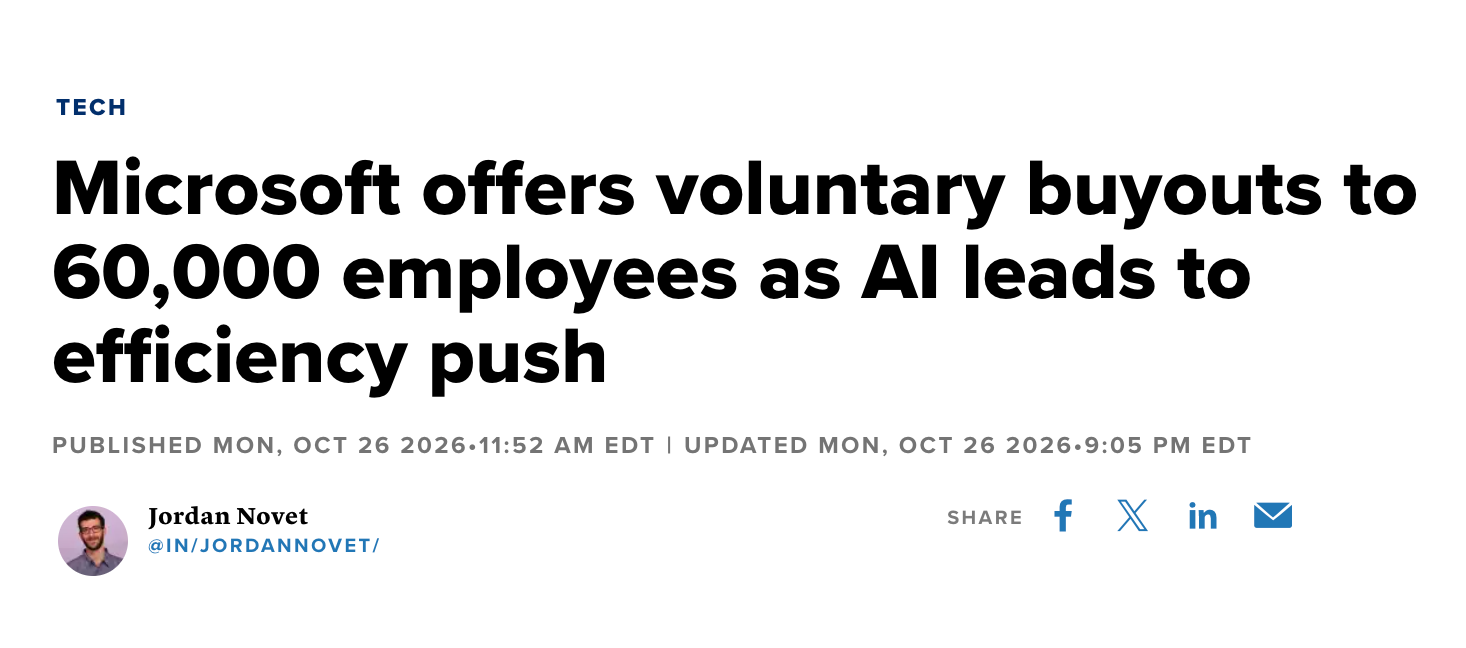
Microsoft’s offer of voluntary exits to about 60,000 employees suggests a striking level of confidence: the company believes it can run with far fewer people while continuing to grow. The offer covers roughly 27% of its 223,000 workers in the US, UK, Canada and India, including vice presidents. It doesn’t establish that roles will be cut, but it raises a bigger question: what does Microsoft think its workforce will need to look like next?
Artificial intelligence is an easy explanation. One version says Microsoft needs to free up money for data centers as capital spending is projected to reach $170 billion, up from $23 billion five years ago. Another says AI agents are already letting companies get more done with fewer employees. A third explanation points to the hiring surge during the Covid period and a long overdue correction.
Each account has a problem. Microsoft’s recent numbers don’t look like a company simply clearing out pandemic-era hires or scrambling to cover weak productivity. The more compelling interpretation is that its output per employee has risen sharply, and leaders expect that trend to continue. AI may be part of what comes next, but the available figures don’t show that it has already replaced the people invited to leave.
Revenue and headcount have split
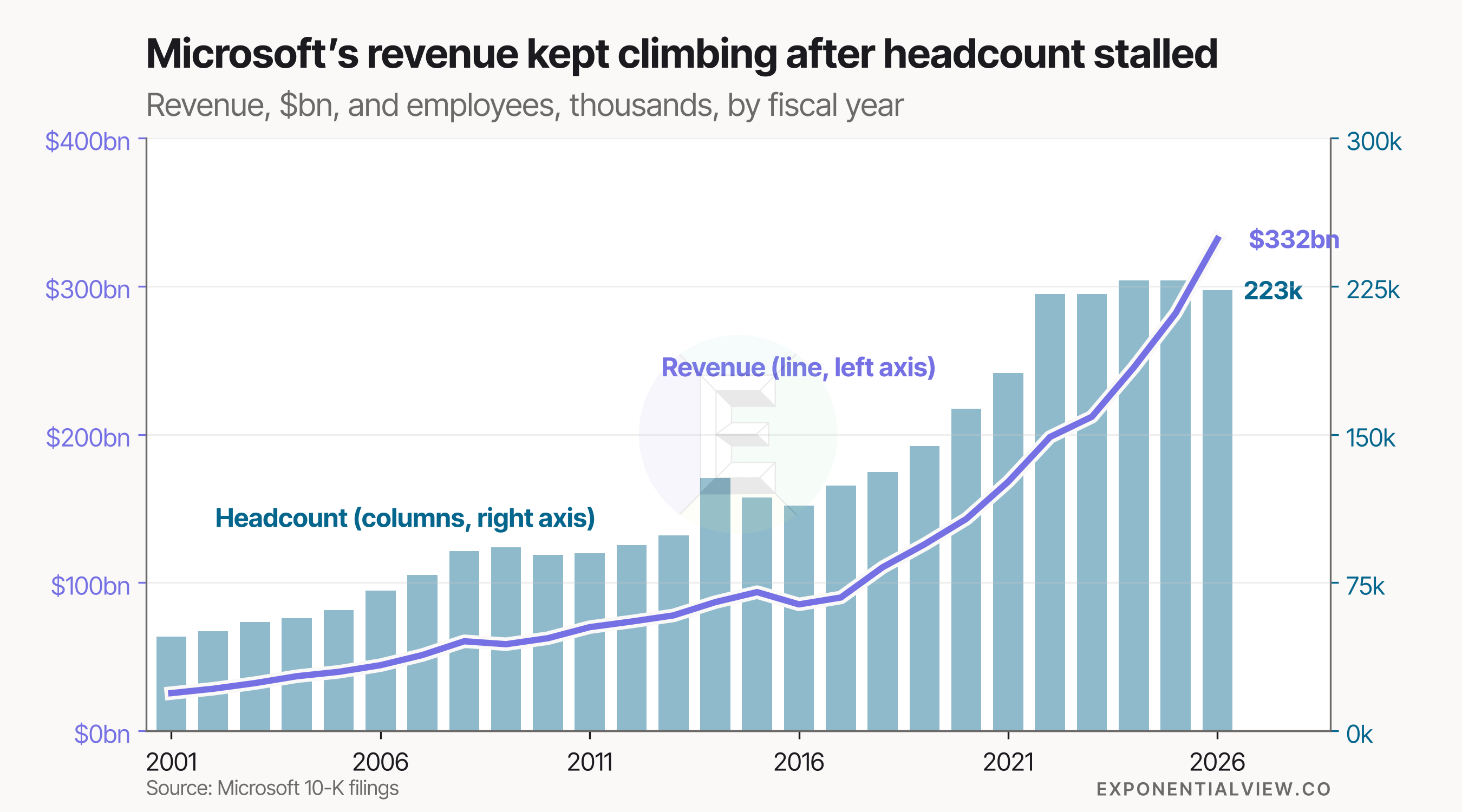
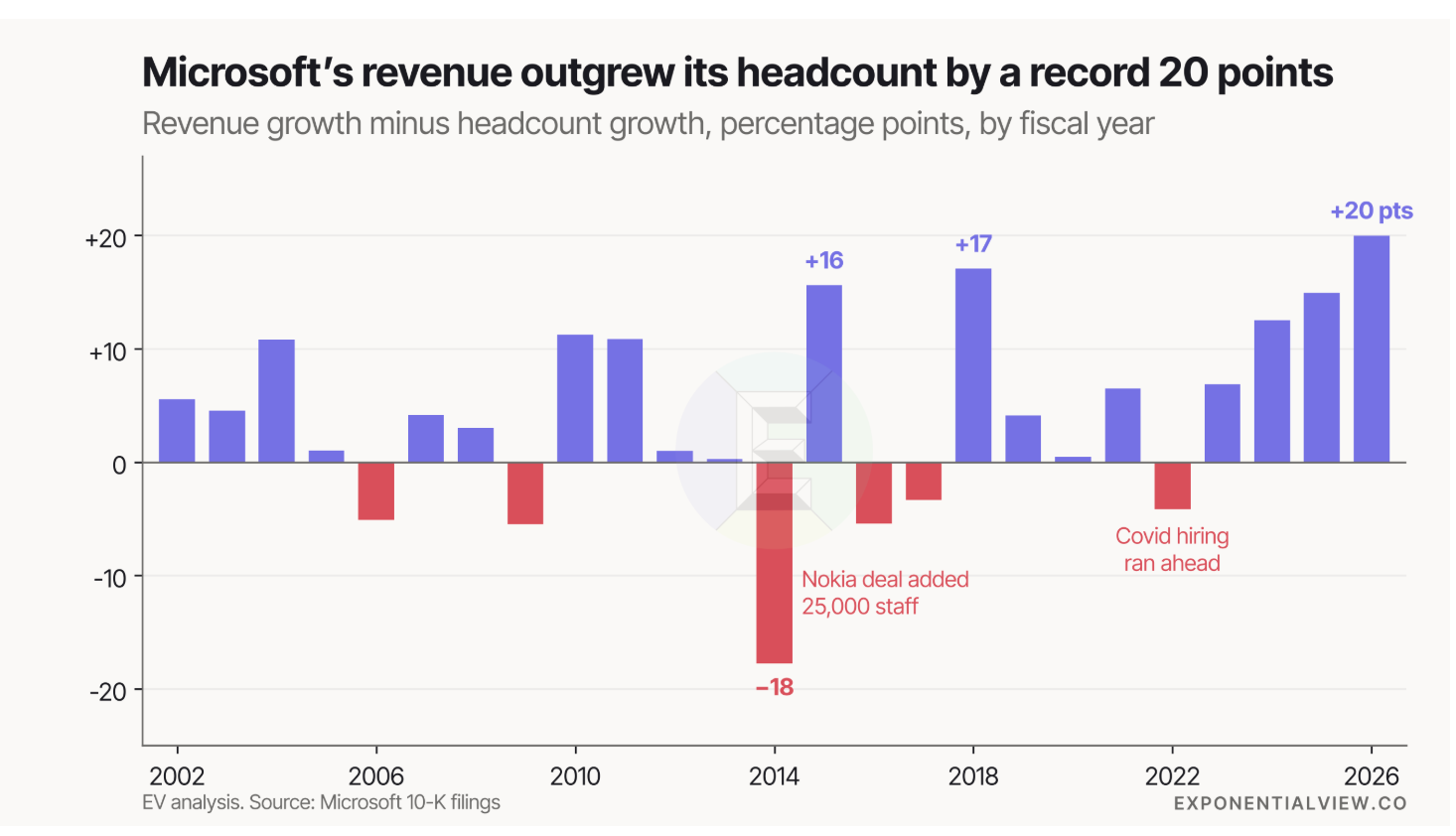
For much of the past two decades, Microsoft’s revenue and workforce expanded together. Since 2022, they have moved apart: revenue growth has exceeded headcount growth for four consecutive years. In the year ending in June, the difference reached 20%, the widest gap in the period described by the company’s historical figures.
That pattern can fit a company working through excess hiring: sales rise while staffing stays level. Microsoft did add 58,000 employees in the two years to June 2022, nearly the same number covered by the current offer. But timing matters. Since 2023, the company has cut 25,000 roles and recorded four years without headcount growth. The offer also isn’t limited to people hired during the pandemic boom. Engineers who joined during Steve Ballmer’s tenure are eligible alongside employees who came aboard through more recent recruiting.
Those details weaken the idea that Microsoft is simply reversing one particular hiring cycle. They also make the offer’s scale notable. A voluntary program gives employees a choice, but offering it to more than a quarter of the workforce reaches well beyond a narrow team or a recent cohort. The terms described in the source include severance, which makes departures a direct expense for the company.
Productivity is the stronger clue
Revenue per employee offers another way to read the divergence. Microsoft’s figure has risen by two-thirds since 2022, reaching $1.5 million. At the same time, the source says margins have risen as revenue strengthened. That combination is hard to square with a workforce that has simply become too large to support the business. It points instead to more revenue generated for each employee, alongside stronger profitability.
There are limits to what that measure can tell us. Revenue per employee is a company-wide ratio, not a count of tasks automated or a direct measure of individual output. Changes in product mix, prices and business composition can affect it too. The figures don’t reveal which teams or activities account for the gain, or whether the same pace can last. They do show that Microsoft’s business has been producing much more revenue per worker while staffing has stayed flat.
That makes the voluntary offer look less like a simple response to past hiring and more like a forward-looking bet. Microsoft appears willing to pay employees to leave because it expects the organization to operate with fewer people, or wants room to reshape which roles it fills. That is a substantial assumption. The financial figures describe what the company has achieved; they don’t prove that a smaller workforce will maintain the same growth, margins or pace of product development.
AI could shape the next phase
The offer alone can’t establish that AI is driving the decision. Microsoft has announced no causal link in the material here between agentic systems and the roles included. Its large planned investment in data centers also creates a separate pressure on spending, but the existence of that investment doesn’t show that staff reductions are meant to fund it. Treating either explanation as settled would run ahead of the evidence.
Still, the productivity numbers make AI a relevant part of the forward-looking question. If software agents and other tools let employees complete more work, companies may need different staffing levels or skill mixes. Whether that produces lasting gains depends on the work involved: tools can speed up some tasks while creating new review, integration and oversight demands. The source provides no breakdown of how Microsoft expects those effects to play out.
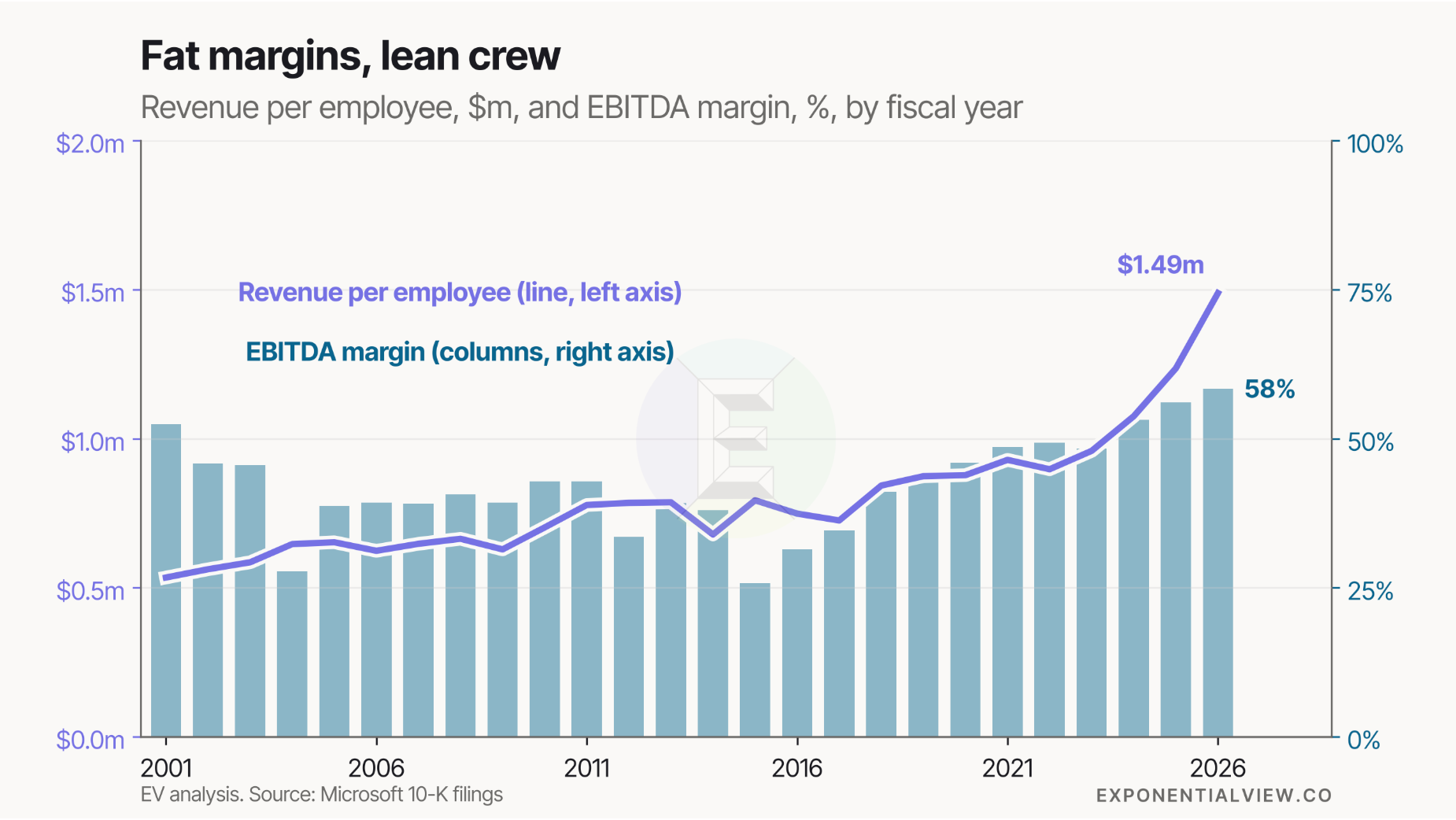
The test will be what happens after employees make their decisions. If Microsoft sustains growth and margins with a smaller workforce, that would support the view that it sees durable productivity gains ahead. If it later needs to rebuild teams or its results weaken, the offer may look more like an overconfident estimate of how lean the business can run. The figures so far explain why Microsoft can consider a smaller workforce; they don’t settle whether its next productivity gains will be large enough to make that workforce sustainable.
Coverage of Microsoft’s voluntary exit offer