Agentic AI Brings Real-Time Processing to the Search for Extraterrestrial Signals
- Gate
- Machine Learning
- Departs
- Crew
- Chris Porter
- Passengers
- 638
The Allen Telescope Array can process 2.4 terabits per second as AI agents help steer observations and inspect data in real time.
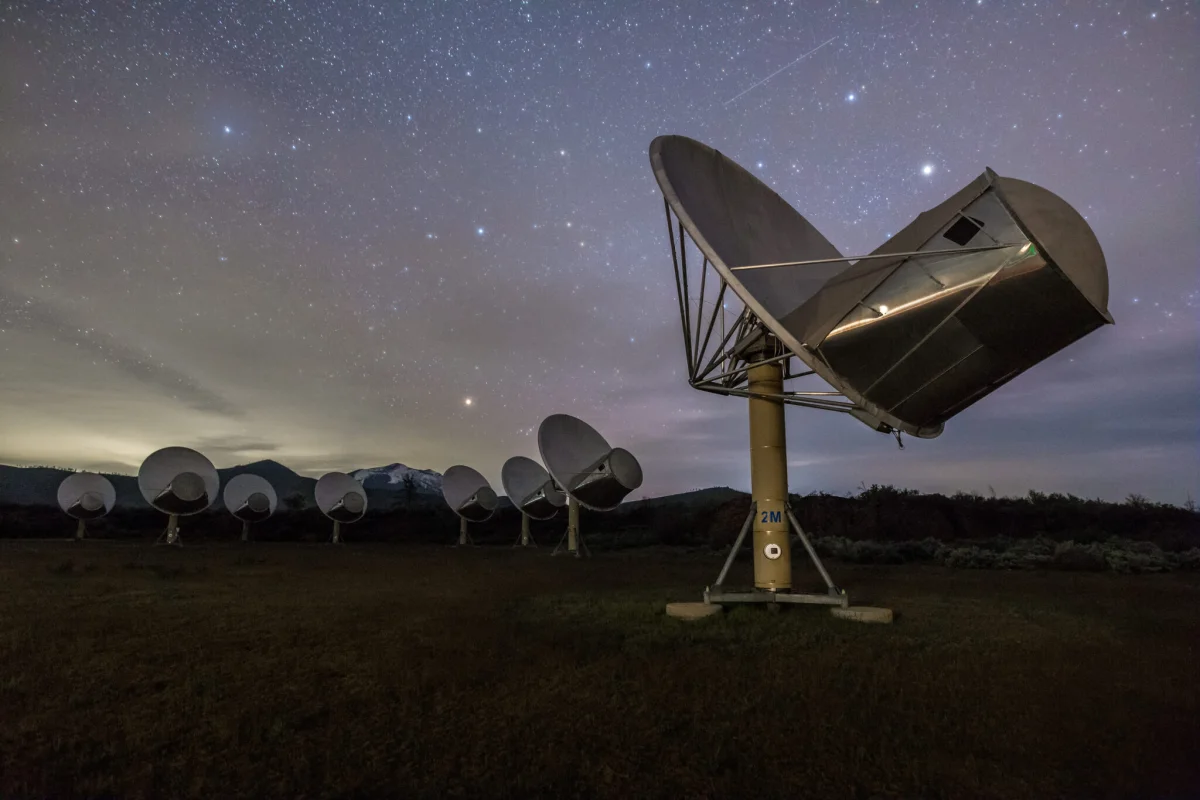
The search for extraterrestrial signals increasingly depends on how quickly observatories can make sense of their own data. At California’s Allen Telescope Array, researchers are bringing agentic AI into that process: a natural language request can direct an agent to control the instrument, work with incoming data and apply AI models. The practical shift is from collecting large volumes for later analysis toward managing and examining observations as they happen.
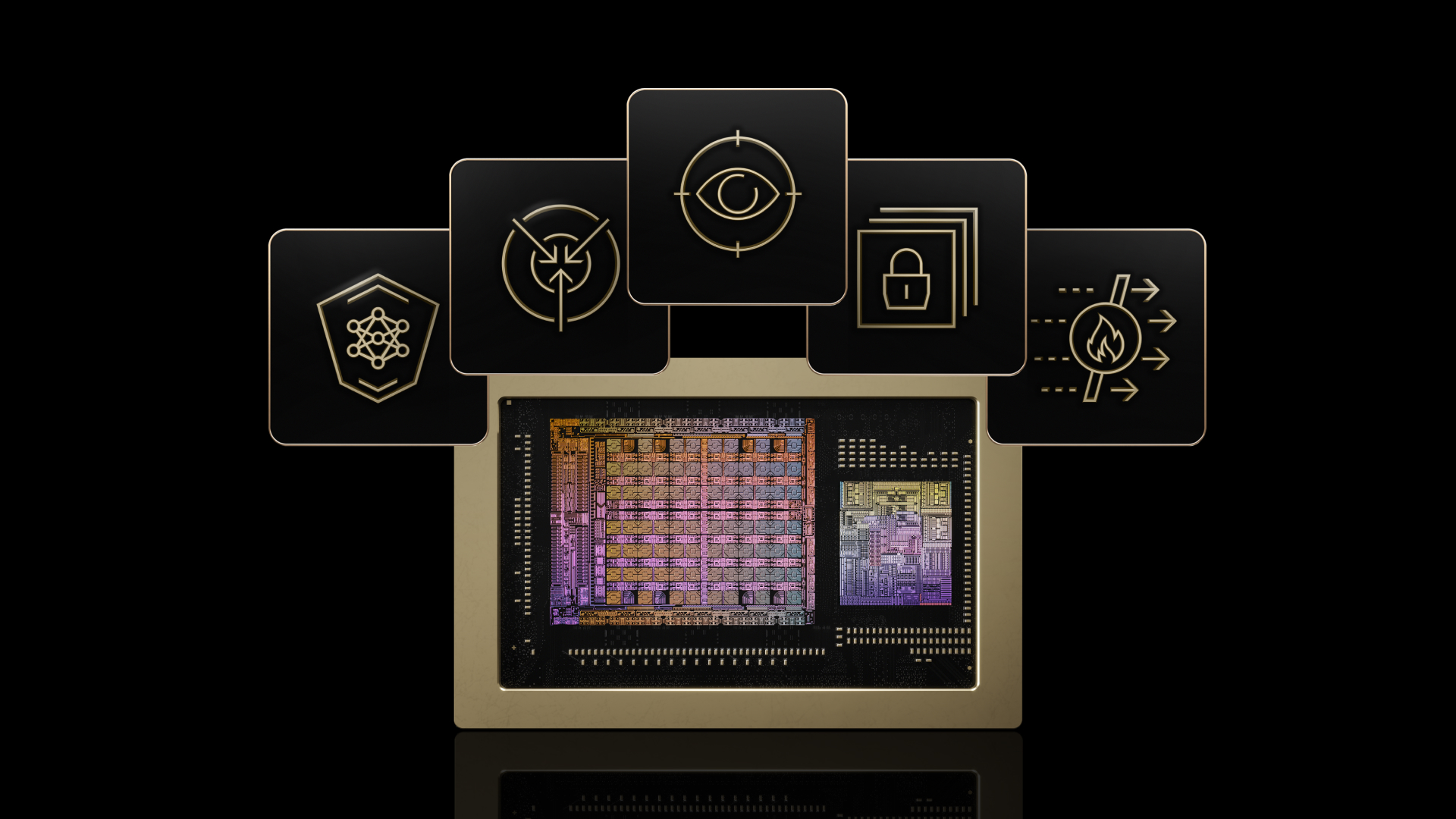
Breakthrough Listen and the SETI Institute are developing this approach with NVIDIA’s Holoscan platform, which handles live sensor data. The system can process 2.4 terabits per second on NVIDIA RTX PRO 6000 Blackwell GPUs, with inference running on premises beside the telescope. Those details matter because the usefulness of an agent depends on access to timely instrument data and computing resources, not just its ability to interpret a request.
Processing data as observations unfold
Radio telescopes produce far more data than researchers can easily inspect by hand. Storing every stream for later analysis can make finding a promising signal slower and put pressure on storage systems. The Allen Telescope Array’s pipeline instead moves terabits per second of sensor data directly into GPU memory, where computation can begin while the observation is underway.
DAQIRI, a library built on Holoscan, supports that data path. CyberEther, a signal-processing framework developed at the SETI Institute, performs the calculations using NVIDIA CUDA-X libraries, including cuFFT and cuBLAS. Taken together, these components connect the telescope’s data stream to GPU-based processing without requiring the full stream to be written to hard drives first.
The agent interface sits above that processing stack. Nexus, a web-based observatory orchestrator, serves as the agent harness and maintains a shared view of instrument state, computing resources and processing pipelines. Researchers can use natural language prompts to monitor packet loss, inspect live spectrograms and rewrite signal-processing blocks. That gives an agent a way to act on the observatory through defined systems while giving researchers a view of what the instrument and its pipeline are doing.
In the described workflow, an agent can steer telescope antennas, calibrate and focus the instrument, identify and correct data errors, and plot results. The aim is to compress work that might take human researchers weeks or years into hours. That is a claim about the speed of operational and analytical work; it doesn’t establish that agents can independently decide which findings are scientifically meaningful. Researchers still need to assess candidate signals and interpret the results.
What the system has demonstrated
The pipeline has already produced a reported first: real-time AI detection of a pulsar in the Crab Nebula. A pulsar is a rapidly rotating stellar remnant whose emissions appear to pulse, making it a useful test of whether a system can identify a known kind of astronomical signal while data is arriving. The result shows that real-time detection is possible in this setup. It doesn’t, by itself, demonstrate the discovery of an extraterrestrial signal.
That distinction is important for evaluating the system’s role in the search for extraterrestrial intelligence. Processing speed can help researchers sift through observations sooner and change a pipeline while data is live. It can make the search more adaptable, but the article doesn’t report a new extraterrestrial candidate, a detection rate, or a comparison with earlier systems. Those measures would help establish how much the approach improves scientific discovery, beyond the demonstrated pulsar detection and data throughput.
Local compute and future deployments
Running inference on premises, near the instrument, keeps computation close to the incoming stream. For an observatory processing data at the stated rate, that arrangement supports immediate analysis without depending on sending the raw stream elsewhere first. It also makes local computing capacity a practical constraint: the system’s reported throughput is tied to the specified GPUs and its processing setup.
The team is evaluating open models, including NVIDIA Nemotron, for situations where data locality and turnaround time matter. The researchers also point to possible observatories operating offline on the far side of the moon. That is a prospective use case, not a deployment described as already in operation. An offline site would make local processing and the ability to manage equipment especially relevant, while leaving questions about its computing requirements and performance to be answered.
Andrew Siemion, the Bernard M. Oliver chair for SETI at the SETI Institute and principal investigator of Breakthrough Listen, said that future agentic observatories may encounter technologies with more in common with the agents than with the humans who built them. He described this as “a breakthrough in translation.” For now, the concrete advance is more operational: agents can help control an instrument and work with a fast data stream through a unified interface. The next test is whether that speed and flexibility lead to more effective searches, with researchers able to check how the agents handle errors and candidate signals.
Learn more about NVIDIA AI for science, and the Allen Telescope Array and NVIDIA Holoscan platforms used in the system.