Chris Alexiuk’s Case for Open AI Models and Practical Developer Education
- Gate
- Machine Learning
- Departs
- Crew
- Matthew Leib
- Passengers
- 623
NVIDIA engineer Chris Alexiuk teaches developers to build with open models, arguing that access to weights, data and training methods helps widen participation.
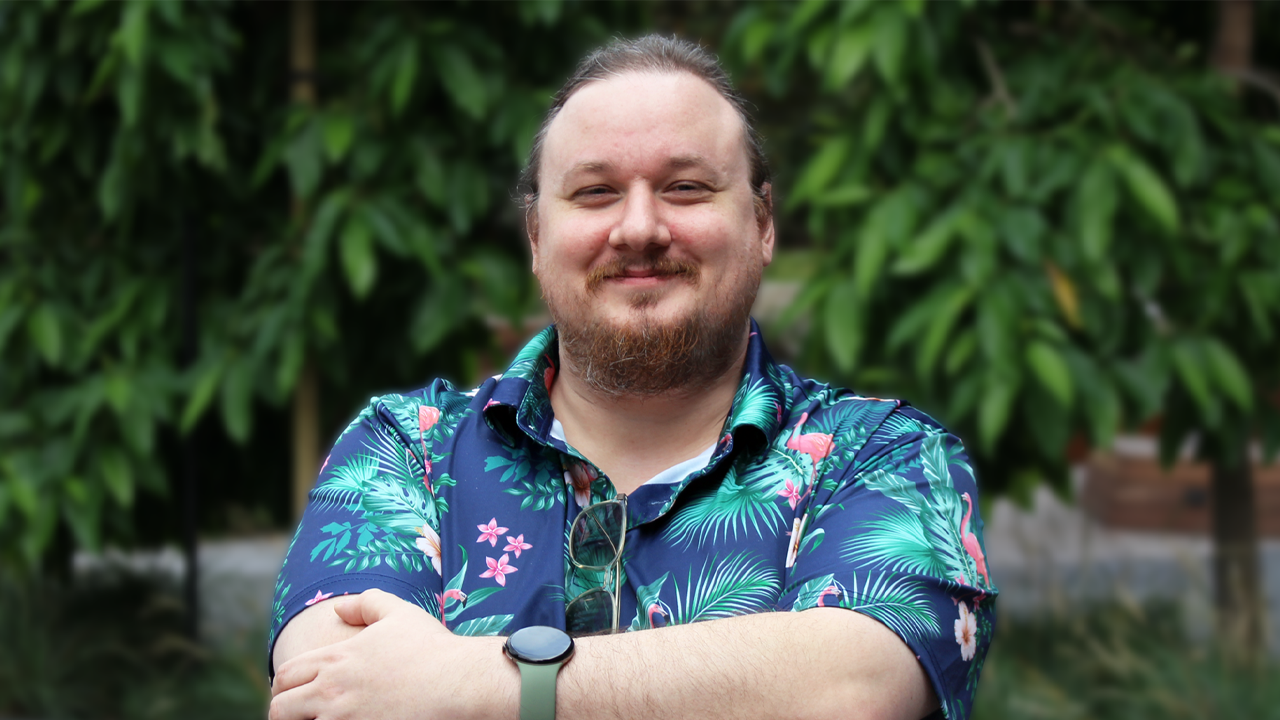
Chris Alexiuk’s work sits at the point where open AI models meet working developers: he teaches people how to build, tune, evaluate and deploy language model applications, while arguing that access to a model’s underlying components matters. His approach is practical and personal. The goal, he says, is to put useful knowledge in front of people who may not yet realize they can build with AI.
Alexiuk is a senior product research engineer in deep learning at NVIDIA, based in Toronto. On YouTube, he has gathered an audience of thousands around tutorials and demonstrations about large language models and AI agents. He sees that teaching as a way to expand who can take part in building AI systems.
“I think the people who will most help us understand how to build and apply AI likely haven’t even heard of it yet,” he said. “Trying to get knowledge and information out to as many people as humanly possible is what continues to drive me.”
Openness as a working principle
For Alexiuk, open models matter because they give developers more than a way to query a finished system. He argues that meaningful openness includes access to model weights, training data and the methods used to train a model. Those materials can help practitioners inspect what they are working with and adapt it to their needs.
“Fully open source AI is necessary for the democratization of intelligence,” he said. “You should have access to the weights, the data that went into it, the training recipes, everything.”
That position informs his enthusiasm for NVIDIA’s Nemotron model family. Alexiuk calls himself its “No. 1 Nemotron Fan” on LinkedIn and uses the name “Joe Nemotron” on social media. His praise is emphatic: he describes openness as a priority and Nemotron as the project doing that work best. Those are his assessments, rather than a comparison backed here by benchmark results.
Nemotron is presented as a family of open source multimodal models intended for long-running, self-evolving and specialized AI agents. Alexiuk’s description of the family as a “magical library” is playful, but it points to a practical idea: developers may have different model options for different tasks, rather than relying on a single system for every kind of work.
He names Nemotron 3.5 Lightning as an option for individual developers handling repetitive, high-frequency execution tasks, and Nemotron Ultra for long-running autonomous agents, deep research and enterprise work. The source provides no benchmark scores, model sizes or cost comparisons for those examples, so they illustrate the intended range of uses rather than establish how the models perform against alternatives.
Alexiuk’s teaching style carries the same accessible tone as his social media persona. On X, he posts as “llm_wizard,” with a cartoon wizard as his avatar. The metaphor lets him describe model choice as selecting a tool for a particular job: find the prepared “spell” that fits the task.
Behind the imagery is a serious claim about who benefits from access. Alexiuk argues that open tools can help more people understand AI and try ideas of their own. “If a tool is amplifying skill, it’s amplifying human expression,” he said. For developers, the practical test of that claim is whether access to model components and learning materials makes it easier to experiment, adapt systems and understand their limits.
A first model project built around a bird
Alexiuk’s route into machine learning began in a computational physics class at Trent University in Ontario. After learning about TensorFlow, he found that he could use a GPU to build image classifiers. His first project addressed a small, specific problem: detecting his friend’s Yellow-Faced Gray Budgerigar in a webcam feed during shared video game sessions.
He built the classifier to alert him when the bird appeared, since he was focused on playing and might otherwise miss it. The modest use case left a lasting impression. “And then my whole life changed, because in that instance I realized it’s crazy what you could do with technology,” he recalled.
The anecdote helps explain why he emphasizes access and education. A personal project can turn a technical concept into something tangible: the developer defines a task, works with available tools and sees a model respond to a real input. Alexiuk’s later tutorials extend that kind of entry point to language models, agents and applications.
He describes the change in what individuals can attempt as striking: he moved from detecting a bird on a webcam to building websites with a model running on his laptop. That account is a personal example, not a claim that every model can build any website reliably. The broader point is that local model use and accessible learning materials give more people a place to start exploring the technology.
Alexiuk says he would welcome someone surpassing him as Nemotron’s biggest fan, especially if that person first encountered the models through his teaching. It’s a fitting measure of his ambition: the work succeeds, in his view, when knowledge travels beyond the person sharing it. Developers considering open models can use that spirit as a starting point, while still evaluating each model against their own tasks, deployment needs and available resources.
Alexiuk shares more tutorials through the NVIDIA Nemotron Labs Livestreams on YouTube.