Data Center Backlash Gives Communities Leverage to Demand Lasting Benefits
- Gate
- Machine Learning
- Departs
- Crew
- Azeem Azhar
- Passengers
- 990
Long power connection queues give communities bargaining power. Recurring local payments could turn data center opposition into lasting support.
Data center developers need one thing above all to earn returns on their investment: a live connection to the power grid. That dependency gives communities facing large new projects unusual bargaining power. The source argues that local opposition should prompt better deals, including recurring payments for community priorities, rather than an end to construction.
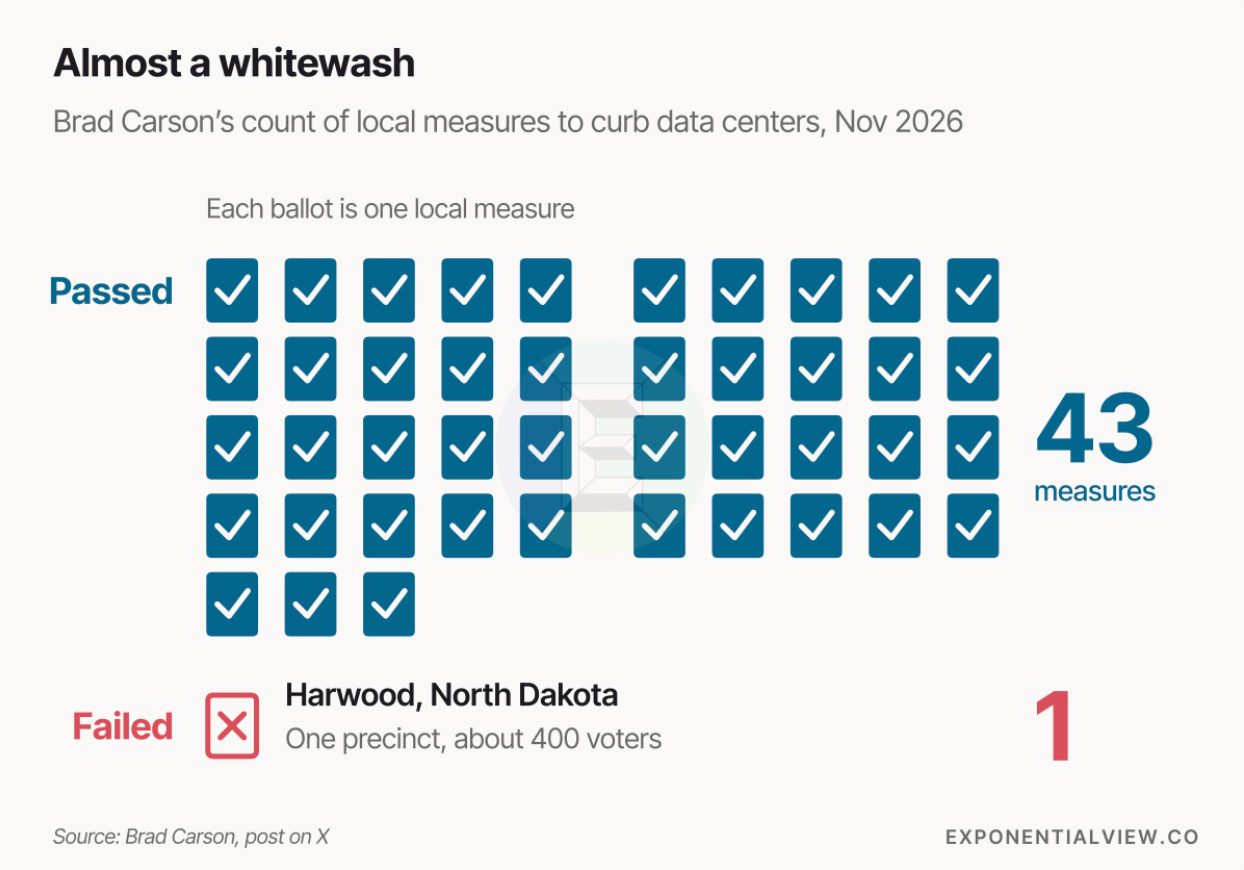
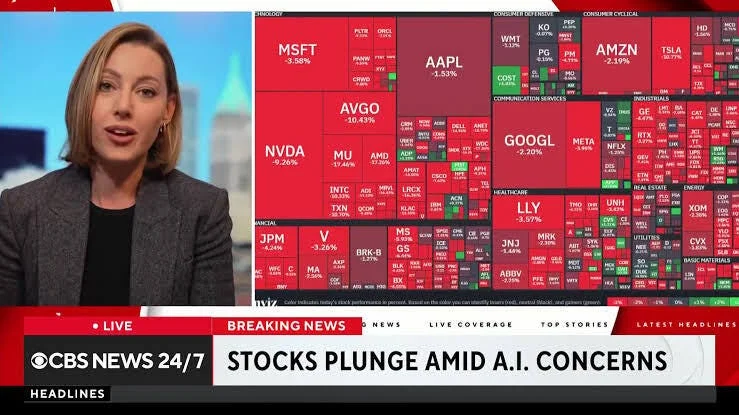
In the US midterms described in the source, voters approved 43 of 44 local measures seeking to slow data center development. The result came amid wider concerns about AI’s effects on workers, the concentration of power, safety and the demands placed on local infrastructure. Data centers were not the only factor in the result, but proposals about them drew strong resistance.
That resistance comes as developers race to build AI infrastructure. The source’s central point is that a delay can be costly for a company with expensive computing equipment waiting to run. The longer a site sits without power, the longer its investment remains unable to generate revenue. That makes time a stronger negotiating tool for local communities than a simple comparison of energy prices or taxes.
Power connections set the terms
The source cites Silicon Data’s estimate that a plugged-in B300 chip can generate about $8 an hour. At that rate, a chip could pay for itself in less than a year. A chip waiting for a connection, by contrast, produces no revenue while the developer waits to put it to work.
A 1-gigawatt data center of the type now being built might house roughly 400,000 B300 chips and cost about $40 billion. Annual operating expenses for a site of that size are estimated at roughly $800 million, less than 2.5% of the initial capital cost, with electricity accounting for about two-thirds. Construction of the building may take 18 to 24 months; the average US wait for a power connection, according to the cited source, is four years.
That gap matters. A completed building without electricity cannot run its servers, and idle equipment cannot earn back its cost. Communities that control the pace or terms of a connection can therefore negotiate for benefits while developers have a strong reason to get online quickly.
A recurring payment in Lanarkshire
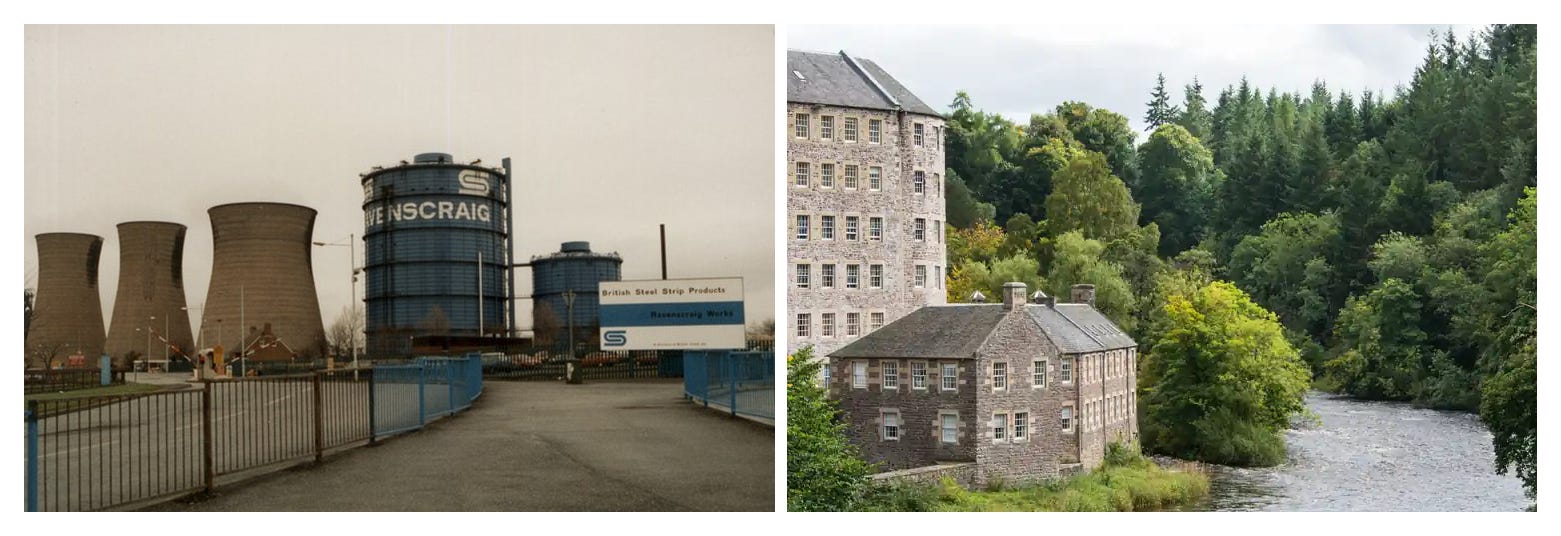
The example offered is DataVita’s proposed data center in North Lanarkshire, Scotland, in the area around Lanarkshire’s former industrial towns. The developer has agreed to pay up to $100,000 per megawatt each year into a local fund for initiatives such as training, education and food banks.
If the site reaches its planned 500-megawatt capacity, the annual contribution would be $50 million. The source compares that with North Lanarkshire’s reported annual income of £1.17 billion, or about $1.58 billion, making the payment roughly a 3% addition. Across the project’s 15-year lifetime, the contribution could reach £543 million.
The comparison with Oracle’s proposed New Mexico site illustrates the difference between one-off commitments and a continuing revenue stream. Oracle’s cited commitments included nearly $1 billion in contracts for local businesses, $155 million to offset utility costs, $50 million for water facilities and a $10,000 grant to a local sports team. The source estimates that spending other than construction costs at $205 million in total. Spread across the campus, it says, that works out to $84,000 per megawatt as a one-time payment.
At the Lanarkshire rate, the source calculates that Oracle’s 15-year contribution would have been $3.5 billion. The comparison depends on the projects and commitments being measured as described, but it highlights the underlying choice: a community can seek a single package of benefits or negotiate for annual payments tied to the site’s operating capacity.
Big investments create relatively few permanent jobs
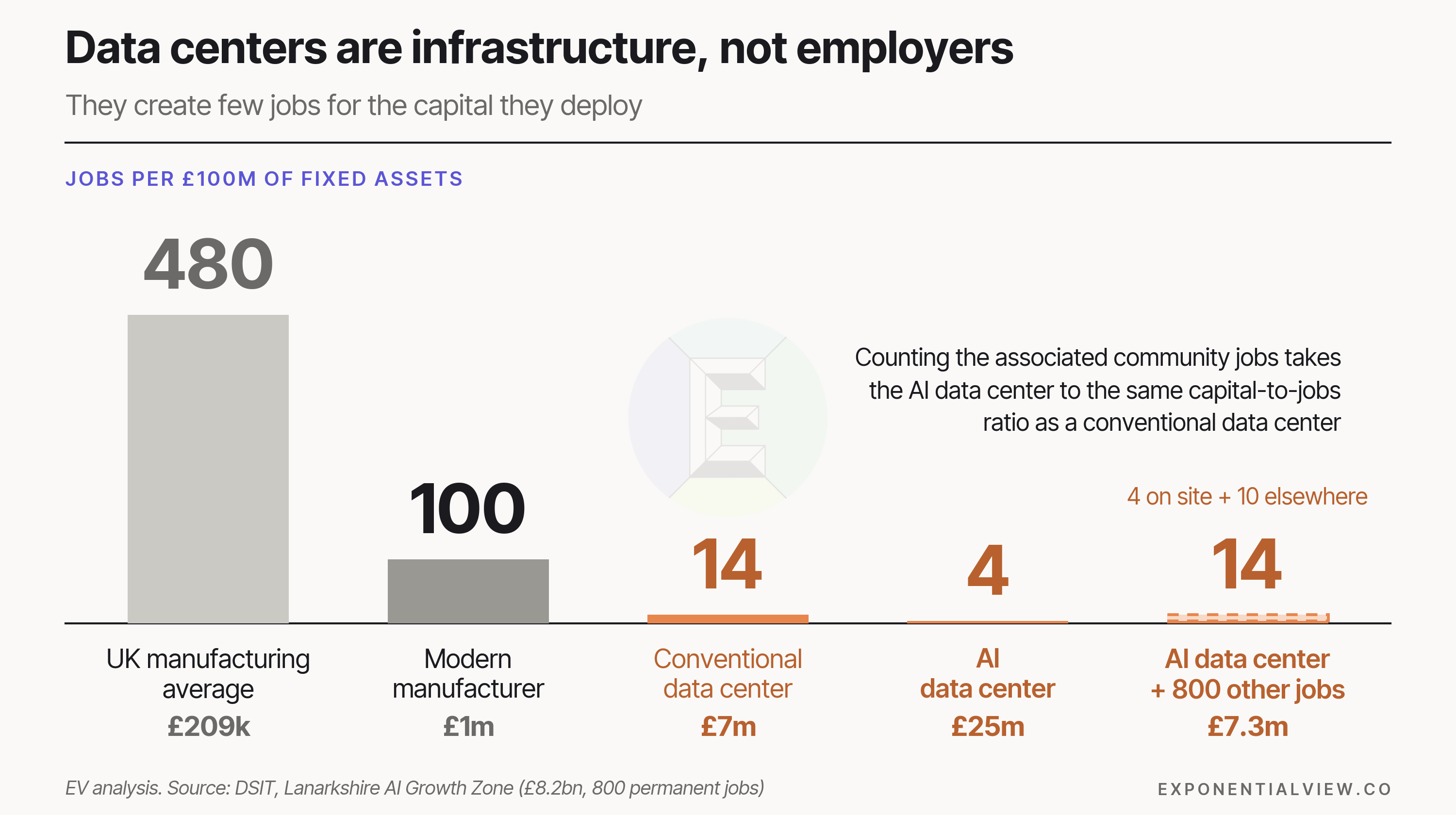
Recurring payments matter because data centers typically employ far fewer people once construction ends than their capital costs might suggest. The source says Meta’s Louisiana investment grew fivefold to $50 billion, while permanent staffing doubled to 1,000 people—about 20 permanent jobs per billion dollars spent. Anthropic’s planned $50 billion of construction in New York and Texas is expected to create 800 permanent jobs, or 16 per billion dollars.
Those figures don’t count temporary construction work, but that work ends when a project is built. In Lanarkshire, the data center is expected to employ around 220 people. Plans for the surrounding AI Growth Zone include roughly 600 jobs for researchers and coders. Together, those roles would improve the jobs-to-investment ratio somewhat, though the source says it would still fall short of modern manufacturing.
A recurring community fund could help address this mismatch. Local groups could use it to support businesses, training and regeneration after construction crews have left. Lower energy and water costs are also practical priorities for nearby residents and businesses, according to the source.
The wider calculation is straightforward: a 1-gigawatt connection could generate $100 million a year for a community under the Lanarkshire benchmark. The source compares that with estimates that energized AI computing capacity can earn $10 billion to $40 billion per gigawatt, while surge pricing for space deals involving SpaceX, Anthropic and Google approaches $50 billion per gigawatt annually. On those figures, $100 million represents about 0.2% of the surge-price estimate; even three or four times that amount would remain below 1%.
The figures are estimates, and project economics vary. Still, long waits for electricity give communities room to negotiate terms that reflect the value developers place on speed. The practical question is whether each new data center leaves behind durable local benefits once its construction crews and initial spending are gone.