Ring’s $270 Indoor Security Drone and $1,000 Rover Put Mobile Cameras on Patrol
- Gate
- Machine Learning
- Departs
- Crew
- Lucas Ropek
- Passengers
- 640
Ring’s new drone and business rover use AI Pilot to map and patrol spaces, raising practical questions about privacy, cloud storage and adoption.
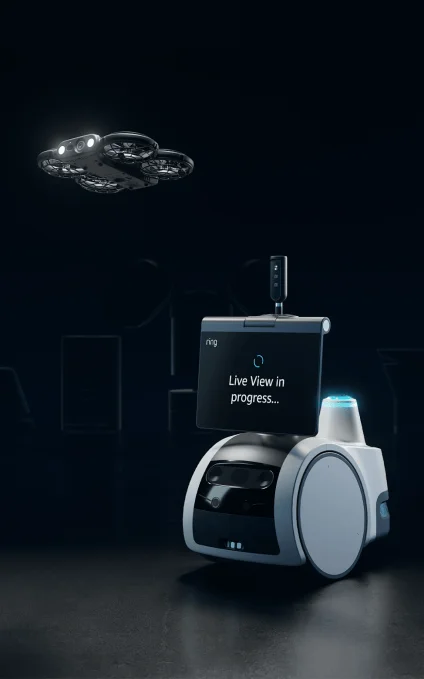
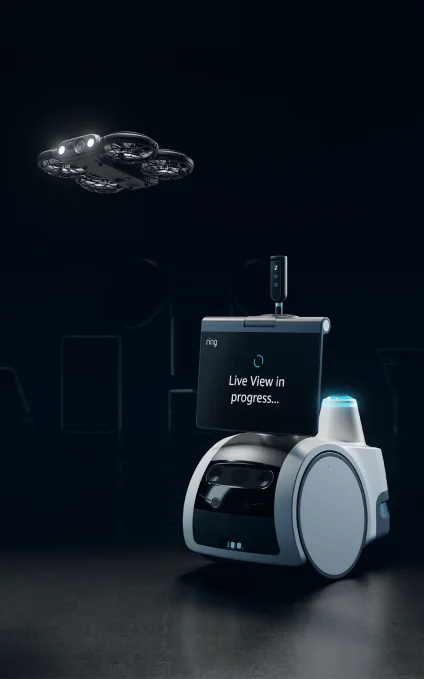
Ring is extending camera based security into mobile robotics with two devices: an indoor drone for homes and a wheeled rover for businesses. Both are designed to patrol spaces, respond to security triggers and send video to users. The products make Ring’s security system more active, but their usefulness will depend on how well autonomous navigation works in real buildings—and on whether customers are comfortable with cameras that move through them.
A drone that investigates alarms
Ring Drone Cam is a flying indoor camera intended to inspect a home while its occupants are away. It can follow scheduled patrols, and Ring says it can respond to activity from other devices in its security system. For example, if a Ring alarm detects a problem near a back door, the drone is designed to fly there and investigate. When idle, it stays in a docking bay.
The camera records video at 2K resolution and has LED lights for night use and low light. Users can control it through Amazon’s Alexa Home Map and set times for patrols. That gives the device two basic modes: planned checks while a home is empty and a targeted inspection prompted by another security device.
The response feature is a key part of the pitch. A stationary camera can show what is happening in one location; a drone that can travel to an alarm could provide a view of another part of the home. But that benefit depends on the drone reaching the right area and producing useful footage. Ring has not provided figures for navigation accuracy, flight time, noise, obstacle handling or how the device behaves when rooms are cluttered. Those details will matter to anyone assessing whether it can reliably add information during an incident.
A wheeled patrol for businesses
Ring Rover Cam is aimed at businesses and can patrol selected routes on a schedule. It streams continuous 4K video to Ring’s mobile app, with an option to start recording automatically when it detects a person. A periscope camera can be adjusted to look over obstacles, while two way audio lets a remote user speak through the robot to someone nearby.
That combination is designed for after hours checks and remote interaction. A business owner could review a live feed or address someone in the space without being there. The system’s ability to identify a person may also help trigger recording, though Ring hasn’t described how that detection performs in different lighting or busy settings. Continuous video and automated recording can make monitoring more useful, while also raising questions about who can view footage and how long it is retained.
AI Pilot maps spaces for autonomous movement
Ring says both products use its proprietary AI Pilot system, which combines specialized vision models, sensors and cloud processing to navigate. The company says the devices build a detailed schematic of a home or office by exploring it. That mapping is central to the concept: a robot needs a representation of its surroundings to move between rooms or follow a route.
Ring hasn’t shared technical details on how AI Pilot builds or updates those maps, how much processing happens on the device, or what happens when a space changes. Those limits leave practical questions for buyers. A business may rearrange furniture; a home may have narrow passages, stairs or pets. The available description doesn’t establish how the drone or rover handles such conditions, or how much setup is needed before patrols work as intended.
Ring describes the products as a guard that can keep watch without clocking out, with the Rover able to sweep a business after closing and investigate a sensor trigger overnight. That framing captures the intended convenience, but the products still rely on a person to interpret what the cameras see and decide what to do next. They extend remote visibility; the details provided don’t show that they can independently resolve an incident.
Privacy and the record of earlier attempts
Ring says the recordings are protected with TAKE, short for “Throw Away the Key Encryption,” which it calls its strongest default encryption. The company has not clarified whether either product will support local video storage. Ring’s cameras generally save recordings to the cloud, so storage location and available controls remain important questions for prospective users.
Mobile cameras also broaden the privacy questions that come with fixed cameras. A device that moves between rooms or around a workplace can capture changing views of employees, visitors and household members. Encryption addresses protection of recorded data, but the product details provided don’t explain local storage, retention periods or who can access footage. Those controls will shape whether customers see the devices as practical security tools.
Ring’s parent company has tried a related product before. Amazon introduced Astro as a home robot in 2021, then adapted it for business security after receiving feedback from Astro customers. That business version was discontinued seven months after its shift toward security. The history doesn’t determine how Ring’s new products will fare, but it shows that a mobile camera’s appeal can depend on more than its ability to move: price, day to day reliability and a clear role in existing security routines matter too.
Prices and launch timing
Ring Rover Cam is scheduled to become available on December 16 for $1,000. The Drone Cam is due on January 27 next year, priced at $270. Ring has not specified a year alongside those dates in the product details provided.
The lower priced drone brings mobile monitoring into the home, while the rover targets businesses willing to pay more for continuous video, scheduled routes and remote audio. For both, the next useful evidence will be operational: how consistently the devices navigate real spaces, how their recordings are stored, and how well the products fit into Ring’s existing systems. Until those details are clear, their strongest case is added visibility—not a replacement for human judgment.