Scaling Physical AI: Ensuring Safety Across Levels and Layers
- Gate
- Machine Learning
- Departs
- Crew
- Riccardo Mariani
- Passengers
- 404
As Physical AI gears up for large-scale deployment, establishing robust safety measures across hardware and software is paramount.
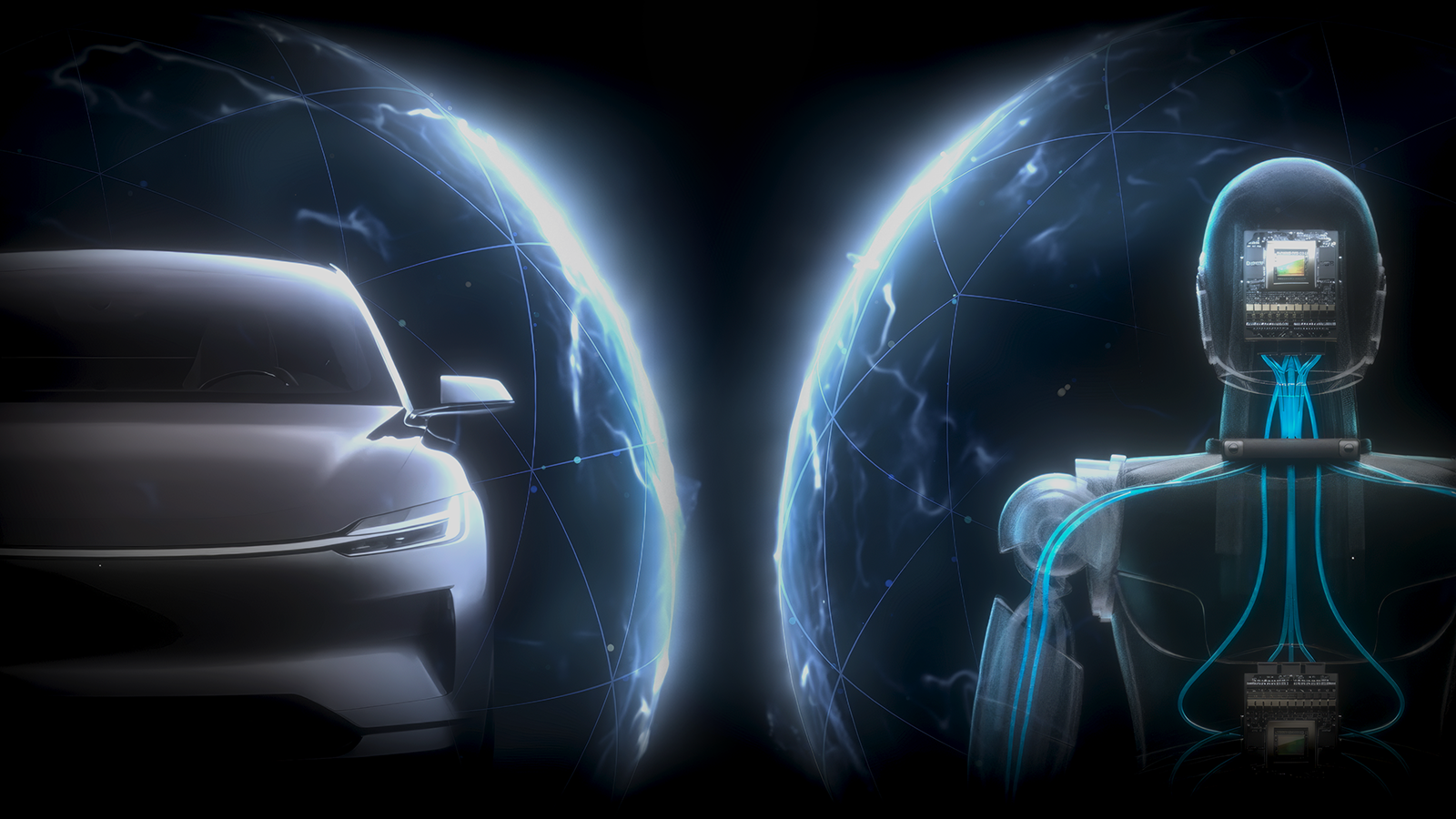
Physical AI is rapidly transitioning from experimental stages to widespread adoption. Projections suggest that by 2035, there could be an installed base of 49 million level 3-5 autonomous vehicles (AVs) according to ABI Research. Meanwhile, Omdia estimates around 60 million industrial robots will hit the markets between 2026 and 2035. As these technologies integrate into everyday environments like roads and factories, the importance of safety becomes paramount.
The concept of physical AI safety involves ensuring that AI-driven machines—ranging from AVs to humanoid robots and industrial systems—make safe decisions that lead to appropriate physical actions. Achieving this requires comprehensive safety protocols that encompass the entire deployment lifecycle, rather than a mere initial compliance check.
The Necessity of Safety for Scaling Physical AI
Years of testing and benchmarking have propelled AVs towards commercial viability. Developers are not only focused on how these systems perform under normal conditions but also on addressing potential hardware and software failures, unintended functionalities, and risks unique to AI. A similar inflection point is emerging in robotics as autonomous machines become more prevalent in shared spaces.
For physical AI deployments, manufacturers, regulators, insurers, and safety teams require concrete evidence that hardware, software, and AI behavior can operate safely, especially when human oversight is minimal or eliminated.
Why a Novel Safety Model is Essential for Physical AI
The evolution of safety standards can be defined by four crucial shifts:
- Dynamic environments call for context-aware safety: Autonomous systems in unpredictable settings like roads and factories must adapt to ever-changing conditions, ensuring safe transitions when unexpected events arise.
- AI behavior merits its own assurance: AI software testing should extend beyond traditional safety assessments, integrating design-time, runtime, and validation-time guardrails. Emerging standards such as ISO/IEC TS 22440 are being developed to tackle these unique risks.
- Continuous deployment is the new norm: As AVs and robots receive software and model updates, and as their operational tasks evolve, they may require additional safety assessments for significant material changes.
- Validation at ample scale requires simulations: Given the complexity and variety of potential scenarios, real-world testing must be accompanied by simulated environments and synthetic data generation.
These shifts imply that safety must be operationalized throughout the design, deployment, and validation processes, addressing facets from hardware to software behavior and the environments in which they operate.
NVIDIA's Safety Foundation for Physical AI
The foundation for physical AI safety is built on specialized engineering, data competency, processes, and validation practices that most companies cannot replicate independently. NVIDIA has dedicated over a decade to developing safety protocols specifically for AVs, refining capabilities in functional safety, sensor fusion, AI behavior assurance, and extensive simulation and real-world validation.
NVIDIA Halos represents the first comprehensive safety system designed for physical AI, enabling developers to implement safety across every layer from design to deployment. While the principles are consistent across AVs and robotics, the specifics around platforms, standards, and evidential requirements differ across applications.
In relation to AV development, NVIDIA's Halos includes:
- Hardware: The NVIDIA DRIVE AGX Thor features safety-engineered computing power, while NVIDIA Hyperion serves as a full-stack vehicle platform for level 4 AVs.
- Operating System and Middleware: Halos OS provides a unified software foundation underpinned by ASIL-D certified DriveOS. Halos Core and Halos Middleware facilitate crucial communication, monitoring, and system isolation.
- End-to-End Model: NVIDIA Alpamayo introduces explainable vision-language action models to enhance comprehension of less common scenarios.
- Simulation and Validation: The NVIDIA Halos Safety Evaluation Framework provides comprehensive tools and guidelines for compiling evidence to support various AV safety cases.
These elements create a cohesive connection from cloud-based AI development to in-vehicle deployment, ensuring traceability of safety evidence throughout the vehicle lifecycle.
In the context of robotics, Halos encompasses:
- Hardware: The NVIDIA IGX Thor combines accelerated computing with dedicated functional safety features tailored for compliance with IEC 61508 and ISO 13849 standards.
- Software: Halos Core for IGX offers operational functions vital for safety, including monitoring, fault detection, and integration of sensors and actuators.
- Real-time Sensing: The NVIDIA Holoscan Sensor Bridge connects sensor information to safety processing, enhancing system awareness.
- Simulation and Validation: Tools like NVIDIA Isaac Lab and NVIDIA Omniverse libraries enable exploration of robot behaviors under a variety of conditions.
- External Safety: The open-source NVIDIA Halos Outside-In Safety Blueprint incorporates external cameras and AI agents, enhancing monitoring capabilities beyond on-board sensors.
NVIDIA’s Halos AI Systems Inspection Lab plays a key role in translating safety and security requirements into systematic inspections, preparing integrations for third-party certifications.
Collaborative Development Using the NVIDIA Halos Safety Ecosystem
NVIDIA Halos fosters connections amongst various entities involved in the development and deployment of physical AI solutions, including product developers, software providers, sensor manufacturers, and certification bodies.
In the AV sector, companies like Geely, Isuzu, Nissan (operating with Wayve software), and Einride are constructing level 4-capable vehicles utilizing NVIDIA Hyperion in conjunction with Halos OS. Numerous mobility providers, including Uber, Grab, and Lyft, are employing Hyperion to facilitate the scaling of robotaxi solutions.
Members of the NVIDIA Halos AI Systems Inspection Lab include AUMOVIO, Bosch, Gatik, Hesai, Lucid, MIRA, onsemi, PlusAI, Sony, Valeo, and Wayve, with projects encompassing autonomous driving, ADAS, sensors, silicon, integration, validation, and safety.
In the robotics domain, companies like acontis and QNX provide essential embedded software for reliable safety function operation. Furthermore, companies like Advantech and NexCOBOT are developing NVIDIA IGX systems with dedicated safety features. Sensor and microcontroller manufacturers like Infineon, NXP, STMicroelectronics, and Texas Instruments are also contributing to the development of safe physical AI systems. Notably, KION Group is focused on creating safety agents for autonomous forklifts, while Agility is integrating NVIDIA IGX Thor and Halos Core into its safety framework for the Digit 5 humanoid robot.
Assurance of NVIDIA Halos' Safety Standards
NVIDIA's commitment to safety is validated by independent assessments. For AVs, TÜV SÜD has certified NVIDIA’s Automotive Product Lifecycle software and DriveOS 6.0 according to ISO 26262 ASIL D and has assessed NVIDIA's engineering processes corresponding to ISO/SAE 21434. Similarly, TÜV Rheinland has conducted an independent safety evaluation of NVIDIA DRIVE AV.
In the realm of robotics, TÜV Rheinland is currently evaluating NVIDIA IGX Thor, Halos OS, and Holoscan Sensor Bridge for functional-safety certification readiness, supplementing the earlier assessments conducted by TÜV SÜD.
Collectively, the ANAB has accredited the NVIDIA Halos AI Systems Inspection Lab as an ISO/IEC 17020 inspection entity, ensuring it competently inspects Halos integrations and aids organizations in navigating the certification processes with third-party entities.
The future for companies developing physical AI isn't just about building advanced systems; it's equally about creating solutions that are verifiable, certifiable, deployable, and trustworthy. Starting with functional safety in design is what differentiates scalable production from mere prototyping.
Discover more about NVIDIA Halos for AVs and robotics, and examine the comprehensive safety architecture for physical AI.


