NVIDIA Powers the Future of Robotaxis with Advanced AI Technology Stack
- Gate
- Machine Learning
- Departs
- Crew
- Ali Kani
- Passengers
- 432
NVIDIA's robotaxi technology stack underpins a projected $400 billion market, enabling scalable, safe, and reliable autonomous vehicle services globally.
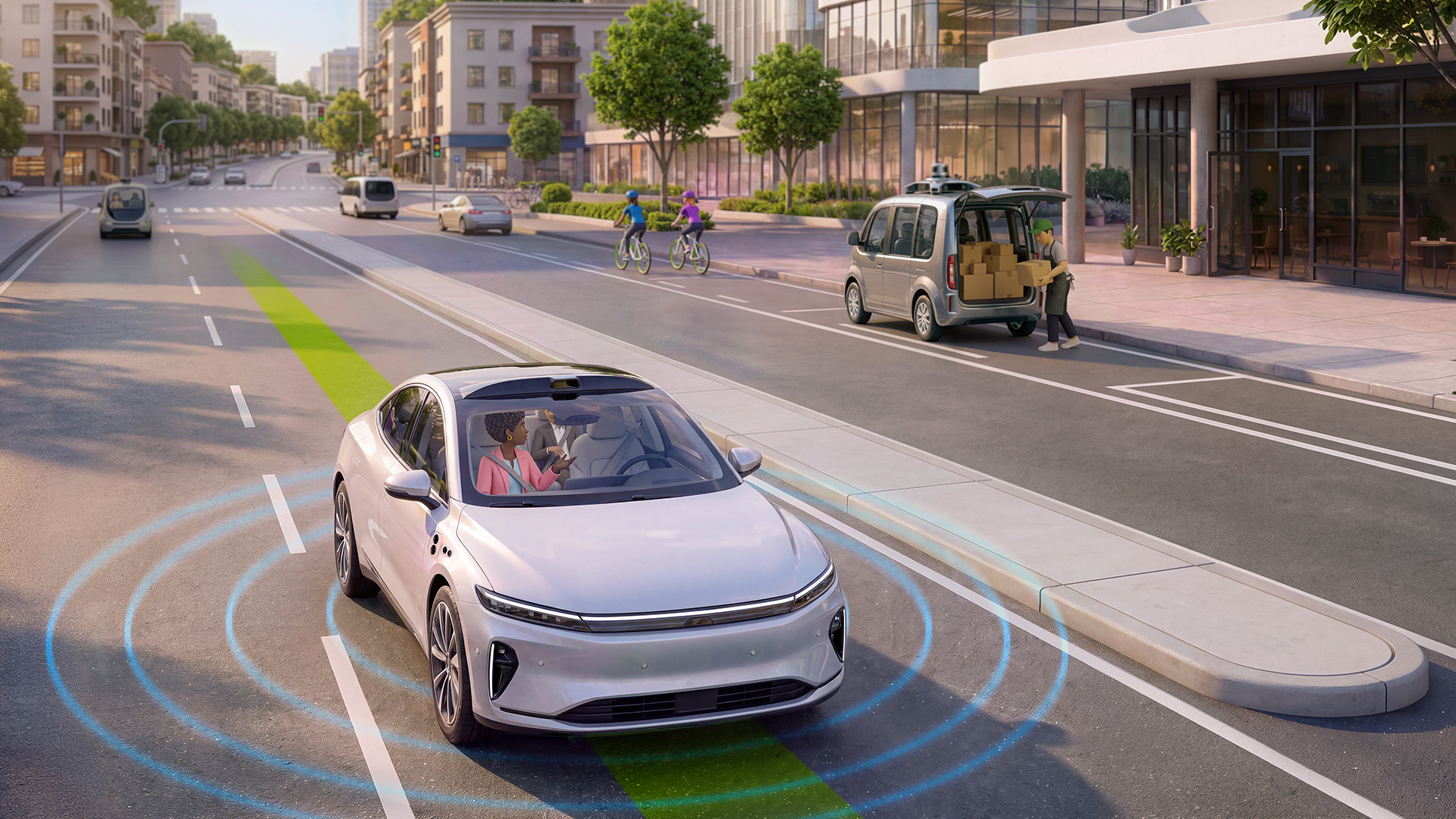
The robotaxi market is positioning itself as a significant player in the transportation industry, expected to hit $400 billion by 2035. With over 6 million commercial vehicles anticipated to be operated as driverless fleets, companies are rolling out services in some of the world's most congested urban areas.
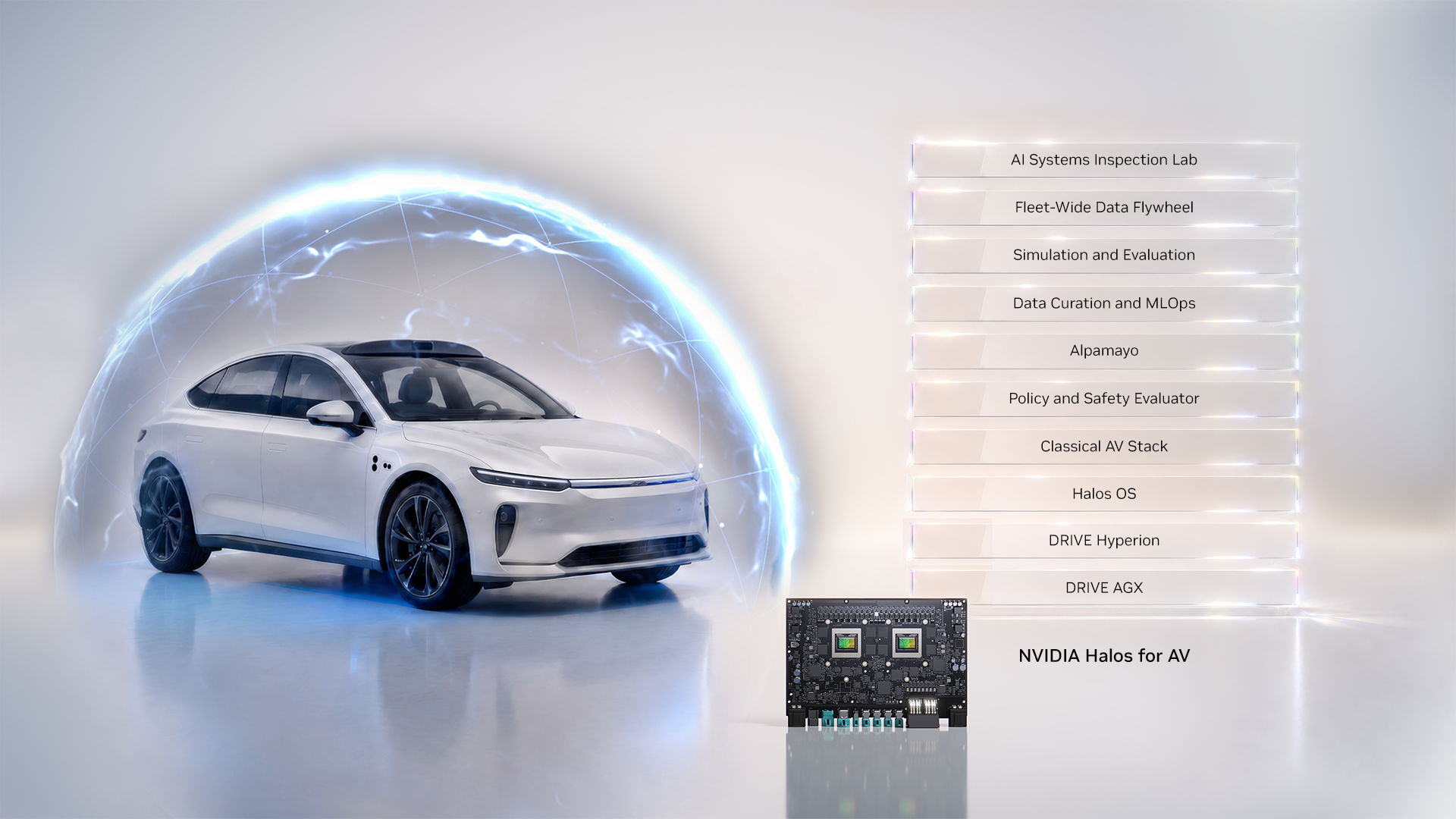
The challenges involved in deploying driverless vehicles extend far beyond just getting a single unit operational. Achieving a level of reliability and safety across a scalable fleet introduces complex compute demands that need to be addressed at every step of the robotaxi development lifecycle. This includes everything from training AI models to real-time processing during vehicle operation.
NVIDIA has emerged as a key player, providing a comprehensive platform for AI training, simulation, and safety validation. Developers can utilize their libraries, software development kits, and workflows in conjunction with their existing technology stacks. Currently, every well-known robotaxi program, including those that are commercially operational, is leveraging NVIDIA’s modular architecture for AI training, simulation, and in-vehicle computing.
Understanding the Robotaxi Technology Stack
The robotaxi technology stack comprises a set of technologies essential for developing, validating, and deploying autonomous vehicles (AVs). It encompasses areas such as data curation, AI model training, and in-vehicle computing, leading to the realization of effective driverless systems.
NVIDIA's approach integrates these capabilities into a three-computer model: a training computer, a validation and simulation computer, and an in-vehicle system.
1. Training Computer: NVIDIA DGX
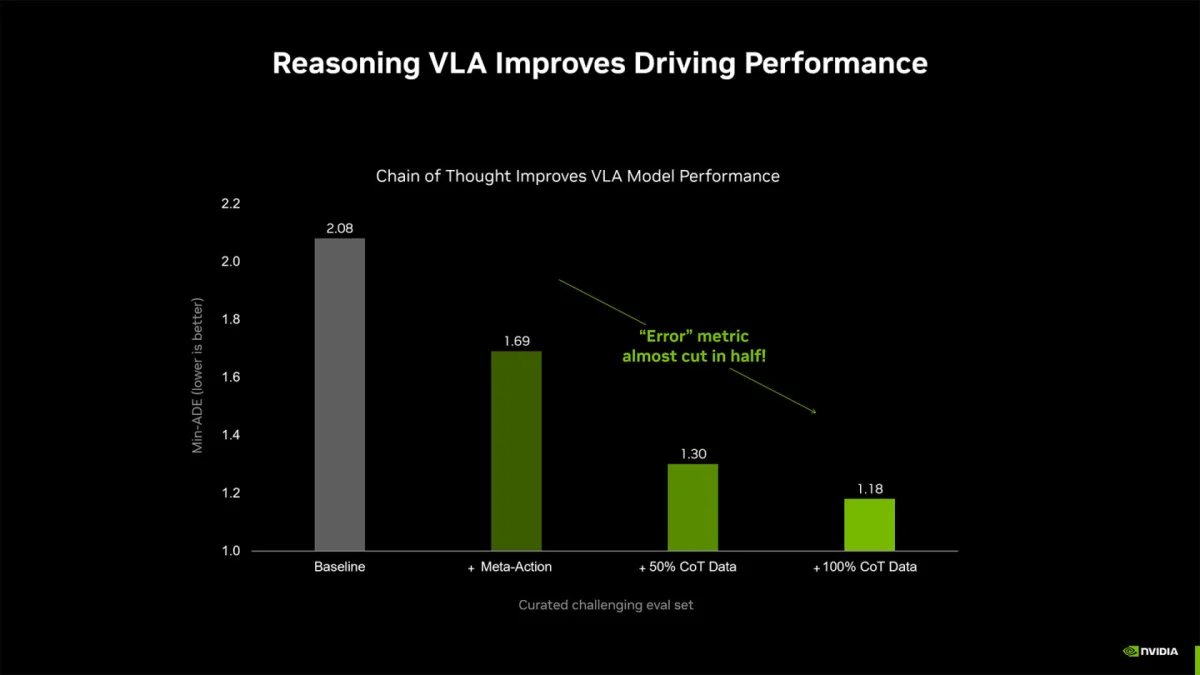
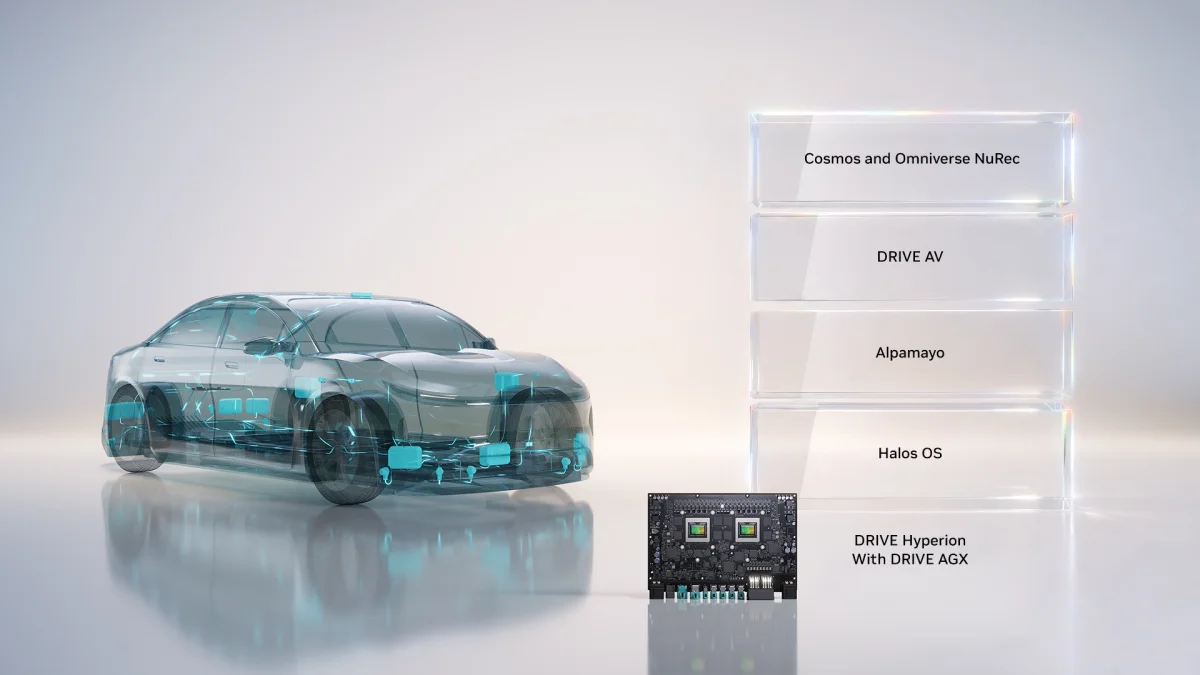
Advancements in robotaxi intelligence hinge on the integration of extensive fleet data into increasingly sophisticated AI models. NVIDIA’s DGX systems serve as the backbone for training these models. The NVIDIA Alpamayo suite provides essential components like open reasoning vision language action (VLA) models, simulation frameworks, and physical AI datasets, all adaptable to specific developer needs.
These reasoning models are engineered to tackle complex AV challenges by segmenting difficult driving situations into manageable phases, systematically navigating through each, and determining the safest trajectory. NVIDIA also offers diverse physical AI datasets, reinforcement learning templates, and guidelines for post-training optimization.
2. Simulation and Validation Computer: NVIDIA Omniverse and Cosmos on NVIDIA RTX PRO
Physical mileage alone can't capture all possible driving scenarios, especially rare or complex situations. To address this, NVIDIA Omniverse NuRec reconstructs real-world scenarios from sensor data, while NVIDIA Cosmos generates variations of those situations, allowing thousands of real-world scenarios to be transformed into countless combinations of behaviors, traffic conditions, and sensor inputs.
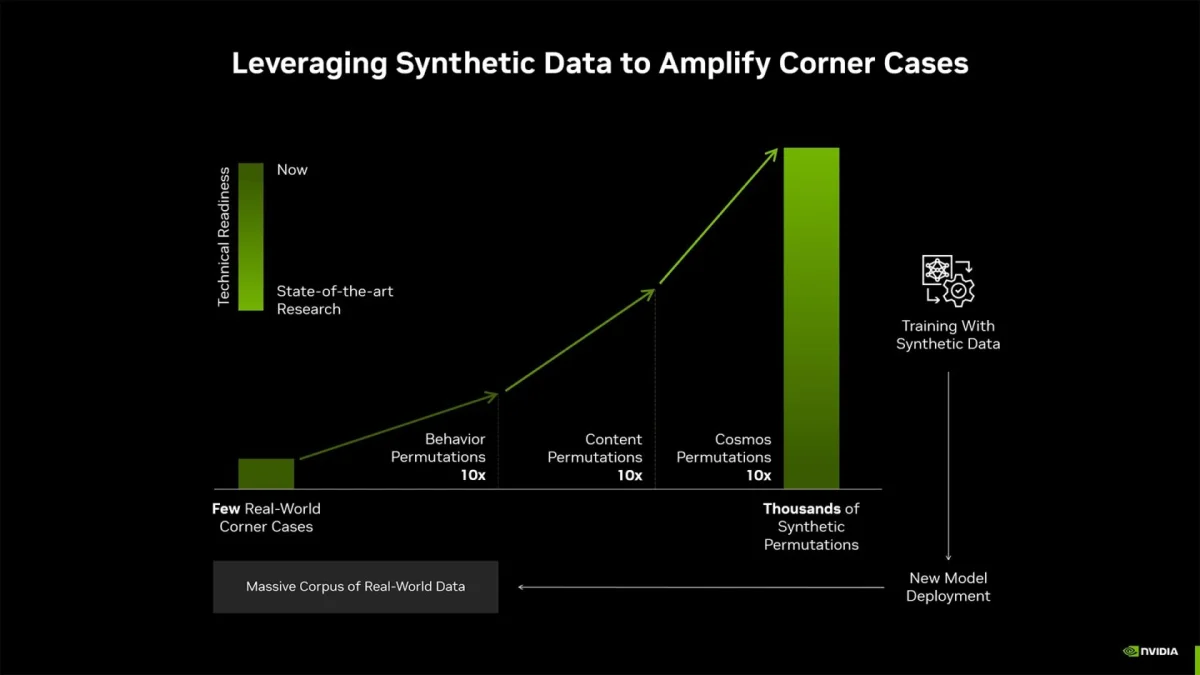
Both the Omniverse and Cosmos platforms rely on NVIDIA RTX PRO Servers, facilitating closed-loop simulation and validation. The NVIDIA AlpaSim simulation framework extends these workflows by evaluating reasoning-based autonomous-driving models, helping developers identify potential weaknesses before deployment.
3. In-Vehicle Computer and Sensor Architecture: NVIDIA Hyperion with DRIVE AGX
The NVIDIA Hyperion platform represents a modular in-vehicle compute and sensor architecture tailored for level 4 robotaxis. Hyperion 10 utilizes dual NVIDIA DRIVE AGX Thor systems-on-a-chip, integrating numerous high-definition sensors for comprehensive environmental detection and operational safety.
This advanced architecture supports real-time sensor fusion and fail-operational driving capabilities, thereby enhancing overall safety. The dual DRIVE AGX Thor system excels in handling modern AI workloads, including perception and reasoning tasks.
Additionally, NVIDIA Halos offers a rigorous safety framework, including continuous testing and simulation from cloud to vehicle.
Global Adoption of NVIDIA’s Robotaxi Technology Stack
NVIDIA's technology has already permeated all major markets where commercial robotaxi services are emerging, including Asia, Europe, North America, and the Middle East. Mobility providers and automakers are actively adopting NVIDIA’s robust three-computer stack to innovate and scale their AI models while ensuring rigorous validation and safe deployment.
Significant Partnerships in Scaling Robotaxi Services
- Uber aims to operate NVIDIA Hyperion-backed robotaxi services across 28 cities by 2028, collaborating with multiple partners to curate AV data.
- May Mobility leverages the NVIDIA platform to launch autonomous ride-hailing services including pilot projects through Lyft.
- Bolt is advancing the development of AV technologies across Europe using NVIDIA technologies.
- Lyft plans to apply NVIDIA Hyperion to its upcoming autonomous fleets.
- Waymo is collaborating with NVIDIA in the development of its autonomous computing systems.
- WeRide plans to introduce Hyperion-powered vehicle solutions in key Southeast Asian markets.
Advancing Robotaxi Intelligence through Partnerships
Partners in the robotaxi space are increasingly turning to NVIDIA to bolster their autonomous functionalities. Av developers like Wayve leverage the combined strengths of NVIDIA’s technology along with partners like Nissan and Uber for a robust product.
- Autobrains is working with both Uber and VinFast to develop smart robotaxis using NVIDIA technologies.
- Zoox, focused on cloud training, operates on the NVIDIA DRIVE platform.
- Momenta provides its software solutions on NVIDIA's infrastructure, while Pony.ai is developing advanced driving controllers with NVIDIA tech.
- Tensor is utilizing NVIDIA DRIVE AGX Thor for its Robocar developments.
- Waabi is merging into the robotaxi sector with deployments powered by NVIDIA platforms.
- TIER IV is collaborating with Isuzu to deploy autonomous buses.
Moving from Development to Production
As the technology matures, automakers like Tesla and Mercedes-Benz are integrating NVIDIA frameworks into their upcoming autonomous systems. This integration enhances predictive models aimed at ensuring safety and performance during operation.
- Tesla employs NVIDIA supercomputers for training its vehicle AI systems.
- Mercedes-Benz collaborates with NVIDIA and Uber to develop a fully integrated robotaxi ecosystem using the latest tech advancements.
- Stellantis and Wayve are employing NVIDIA tech for their L4 services.
- Hyundai Motor alongside Kia is also enhancing its data-driven systems through NVIDIA's collaboration.
- Geely and its partners plan to develop and commercialize robotaxi services using NVIDIA technology.
- Zeekr, part of the Geely Group, has integrated DRIVE AGX Thor to centralize vehicle control.
This comprehensive approach from platform to vehicle ensures optimal performance and safety in scaling robotaxi fleets.
For a closer look at NVIDIA’s robotaxi development solutions, visit their complete platform for robotaxi development.


