Modal's New Features: Static IP Proxies, Enhanced Slack Integration, and Live Resource Monitoring
- Gate
- Machine Learning
- Departs
- Crew
- Richard Davis
- Passengers
- 928
Modal introduces new features including static IP proxies, Slack integration for alerts, and a real-time usage dashboard for effective resource management.
🕳️ Static IP Proxies
Modal now enables users to route outbound traffic through static IPs dedicated to their workspace. This development simplifies secure connections to databases and other private resources, allowing teams to keep these critical assets shielded from the public internet. For businesses, ensuring that sensitive data remains inaccessible via public IP addresses is not just a technical consideration—it’s a matter of compliance and risk management. With the rise in cyber threats, organizations must prioritize network security, and static IP proxies play a key role.
Companies can set these static IP proxies to ensure consistent and private data access, which is essential for operations that depend on stringent security protocols. These dedicated IPs enhance predictability in network traffic, reducing issues such as geo-blocking and IP-based restrictions that can hinder access to necessary resources. The value here is clear: organizations are increasingly looking for ways to fortify their data integrity while maintaining operational efficiency.
For detailed implementation steps and additional documentation, users can refer to the proxy documentation.
💬 Slack Integration
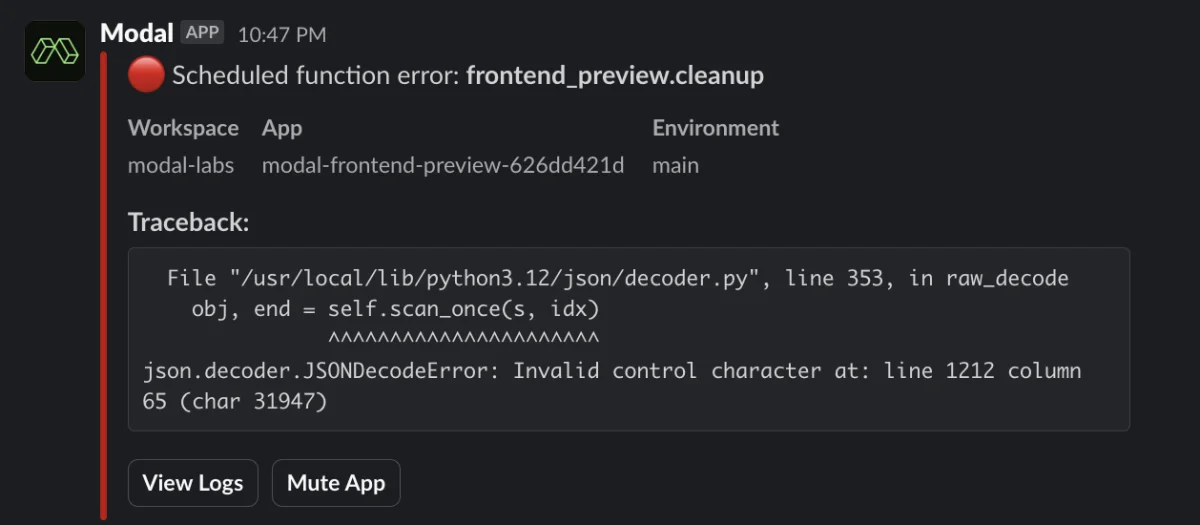
The latest addition of a native Slack integration in Modal allows users to receive real-time alerts for their applications directly in their Slack channels. This feature enhances operational awareness and responsiveness, enabling development teams to act swiftly on performance updates or issues as they arise. In high-pressure environments where every second matters, alerts delivered straight to a communication platform like Slack can significantly reduce response times.
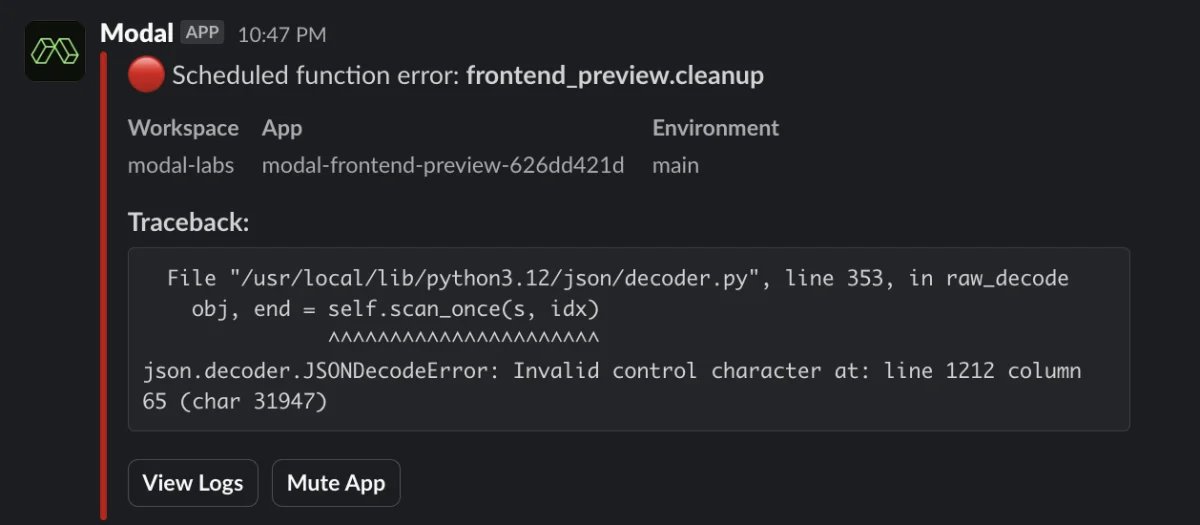
Real-time notifications can streamline workflows, but they also raise questions about information overload. Users must balance the flow of alerts to ensure that the most critical updates are prioritized without drowning in minor notifications. More information on setting this up can be found in the Slack notifications guide.
🌈 Live Usage Dashboard
To improve resource tracking, Modal introduces a live usage dashboard. Users can navigate to the Live Usage section in their dashboard to monitor resource consumption across all applications in their workspace. This feature provides a clear visual representation of active resources, thereby facilitating better resource management and planning. Monitoring resources in real-time is increasingly vital in cloud environments, as it allows teams to respond to usage spikes and optimize allocations proactively.
Recognizing patterns in resource utilization can lead to cost-saving measures and improved efficiency. Want to avoid unexpected overages? Keeping an eye on usage metrics can be a game-changer in budget management. Users can access this feature by expanding the Active Resources section in their dashboard.
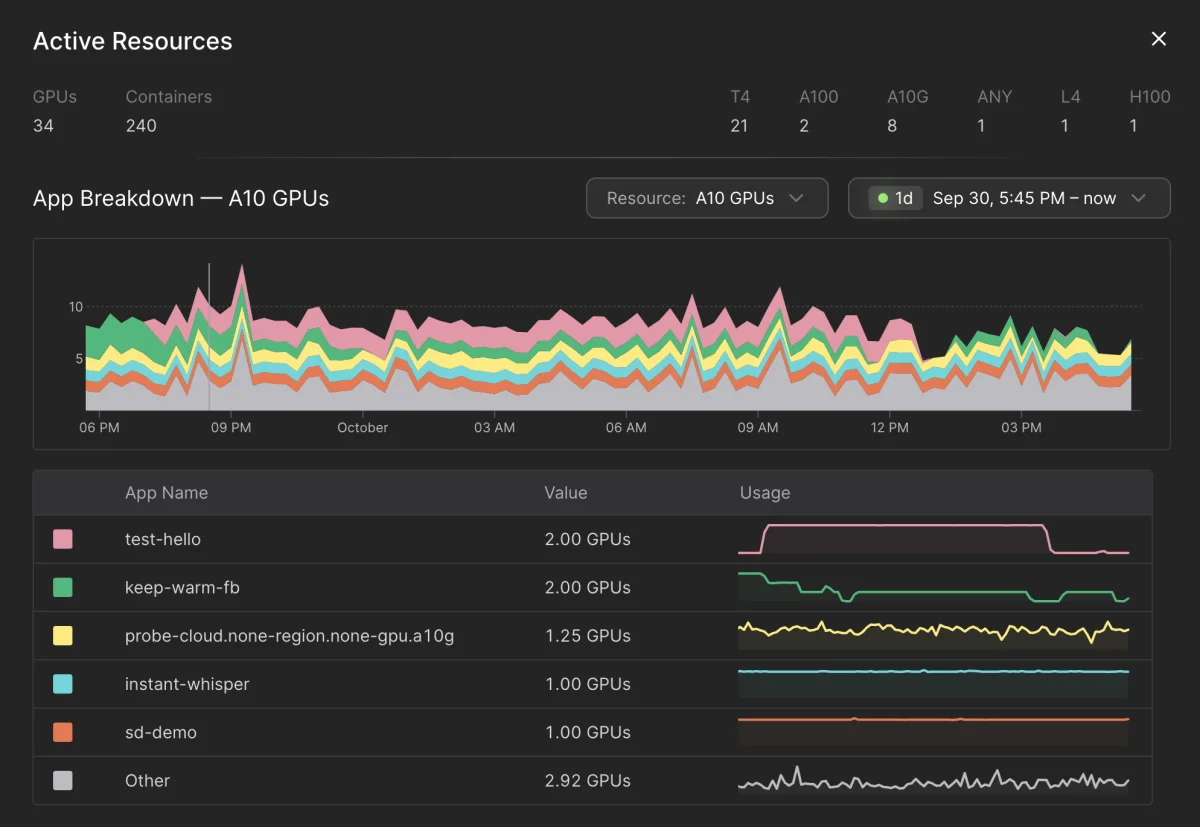
For more insights on usage tracking, visit the appropriate documentation page.
🍁 GPU Fallbacks
Modal now offers the capability to specify GPU fallbacks for functions, maximizing the range of resources available for function execution. This feature allows users to draw from a broader pool of GPU resources, ensuring that jobs are completed efficiently even under fluctuating resource availability. If you're working in this space, you'll appreciate that resource availability can often vary, and relying on a single GPU cluster can lead to bottlenecks and delays.
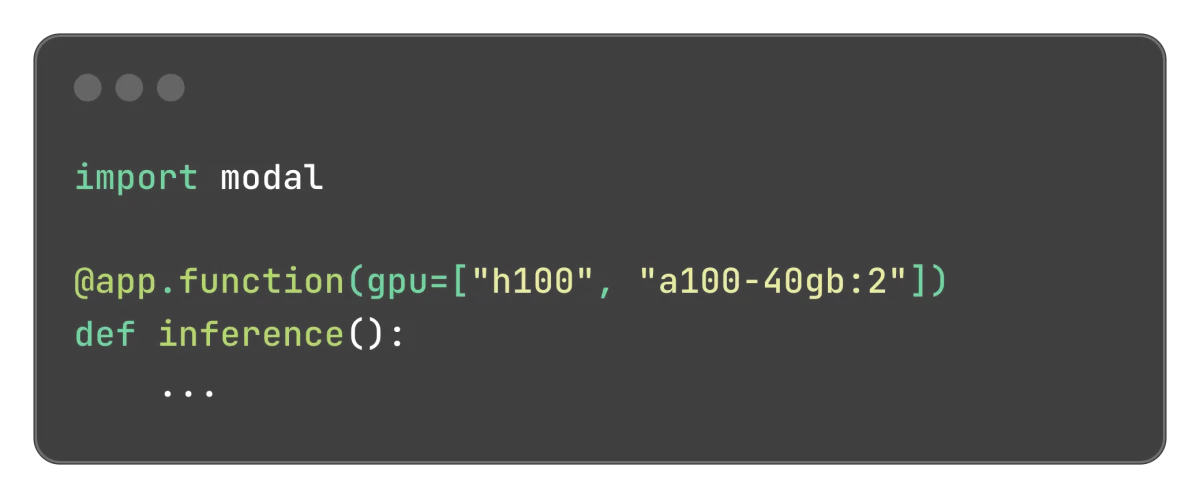
By employing fallbacks, teams can maintain uninterrupted workflow and enhance resilience during peak demand periods. This flexibility is essential as AI applications become more complex and resource-intensive. Details on how to implement GPU fallbacks can be accessed in the GPU documentation.
👩💻 Client Updates
To benefit from the latest updates, users can run pip install --upgrade modal. Highlighted updates include:
- CLI: The
modal shellcommand now accepts a container ID, which lets users shell into a running container for immediate interaction. This feature can significantly speed up debugging and testing. - Functions: Improved memory snapshotting support now caters to parameterized functions, allowing for more dynamic usage scenarios.
- Sandboxes: New
StreamTypecontrols facilitate better management of output handling viaSandbox.exec, streamlining the development process. - Controlled Network Access: The introduction of the
cidr_allowlistargument enhances the networking capabilities of sandboxes, allowing for controlled access to specified IP ranges. This can help tighten security for development and production environments. - ASGI Compatibility: Modal now supports Lifespan protocol, broadening the framework’s compatibility for application development.
🔮 Founder’s Predictions on the AI Market
In a recent blog post, founder Erik elaborates on anticipated trends in the AI market, discussing how GPU consumption patterns might evolve. He underscores Modal's commitment to adapting GPU supply capabilities to meet the changing demands in AI technology. Reflection on these trends not only underscores Modal's strategic positioning but also highlights the wider implications for resource management in the industry. Companies that anticipate these shifts will find themselves better equipped to navigate upcoming competition.
For detailed insights, read the full article here.
🎨 How to Run Advanced Models
With increasing model releases, the Modal content team remains busy. Recent advancements include:
- Stable Diffusion 3.5: Stability AI recently released this updated image diffusion model, available in three variations (Large, Turbo, Medium). Users can test it out on Modal through the Turbo example. Exploring these variations may reveal performance differences tailored to specific use cases.
- FLUX: This set of trending image diffusion models has new examples on Modal, including running FLUX fast with optimizations for PyTorch, and fine-tuning FLUX using Dreambooth.
- Mochi: A new text-to-video model is also available on Modal, with example runs accessible here. This highlights the movement towards richer media experiences.
- Moshi: This new speech-to-speech model can be explored through the voice chat example. It’s indicative of the intersection between AI and communication technologies.
As more users begin to train models alongside deployment, Modal has introduced examples focused on running long training jobs and parallelizing hyperparameter sweeps. Addressing the needs of these advanced scenarios shows a keen understanding of what developers require.
🍭 Fun Tidbits
- Modal will be attending AWS re:Invent in December. Let’s meet up! Establishing direct connections at these events can help companies foster partnerships.
- The official Modal YouTube channel has launched, featuring a video on parallelizing a hyperparameter sweep on Modal GPUs. This caters to users seeking visual learning resources.
* or should we say Tidbyt
Implications and Future Outlook
Modal's recent updates indicate a broader strategy aimed at enhancing user experience and functionality in a highly competitive market. The introduction of features like static IP proxies and real-time Slack notifications shows an understanding of the growing demands for security and efficiency. Each of these advancements suggests that Modal is positioning itself to attract teams that require reliable and secure infrastructure.
As AI applications continue to proliferate, the need for adaptive technologies will only grow. Modal's capability enhancements, particularly in GPU resource management and real-time analytics, point toward an increasing reliance on cloud-based solutions. Users should expect an intensified focus on resource optimization and security measures that accommodate the complexities of modern applications.
What's the takeaway? Staying informed about these trends can empower users to make better decisions in choosing their platforms. Increased functionality and simplified workflows may just be a stepping stone toward more integrated environments where operation efficiency takes precedence.


