OpenArt Streamlines AI Art Platform Scalability with Modal's Infrastructure
- Gate
- Machine Learning
- Departs
- Crew
- John Johnson
- Passengers
- 770
OpenArt has efficiently scaled its AI image generation platform using Modal, overcoming limitations of traditional API providers and cloud infrastructure.

OpenArt, a platform dedicated to AI image generation and editing, has effectively harnessed Modal’s infrastructure to streamline its operations and scalability. With a lean yet agile team, OpenArt has grown to support over 3 million monthly active users. This growth is largely due to their ability to create tailored image generation experiences, employing popular models and proprietary fine-tunes that allow users to achieve specific visual effects and share customized workflows.
Challenges with Traditional APIs
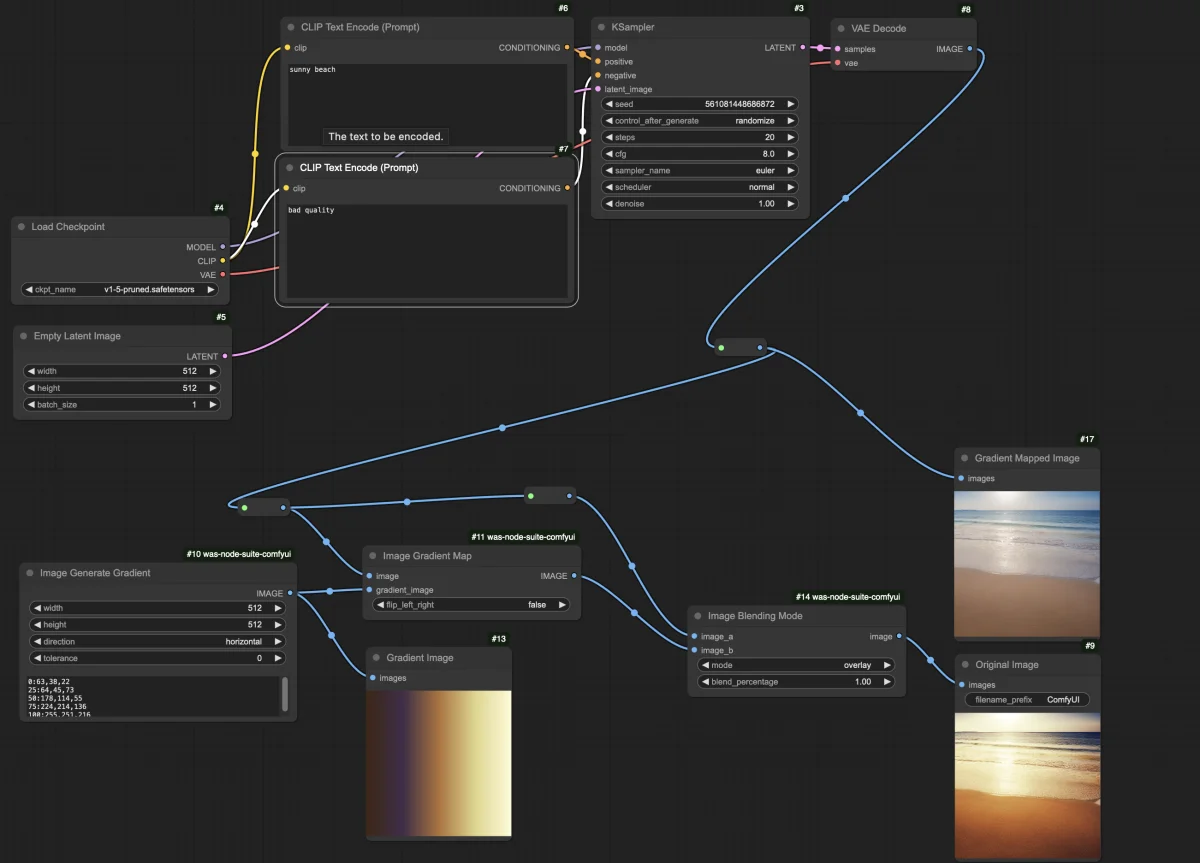
OpenArt initially leveraged API providers, such as Replicate and Fireworks, for standard text-to-image generation tasks. However, these solutions lacked the flexibility required for more complex and customized pipelines. OpenArt's distinct advantage lies in its proprietary ComfyUI workflows, integral to advanced features like style transfer and facial expression editing.
These workflows involve intricate processes that extend beyond the scope of simple API calls. For example, even when using API providers that allowed for ComfyUI integrations, OpenArt found that they were insufficient for their fully customizable needs, hampering the company’s ability to innovate in a competitive market.
Infrastructure Bottlenecks
OpenArt also explored setting up its own infrastructure using AWS and GCP, but they encountered severe bottlenecks. The deployment process was cumbersome; each modification to their ComfyUI pipeline resulted in hours of waiting time. Factors contributing to this inefficiency included complex configuration settings, protracted GPU acquisition times, and quota limitations, making it clear that a more rapid solution was necessary for a startup poised for growth.
Coco Mao, the CEO and co-founder of OpenArt, expressed frustration over the prolonged deployment cycles: “It was really a pain to run those custom ComfyUI workflows on AWS or GCP. In order to deploy one workflow it would take hours. It was a very not smooth experience.” This lack of operational agility was ultimately untenable for OpenArt as they sought to deliver continuous updates and enhancements to their user base.
Transitioning to Modal's Infrastructure
In search of alternatives, OpenArt discovered Modal, which offered a balance between customizable, high-code capabilities and a streamlined developer experience. Using Modal, they significantly reduced the time it takes to deploy their innovations. After developing a ComfyUI workflow locally, deployment on Modal involved defining a container image in Python, setting up functions to launch and execute workflows, applying a Modal decorator to specify requirements, and executing a simple command line to deploy.
This transition enabled OpenArt to go from deployment times of hours to mere minutes. Coco Mao highlighted the impact of this new infrastructure: “We believe in building solutions that are not just powerful but also elegant in their simplicity. That’s what sets us apart.” With Modal's platform capable of running arbitrary code and accommodating various files, OpenArt could seamlessly integrate its bespoke ComfyUI workflows into its services.
Autoscaling and User Demand
As OpenArt's user base expanded, Modal’s autoscaling features became pivotal. The system could dynamically scale to hundreds of GPU containers to handle increased demand without additional input from the OpenArt team. Currently, over 100 workflows are powered by Modal on the OpenArt platform, demonstrating the effectiveness of this infrastructure.
Coco Mao remarked on the speed and ease of deploying workflows thanks to the serverless architecture of Modal: “As a startup, you need to iterate on things quickly. So it’s really helpful when the developer experience and development speed is suddenly like 5x or 10x. It’s a lot easier to deploy a ComfyUI workflow because Modal is serverless, so it auto-scales really well.”
Conclusion: A Compact Team's Success
OpenArt's experience illustrates that it doesn't take a large team to create scalable and customized AI solutions. The company’s advancements highlight the importance of intelligent tools and a focused mindset in driving innovation. Modal has not only supported OpenArt in launching but also in scaling sophisticated AI products that cater to a broad user base, enabling them to remain agile in a fast-evolving field.


