Advancements in Level 4 Autonomous Driving: AI Strategies Transforming the Future of Transportation
- Gate
- Machine Learning
- Departs
- Crew
- Marco Pavone
- Passengers
- 364
Recent AI advancements are propelling Level 4 autonomous driving closer to reality, enhancing safety, efficiency, and accessibility in transportation.
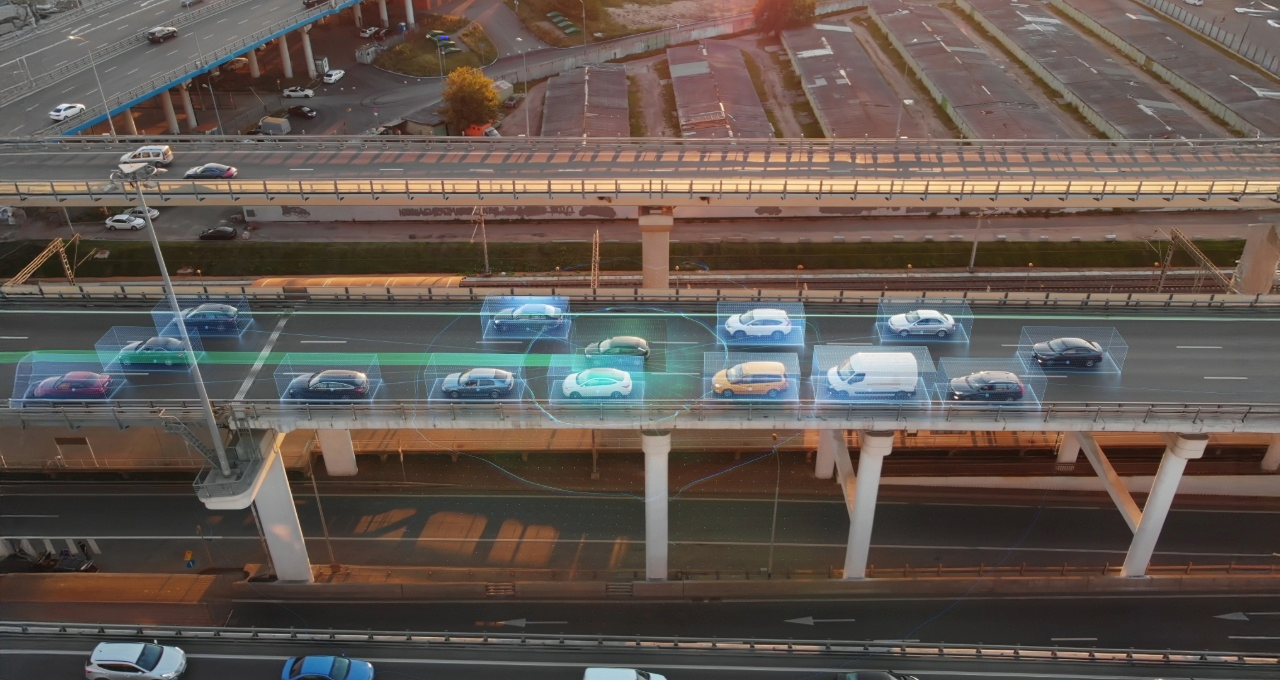
Since the Society of Automotive Engineers outlined the framework for vehicle autonomy in 2014, the landscape of self-driving technology has undergone substantial transformation. The defined levels of automation range from level 1 (driver assistance) to level 5 (full automation), marking a clear path for industry progression. Nevertheless, accurately predicting the timeline for these advancements has proven difficult. Excitingly, recent years have seen more progress in autonomous driving than the previous decade combined, revealing a marked shift in the sector's dynamics.
Understanding Level 4 Autonomous Driving
Level 4 autonomous driving is characterized by the vehicle's capability to manage all driving tasks within specified operational domains—such as designated urban areas or specific routes—without requiring human intervention. This capability is built on recent breakthroughs in AI involving foundation models, end-to-end architectures, and advanced reasoning techniques, all of which empower vehicles to navigate intricate driving scenarios more effectively.
Today, the realization of Level 4 “high automation” is fostering the shift towards scalable and commercially feasible autonomous driving solutions.
Key AI Breakthroughs Driving Level 4 Autonomy
Six primary AI advancements are converging to enhance Level 4 autonomy:
1. Foundation Models
Foundation models harness vast quantities of knowledge from internet-scale datasets, moving beyond reliance solely on proprietary driving fleet data. Similar to humans who draw on years of experience when learning to drive, these models allow vehicles to interpret unprecedented challenges—like a mattress obstructing the road—by leveraging their broad training datasets. This capability enhances the vehicle's decision-making finesse when confronting unusual scenarios, improving its overall adaptability.
2. End-to-End Architectures
Prior autonomous systems typically utilized segmented modules for perception, planning, and control, leading to potential loss of critical contextual information with each transfer. In contrast, end-to-end architectures enable a unified approach, facilitating direct processing of sensory input into driving decisions while maintaining contextual coherence. Although this architecture isn't a new concept, recent innovations have made it feasible, yielding improved decision-making and greater efficiency.
3. Reasoning Models
Reasoning vision language action (VLA) models blend various perceptual inputs, language comprehension, and action generation through detailed reasoning processes. By evaluating complex scenarios, these models echo human-like decision-making patterns. They enhance vehicle reliability and performance by outlining the rationale behind action selections, providing transparency that fosters user trust. Innovations like NVIDIA's Alpamayo 1, a chain-of-thought reasoning VLA model with 10 billion parameters, demonstrate the potential of this technology. It offers insight into decision-making processes through trajectory generation based on video input.
4. Simulation Techniques
Physical testing of driving policies in every conceivable scenario can span decades, making comprehensive on-road testing impractical. Simulation technologies, including neural reconstruction and world models like NVIDIA Cosmos, facilitate interactive training setups and generate limitless novel situations. Using text prompts, developers can recreate varied environmental conditions—such as alterations in weather or lighting—to rigorously test and validate autonomous response mechanisms.
5. Enhanced Computational Power
The feasibility of these advancements hinges on sufficient computational resources. NVIDIA's DRIVE AGX and DGX platforms have evolved over multiple iterations, each one optimally balanced to handle current and anticipated future AI workloads. Designing systems with these demands in mind ensures they operate efficiently in tandem with next-gen AI systems, underscoring the co-optimization required for practical applications.
6. Safety in AI
Ensuring safety is paramount for Level 4 autonomy, distinguishing it from lower levels. Recent advancements in AI safety introduce numerous protective measures across design, deployment, and validation phases. For instance, NVIDIA's safety architecture embeds checks into the driving model, underpinned by a modular stack to enhance validation processes. These developments are part of NVIDIA Halos, a comprehensive system designed to unify various aspects of safety within autonomous vehicle development, providing tools to facilitate secure deployments from cloud to vehicle.
The Importance of Level 4 Autonomy
The implications of advancing to Level 4 autonomy extend beyond technological feats; they promise to dramatically enhance vehicle safety, effectively mitigating human error, which currently accounts for the majority of traffic incidents. NVIDIA positions itself as a leader within this domain, providing a complete autonomous vehicle solution that spans from data cloud infrastructures to practical vehicle implementations.
NVIDIA's end-to-end compute stack is essential for progressing towards Level 4 autonomy, incorporating three vital platforms:
- NVIDIA DGX for AI training within data centers,
- NVIDIA Omniverse and Cosmos for simulating environments and producing synthetic data for testing,
- NVIDIA DRIVE AGX to process real-time sensor data in vehicles.
These platforms create a feedback loop critical for ongoing learning, testing, and deployment, accelerating innovation while prioritizing safety. The upcoming NVIDIA GTC Washington, D.C. event scheduled for Oct. 27-29 will delve deeper into autonomous vehicle safety and technology, offering sessions dedicated to exploring future trends within the autonomous driving sphere.


