AI's Emerging Role in Justice: Empowering Self-Represented Litigants
- Gate
- Machine Learning
- Departs
- Crew
- Azeem Azhar
- Passengers
- 721
AI is increasingly assisting self-represented litigants in legal battles, as seen in various countries, offering new avenues for access to justice.
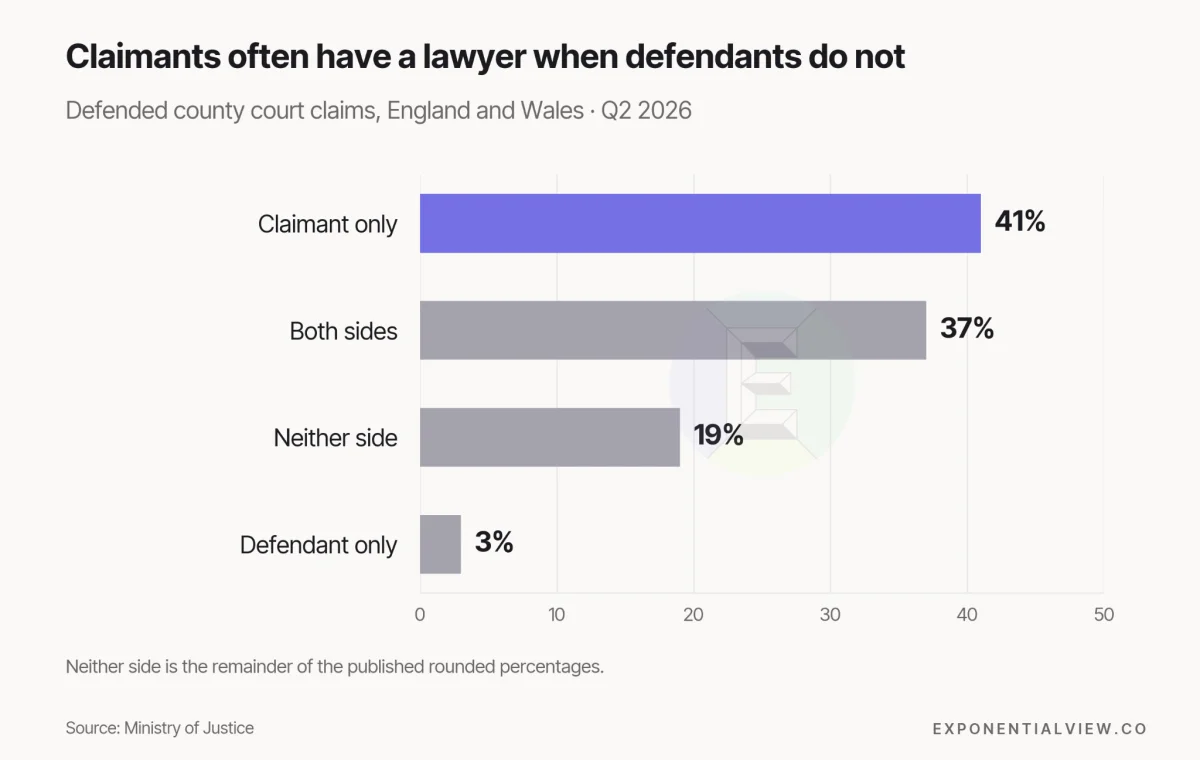
As artificial intelligence (AI) technology matures, its application within the legal domain is starting to reshape how individuals prepare for and navigate legal challenges, particularly for those without legal representation. Recent statistics reveal worrying trends in legal assistance: in England and Wales, approximately 60% of defendants involved in county court claims this year lacked legal counsel. Similarly, in the United States, a study highlights that more than 90% of consumers facing debt lawsuits are self-represented, underscoring a pervasive issue of legal access.
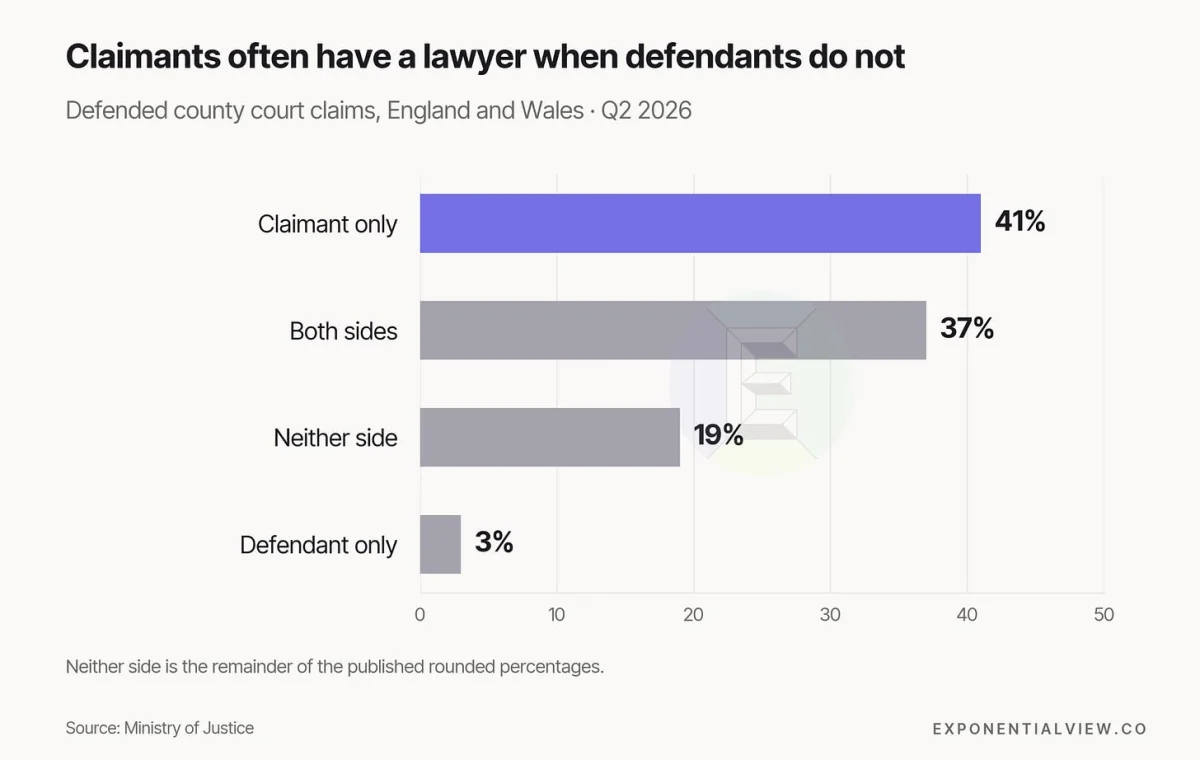
This scenario is ripe for disruption by AI, as technologies evolve to support these individuals in constructing their legal arguments and understanding their rights. For instance, in Australia, a notable case involving Greg Baker, a computing academic, illustrates the potential of AI in legal contexts. After his employer declined to convert his casual position into a permanent role, Baker utilized AI tools to augment his case. He ultimately succeeded in his appeal to the Fair Work Commission, demonstrating how AI can empower self-represented litigants in obtaining favorable outcomes against established entities.
AI Utilization Patterns in Law
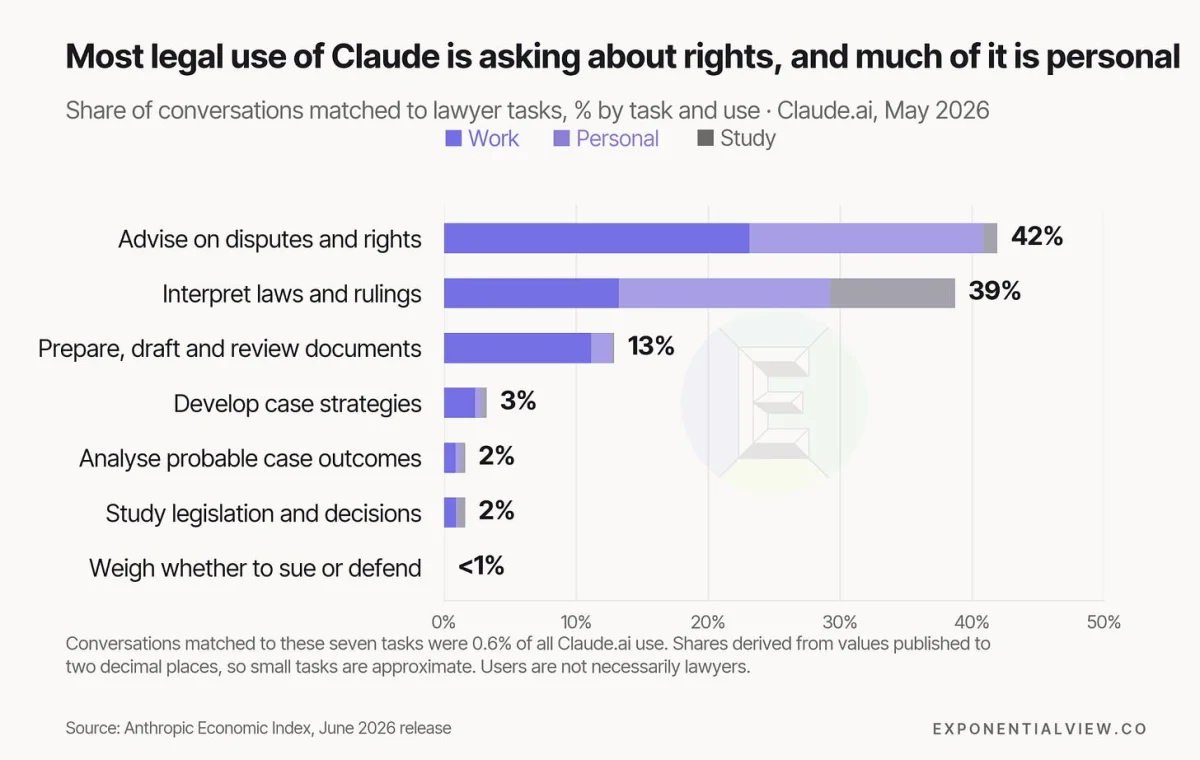
Digging into AI usage patterns, recent data reveals that around 0.6% of interactions with Claude, an AI model, in May 2026 were associated with legal tasks. When ranked among 718 occupations, this places legal work 38th—trailing behind sectors such as programming and writing. Notably, the lion's share of user queries pertained to legal rights and interpretations, indicating that a significant portion of users is looking to AI for clarity on their legal standing.
This shift towards leveraging AI for legal aid presents various implications. Traditionally, individuals without lawyers often face significant hurdles in understanding complex legal frameworks and documenting claims effectively. AI can fill this gap by providing accessible information and guidance on standard legal procedures, enabling self-representation with more confidence.
Challenges and Considerations
Despite these promising developments, there are inherent challenges in utilizing AI for legal assistance. First, the quality and reliability of legal information generated by AI tools remain crucial concerns. AI systems like Claude rely on extensive datasets, and if these datasets are inadequate or biased, the information provided may lead to poor legal outcomes. Transparency in the algorithms governing AI applications is essential to ensure that users understand the limitations and potential biases in the advice provided.
Moreover, the nature of legal work—where nuance often plays a critical role—can challenge AI's effectiveness. Legal arguments frequently hinge on specific contextual details, and while an AI may provide general guidance, the subtleties of particular cases may elude a purely AI-driven approach. Therefore, ongoing research is needed to refine these technologies and integrate human expertise effectively alongside AI tools.
The Bigger Picture - Access to Justice
AI's capacity to assist those largely excluded from conventional legal representation prompts a broader discussion about access to justice. The significant number of self-represented litigants often leads to stark inequities in outcomes, reinforcing the notion that legal support is a privilege rather than a right. Increasing access through innovative technologies like AI could serve as a democratizing force in the legal landscape.
The use of AI in legal settings could pave the way for more extensive reforms aimed at enhancing legal accessibility. Such progress aligns with emerging trends in other industries where technology is used to streamline processes and enhance user experience. Implementing user-friendly AI tools could empower more individuals to actively participate in their legal situations, potentially changing the dynamics of future court proceedings.
The combination of AI's capabilities with a user-centric approach may lead to new frameworks for how legal assistance is rendered. As this area evolves, stakeholders—including legal practitioners, technology developers, and policymakers—will need to engage in an ongoing dialogue to create effective standards and practices around the use of AI in law. Ensuring ethical use and maximizing positive impacts while minimizing risks will be critical as AI's role in justice expands.
In summary, the current landscape indicates that AI applications in the legal arena are gaining traction, particularly among self-represented litigants. While challenges remain, the trajectory suggests a potential shift towards improved equity in legal representation and outcomes for underserved populations.


