Standardization's Impact: How LLMs and MFA Programs Shape Creative Output
- Gate
- Machine Learning
- Departs
- Crew
- Azeem Azhar
- Passengers
- 341
Standardization in creative fields may limit innovation, as seen in MFA writing programs and large language models, potentially stifling unique voices.

Standardization plays a significant role in shaping creative fields, much like how the Marquis de Condorcet highlighted its importance in 1794. He emphasized that shared notations and symbolic languages serve as vehicles for knowledge advancement. According to Condorcet, “One who has learned the elements of a science and wishes to go further will find in books [...] new signs needed to rise to further truths.” This observation not only applies to science but resonates deeply within artistic domains.
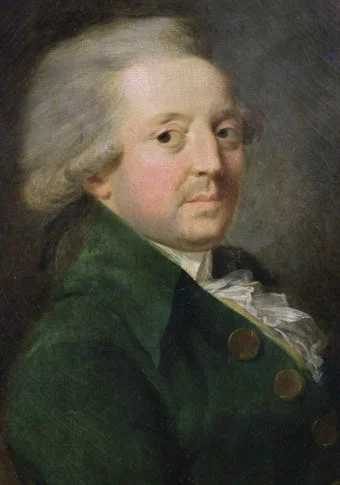
Standardization is often perceived as a two-pronged notion: it either serves to propel a field forward, or it risks flattening it. In the former case, it enables practitioners to build upon the foundational work of their predecessors, while in the latter, it can create a comforting numbness that stifles diversity and innovation. This dichotomy is especially relevant in the context of modern creative writing programs and the advent of large language models (LLMs).
In his thought-provoking essay, “How the MFA Swallowed Literature,” Erik points out how current MFA programs have significantly impacted literary fiction. These programs typically follow a standard formula, focusing on a structure that emphasizes peer workshops. This cyclical process often leads to a homogeneity in writing that prioritizes comfort over creativity, producing what Joyce Carol Oates referred to as “wan little husks of ‘auto fiction.’”
The dramatic increase in the number of MFA programs — from 15 in 1975 to approximately 250 by 2012 — highlights a system that increasingly prioritizes conformity over uniqueness. As Erik notes, the landscape of literature and the craft meant to teach it have become indistinguishable: “One ate, digested, absorbed the other.” This development raises questions about the future of literary culture, which should challenge the canon rather than reiterate it.

Consider the impact of authors like Salman Rushdie, who redefined literary conventions with works such as Midnight’s Children. Rushdie expanded the boundaries of storytelling by exploring the mythos, languages, and historical contexts of a newly independent India. His contributions transformed the English novel and gifted future writers with new frameworks from which to draw inspiration. Yet today, the prevailing normalization within MFA programs can inhibit the emergence of similarly groundbreaking voices.
The issue at hand extends beyond literature alone; it encompasses all creative fields, including the sciences. Each domain thrives on the pursuit of the new rather than the replication of past efforts. Unfortunately, some environments inadvertently foster minimal variations or what might be termed “modest speciation,” rather than a thriving ecosystem marked by rapid innovation, akin to a Cambrian explosion. When present systems prioritize immediate rewards, they tend to elevate the ordinary while suppressing the exceptional.
This is precisely where large language models (LLMs) come into play. By design, LLMs represent a standardization within their operational framework — calibrated to generate output based on specific statistical distributions. This raises pertinent concerns about their potential influence on creativity across various fields. On the surface, the text produced by an LLM may simply be a collection of coherent sentences. However, the deeper you engage with an LLM, the more apparent the underlying conceptual architecture of its design becomes.
LLMs have a tendency to amplify uniformity because their training emphasizes identifying and reproducing the middle of the distribution. Much like MFA workshops that encourage conformity, LLMs can lead to an output that is risk-averse and lacks distinctive edges. Outlier ideas or unconventional perspectives become increasingly unwelcome, limiting the scope of exploration and diversity in thought.
As we consider the implications of these trends, a critical question arises: how can we create systems that encourage the exploration of new ideas rather than merely replicating existing thoughts? In artistic and scientific practices alike, it is essential to devise frameworks that foster diversity and innovation while resisting the complacency of standardization.
Recognizing the recent increases in standardized processes in creative fields, industry participants must critically assess their methodologies. Only through an intentional effort to challenge prevailing norms can a more vibrant and diverse tapestry of creativity be cultivated. As we navigate the landscape influenced by MFA programs and LLMs, the future of creativity will rely heavily on our ability to celebrate divergence over conformity.
As Erik closes his argument, the call for a shift in narrative is increasingly clear; we must find a way to nurture the exceptional voices capable of redefining their respective fields. By disrupting the patterns of standardization, we can cultivate a richer creative environment that welcomes the next generation of groundbreaking thinkers and creators.


