Evaluating the Cognitive Impact of Increased AI Usage on Human Thinking
- Gate
- Machine Learning
- Departs
- Crew
- Azeem Azhar
- Passengers
- 515
Concerns about AI's effect on our cognitive abilities are growing, particularly regarding the risks of cognitive surrender in decision-making and attention span.
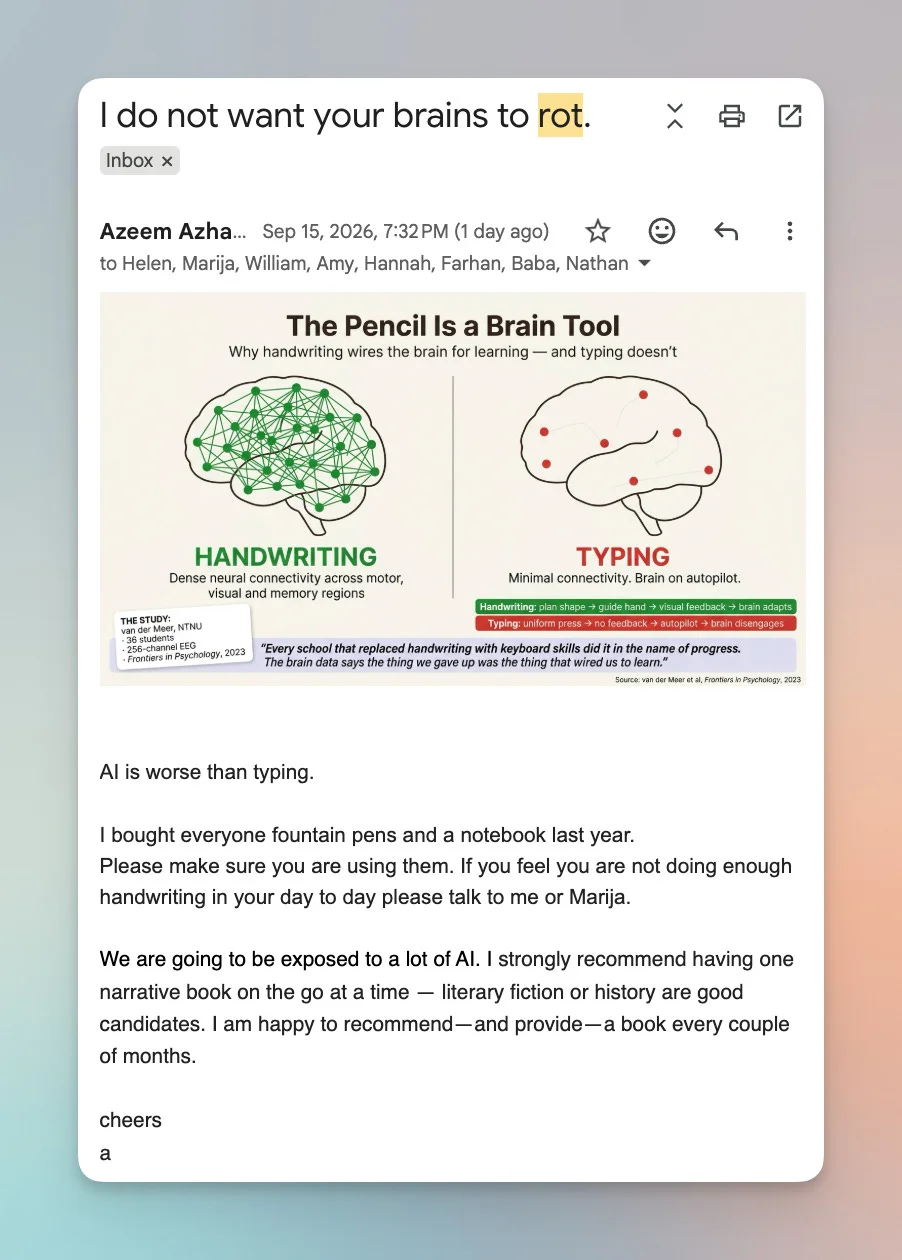
As the proliferation of artificial intelligence (AI) continues to reshape the landscape of our daily activities, there's a mounting concern regarding the potential consequences on our cognitive abilities. An email shared with a team highlights these concerns effectively, delving into the implications of over-reliance on AI tools.
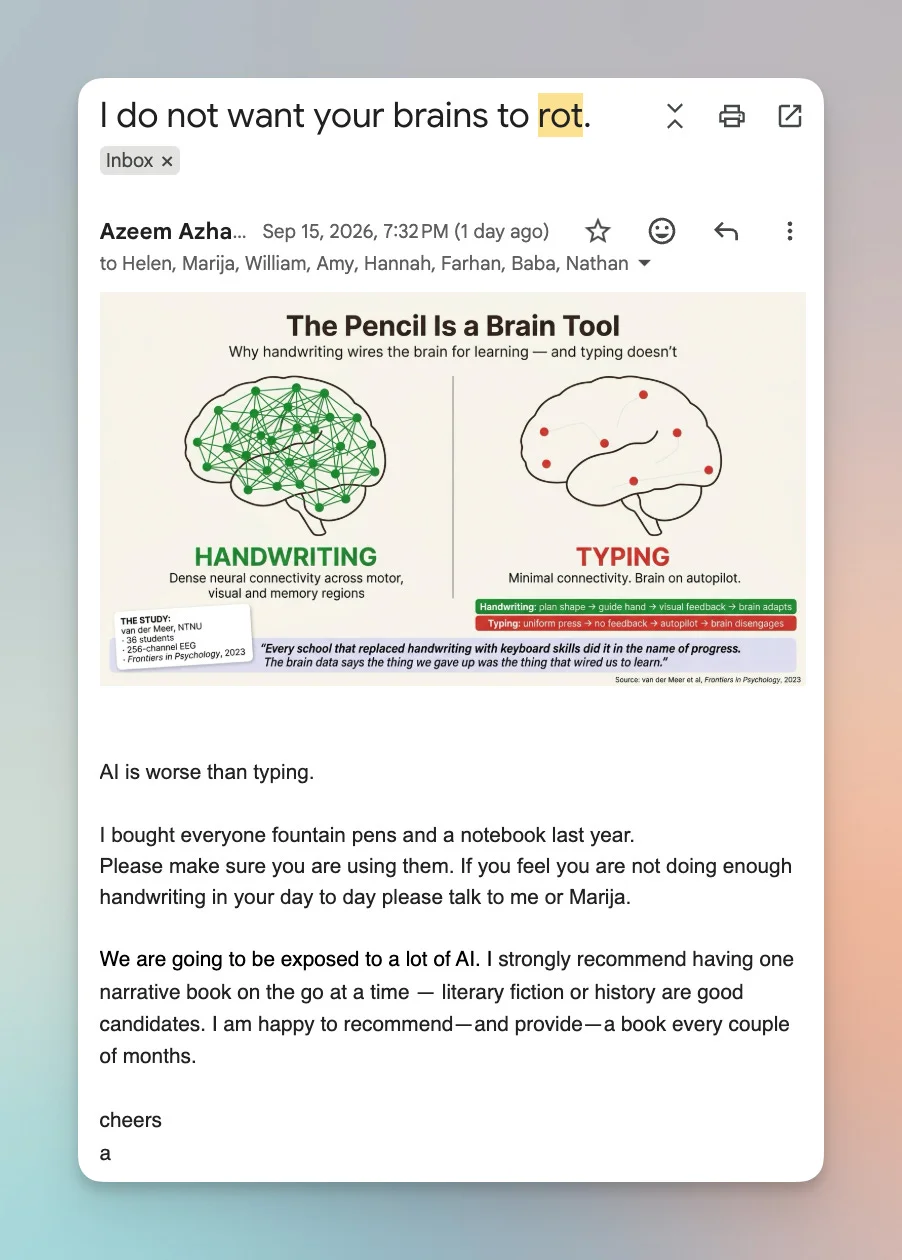
Central to the discussion is a compelling juxtaposition: utilizing AI-generated content—like visual summaries of academic papers—to express the very worries regarding cognitive deterioration. This paradox illustrates how we might unknowingly embrace shortcuts that could diminish critical thinking skills.
Understanding Cognitive Offloading vs. Surrender
A key concept in this dialogue is the distinction between cognitive offloading and cognitive surrender. Cognitive offloading refers to the strategic delegation of tasks, which can enhance our productivity without compromising cognitive function. However, cognitive surrender involves an uncritical relinquishment of our reasoning abilities. This concern has gained traction in the context of AI, suggesting that as users increasingly rely on intelligent systems, the risk of cognitive surrender grows.
In past discussions, such as in a February article, it was noted that the seductiveness and effectiveness of AI may encourage more individuals to give up their critical faculties. The question arises: Are we sacrificing our cognitive depth in exchange for convenience?
The Decline of Cognitive Practices
Recent insights from a preprint paper, although not peer-reviewed, argues that we are witnessing a cognitive divergence. This phenomenon refers to a decline in our cognitive practices, such as attention span and reading engagement. These metrics were already dropping before the rise of AI, but the introduction of advanced AI systems has the potential to worsen the situation.
As we assign simpler and more rote tasks to AI, we may inadvertently erode the very practices that support our cognitive health and efficiency. The concern is that the more we direct cognitive tasks to machines, the more we risk weakening our mental faculties, ultimately leading to a diminished capacity for deep thinking.
Impact on Productivity and Identity
The paradox lies in the productivity we gain from using AI versus the potential erosion of our identities as thinkers and problem-solvers. While AI can aid in streamlining workflows and managing tasks, it's crucial to contemplate how such tools could lead to a landscape where original thought is neglected. For developers and researchers, an essential question emerges: how to balance leveraging AI tools with maintaining mental acuity?
Practical Implications of AI-Dependent Behaviors
Practical constraints are also necessary to consider when deploying AI technologies. The cost of over-reliance on AI can manifest not just as a decline in individual cognitive abilities, but also within organizations that may prioritize efficiency over intellectual depth. As AI becomes integrated into more decision-making processes, teams may find themselves operating at a reduced capacity for analytical thinking.
This is particularly relevant in industries that thrive on creativity, strategy, and critical evaluations—such as marketing, product development, or even academia—where nuanced understanding and human insight are irreplaceable. Education, too, may need to reassess curricula to reinforce cognitive skills in light of these challenges.
Addressing the Concerns and Future Research Directions
With these concerns in mind, the scope for future research becomes clear. It's critical to investigate the long-term implications of AI on our reasoning processes and cognitive health. Researchers should explore how we can retain our cognitive strengths while incorporating AI tools into our workflows. Questions that could drive this investigation include:
- How can organizations implement AI while emphasizing the importance of critical thinking?
- What training programs can be established to mitigate cognitive decline?
- In what ways can we encourage users to remain actively engaged rather than passively reliant on AI?
Ultimately, striking the right balance between harnessing AI technology and maintaining our cognitive robustness will be key to ensuring that we do not, inadvertently, allow our brains to “rot.” The implications of this cognitive divergence and the potential for cognitive surrender require careful consideration as AI continues to evolve and permeate various aspects of our lives.
For further insights and expanding on these themes, you can read more.


