Evaluating the Performance Enhancements of OpenAI's GPT-6 Astra Ultrafast on NVIDIA Blackwell GPUs
- Gate
- Machine Learning
- Departs
- Crew
- Dion Harris
- Passengers
- 339
OpenAI's GPT-6 Astra Ultrafast leverages NVIDIA's Blackwell GPUs for significant performance gains, offering up to 8x faster token generation for developers.
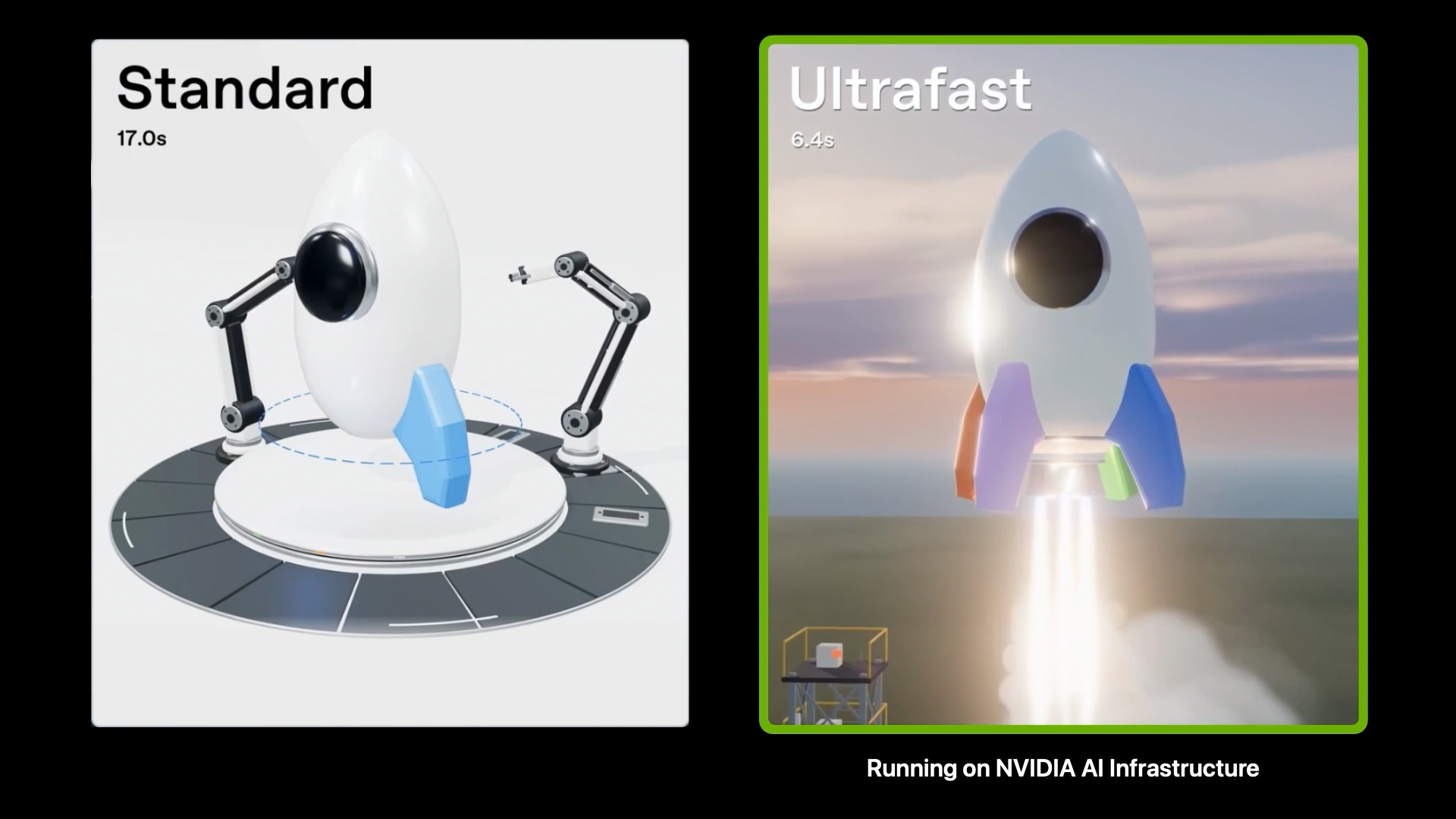
OpenAI has introduced its GPT-6 Astra Ultrafast model, which now runs on NVIDIA Blackwell GPUs. This latest offering is currently accessible via the OpenAI API, as well as to select users of ChatGPT Work and Codex. The partnership between OpenAI and NVIDIA is yielding promising results, especially in terms of speed and efficiency.
The Astra Ultrafast mode is designed to provide a substantial performance boost, featuring an impressive capability of generating tokens up to 8 times faster than the previous Astra Standard mode. For developers, this enhancement can significantly improve workflows by shortening the edit-test-debug cycles typical in programming. Rapid token generation not only decreases the time spent on generating responses between tool commands but also enhances the responsiveness of interactive applications. This means a more seamless experience when using AI tools for coding and other tasks.
Breaking down how this speed enhancement operates within typical workflows reveals its real-world impact. In scenarios where an agent generates code, utilizes a tool, checks the output, and determines the next steps, each instance of response time accumulates. Astra Ultrafast integrates into these loops, making a noticeable difference in overall efficiency and user experience. The result is a well-integrated system where both AI and human interactions can operate at an accelerated pace—a crucial factor when developers encounter time-sensitive tasks.
Philippe Tillet, the inference lead at OpenAI, emphasized the significance of NVIDIA’s commitment to tooling and documentation. He noted, “NVIDIA’s deep investment in tooling and documentation has enabled us to make our models exceptionally good at programming Blackwell and Rubin GPUs.” The collaboration facilitates the development of high-performance kernels that leverage the capabilities of NVIDIA hardware, ultimately enhancing performance across key metrics such as latency, throughput, and cost-efficiency. With Astra Ultrafast, this means quicker model responses, specifically when agents are engaged in the process of coding, tool usage, and the navigation of complex problem-solving.
Continuous Performance Improvement
The advancements in performance do not end with deployment; they are an ongoing endeavor. OpenAI harnesses its own models to further refine the inference software that operates on NVIDIA GPUs. This capability is key, as it allows developers to continually test and implement enhancements, leading to faster model responses and more efficient infrastructure over time. This iterative approach signifies a notable shift in how AI performance can scale and adapt, promoting sustained improvements beyond initial rollouts.
Uday Ruddarraju, OpenAI’s chief technology officer of compute, echoed this sentiment by stating, “Our work with NVIDIA is helping us make AI faster and more useful. We used our internal models to optimize inference on NVIDIA GPUs, and NVIDIA’s programmability helped us deliver the acceleration behind Astra Ultrafast.” This ongoing collaboration highlights a commitment to leveraging internal and external capabilities for maximizing performance along the software-hardware continuum.
The programmability of NVIDIA's platform provides an added layer of flexibility that is beneficial for developers and researchers. It allows for the reuse of computational resources across various stages such as training, inference, and reinforcement learning as models continue to evolve. This adaptability is crucial for operations requiring diverse workloads, as it enhances resource utilization and prevents unnecessary over-provisioning for different tasks, thereby optimizing cost-effectiveness.
For developers eager to explore these enhancements, GPT-6 Astra Ultrafast is readily available via the API. The Ultrafast guide offers comprehensive information regarding accessibility, pricing, and implementation details. As the capabilities of models like Astra Ultrafast continue to improve, the implications for programming practices and AI interactivity are poised to reshape how developers engage with AI technologies.
In summary, the combination of OpenAI's state-of-the-art model with NVIDIA’s advanced GPU architecture signals a pivotal moment in AI tooling. Enhanced processing speeds and continual optimizations create a framework that not only meets the growing demands of developers but also pushes the boundaries of what can be achieved through AI-assisted coding and automation.


