NVIDIA RTX Spark: A Comprehensive Look at the New Era of Local AI and Gaming Performance
- Gate
- Generative AI
- Departs
- Crew
- Gerardo Delgado
- Passengers
- 581
NVIDIA's RTX Spark redefines personal computing by merging gaming, creativity, and AI capabilities, set to launch with numerous software enhancements and performance boosts.
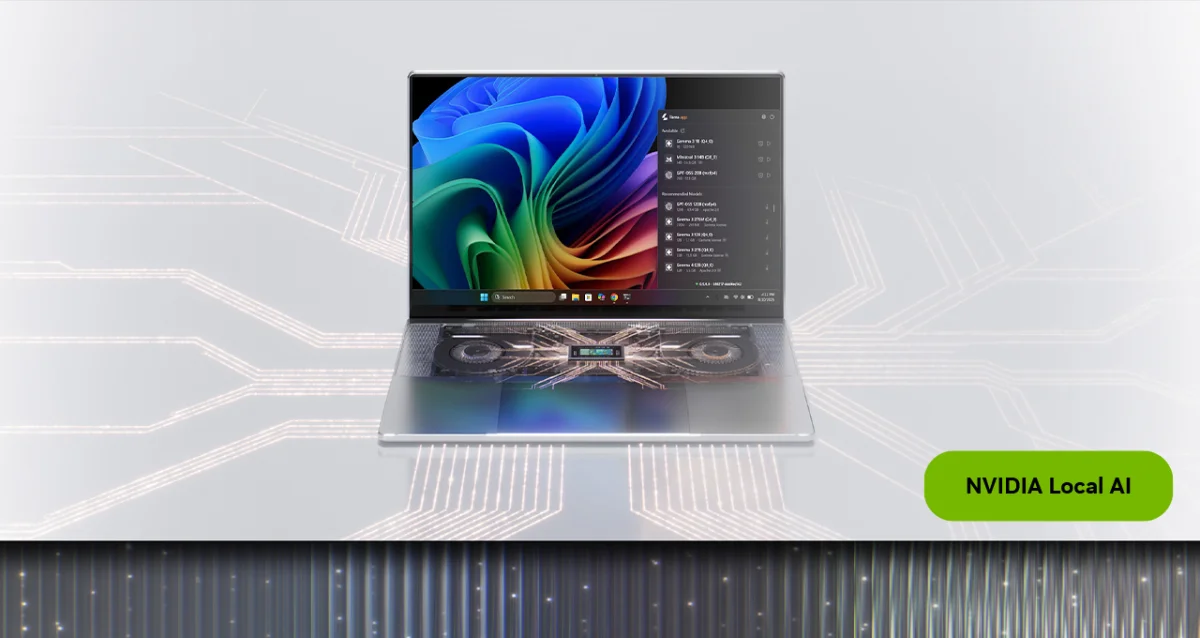
NVIDIA RTX Spark is positioned as a transformational force in personal computing, uniting the functions of a gaming device, a creative hub, and a local AI supercomputer. Boasting up to 128GB of unified memory and a remarkable 1 petaflop of AI computing power, RTX Spark embodies the comprehensive capabilities of NVIDIA's RTX and CUDA technologies, catering to the needs of gamers, developers, and creatives alike. The launch of this superchip marks a shift towards efficient local AI operations, harnessing powerful AI agents embedded within the PC.
On October 16, NVIDIA and Microsoft will officially unveil RTX Spark laptops, coinciding with a rollout of new software features and performance optimizations aimed at broadening the potential applications of local AI on this hardware.
Key Software Features and Launch Details
With the launch of RTX Spark, numerous updates are set to enhance its appeal in diverse fields:
- Enhanced Agent Capabilities:
- Top agent applications such as GitHub Copilot, Hermes, OpenClaw, Perplexity, Pi, and WorkBuddy are receiving updates to streamline their setup processes on RTX Spark. Improved security measures leveraging OpenShell and Microsoft Execution Containers (MXC) will be implemented, along with options for hybrid local and cloud AI routing.
- The NVIDIA Nemotron 3.5 Bolt 74B model, engineered specifically for agent-based artificial intelligence, will become available a day prior to the laptop launch.
- NVIDIA PAIR will transition out of beta, enhancing its functionality with support for llama.cpp.
- Creative Applications Optimized for RTX Spark:
- Adobe applications are set to double their performance, with optimizations featuring GPU acceleration to facilitate better compositing in Photoshop and enhanced playback and rendering in Premiere.
- The upcoming NVIDIA Broadcast 2.3 will introduce capabilities such as Video Super Resolution and agent Model Context Protocol (MCP) controls.
- ComfyUI will incorporate RTX video features to streamline AI-driven video workflows.
- Blender will debut NVIDIA DLSS Ray Reconstruction in its version 5.3 release next month, improving viewport interactivity.
- Development Tools Ready for RTX Spark:
- Key developer frameworks—PyTorch, Python, CUDA, and associated libraries—are now available for developers to leverage the RTX Spark’s power.
- Coding agents, including GitHub Copilot, have been optimized for smooth integration with RTX Spark workflows.
- Llama.cpp will offer support for decision models and release a companion Windows application.
- Gaming and Anti-Cheat Support:
- On launch day, a new DLSS 5 AI model will be introduced, promising significant performance enhancements in supported titles.
- The Nemotron 3.5 Bolt E4B model, specifically tailored for NVIDIA ACE game characters, is slated for release a week after the laptops.
- RTX Remix updates incorporating DLSS 5 are also scheduled for release shortly after launch.
Advancements in Local AI Agents
The landscape of personal computing is evolving as local AI changes user interactions with PCs. The popularity of agent technologies surged this year as local large language models (LLMs) have reached a level of sophistication comparable with leading cloud models. Downloads of these local LLMs have surged fivefold compared to last year, with advanced projects like OpenClaw and Hermes leading the charge.
NVIDIA is strategically positioning RTX Spark as the premier hardware platform for local agents, focusing on seamless integration, security, and ease of use.
Streamlining Agent Setup
Upon starting up RTX Spark, users encounter a “Getting Started” guide that facilitates the installation of various agent applications.
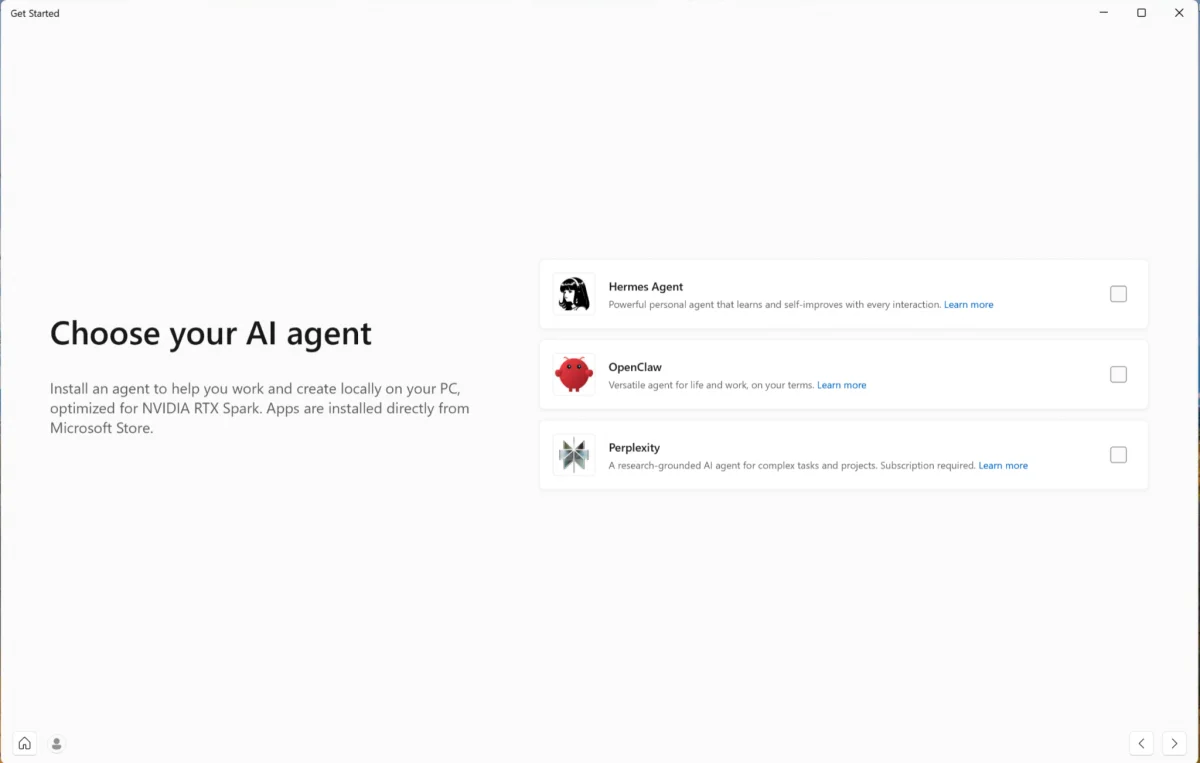
This setup is fortified with secure sandbox technology, thanks to advancements in OpenShell and MXC, which fortify operating system-level security while enhancing agent capabilities. Hermes Agent is set to fully integrate these controls by month’s end, with OpenClaw and GitHub Copilot also making use of MXC for security enhancements.
Post-installation, simplifying local AI configuration in applications like GitHub Copilot, Hermes Agent, and others is now achievable in just a few clicks. The applications recommend tailored local models optimized for RTX Spark, simplifying the user experience.
With a growing user base desiring both local and cloud model advantages, NVIDIA Switchyard introduces an open-source model routing solution that intelligently bridges the two types of models. This means users can minimize cloud reliance while achieving comparable outcomes to cloud-only processing. Upcoming integrations for routing solutions will enhance user capabilities even further.
Software vendors are enhancing their applications to facilitate connections with leading Windows programs, backed by MCP libraries and command-line interfaces. This includes NVIDIA applications, expanding the availability of CUDA-X Skills.
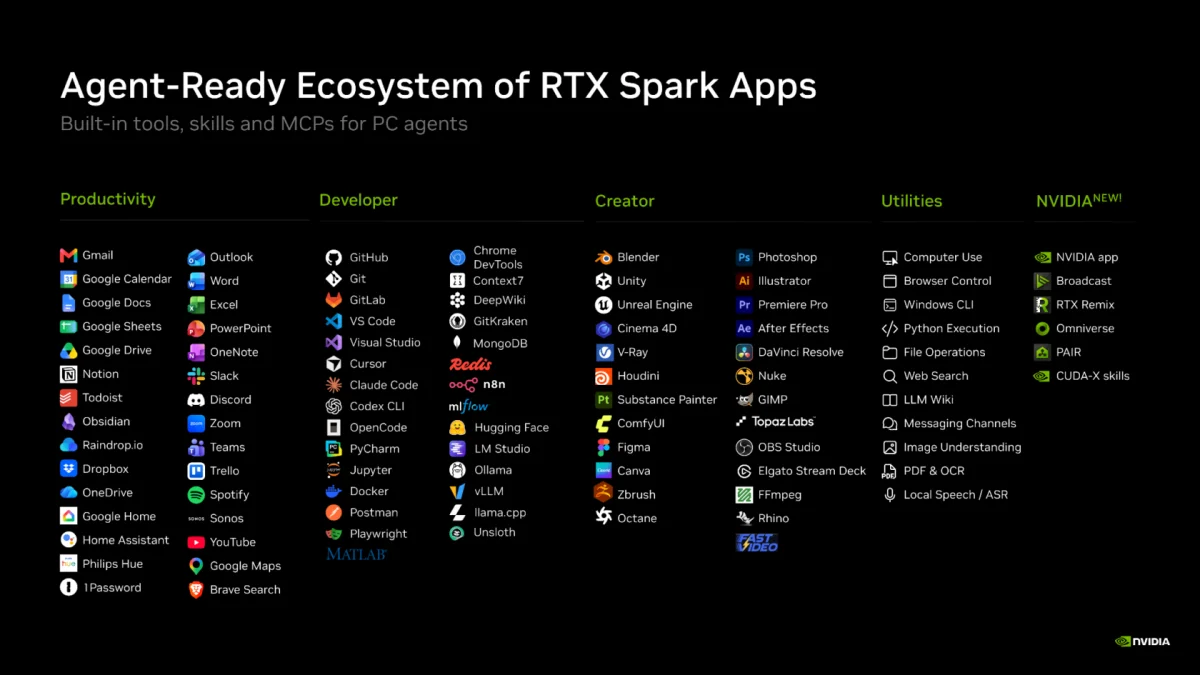
NVIDIA is also rolling out AI playbooks with the RTX Spark launch, which will help users configure their agents and establish their own customizable AI systems.
Introducing Nemotron 3.5 Bolt 74B
The new NVIDIA Nemotron 3.5 Bolt 74B, with 74 billion parameters, is designed specifically to function as a local agent on RTX Spark. Engineered with a 2-bit quantization technique and advanced training methodologies, it balances speed and intelligence effectively, outperforming density-focused models while consuming manageable memory resources.
At launch, users can access Nemotron 3.5 Bolt through various platforms, including llama.cpp, vLLM, Ollama, Unsloth, and LM Studio, as well as directly through applications like Hermes and OpenClaw. This model remains entirely open-source for developers who wish to utilize or enhance its frameworks.
NVIDIA PAIR: Optimized Personal AI Routing
NVIDIA PAIR positions itself as a personal AI router, simplifying connections across multiple PCs within a local network while ensuring efficient distribution of AI workloads. This tool automatically detects compatible devices and integrates AI models seamlessly.
Today, PAIR exits beta, introducing features like llama.cpp support, direct integration with Hugging Face models, and flexible settings for inference engines. This initiative encourages collaborative contributions from developers, demonstrating strong community involvement shortly after launch.
Accelerated Creativity with RTX Spark
Comprising over 130 enhanced applications, CUDA integration, and RTX technologies like DLSS, NVENC, and OptiX, RTX Spark enhances the productivity of creatives operating in video and image generation workflows.
Adobe’s Optimizations for Creative Applications
Adobe aims to improve essential creative tools, including Photoshop and Premiere, within the RTX Spark framework, targeting increased performance for AI-driven enhancements.
By utilizing GPU acceleration, Adobe enhances task efficiency in image editing, video rendering, and AI features implementation. The optimizations are in phased rollouts, with some features already in beta.
New Capabilities in NVIDIA Broadcast
The latest version of NVIDIA Broadcast 2.3, designed for RTX Spark, brings innovative features like Video Super Resolution and Frame Generation AI effects to both live and recorded content.
Notably, offline file processing is a new addition, allowing for top-quality processing of pre-recorded data without the constraints of real-time performance demands.
ComfyUI Expands Video Capabilities
ComfyUI expands its toolset with the introduction of RTX Video Frame Generation and HDR functionalities, allowing greater creative control over AI-generated video production.
The implementation of RTX Video Frame Generation significantly increases frame rates, while the HDR feature elevates standard footage to a new level of visual fidelity, enabling creators to export high-quality deliverables efficiently.
Blender’s Future with DLSS Ray Reconstruction
Blender’s upcoming version 5.3 is designed to support RTX Spark, introducing DLSS Ray Reconstruction to maximize viewport real-time updates, assisting artists in crafting complex scenes with visual accuracy.
Development and Deployment from RTX Spark
The shift in development practices means today's programmers are often guiding AI agents rather than merely writing code. RTX Spark creates an environment where all necessary workflows can be executed on a single device, facilitating testing, prototyping, and deployment seamlessly.
Prepared Developer Tools for RTX Spark
It’s essential for developers that resource management is optimized for RTX Spark, with NVIDIA collaborating with Microsoft to ensure all significant development frameworks are available:
- The PyTorch-CUDA build tailored for Windows on Arm is among the new offerings.
- Pioneering a native version of Python 3.15 for Windows on Arm, alongside a compatible Conda installer featuring over 2,000 packages.
- A majority of the top Python wheels (approximately 97%) are now compatible, bolstered by collaborative efforts with the software ecosystem.
Agents now spearhead most development activities, enhancing user experience and increasing the possibilities for working with NVIDIA technologies without requiring deep knowledge of CUDA.
Coding Agents Stepping into the Local AI Realm
GitHub Copilot stands out as a highly adopted coding agent, now enhanced with MXC support and a myriad of local model integrations. Developers benefit from local hardware efficiencies, significantly reducing costs associated with token consumption.
In a bid to augment local availability, Microsoft reveals its MAI 1.1 Coding Flash model for local use, enhancing model support in Windows ML as well.
Get started with GitHub Copilot on your local setup as the RTX Spark launches.
Llama.cpp Introduces Decision Models
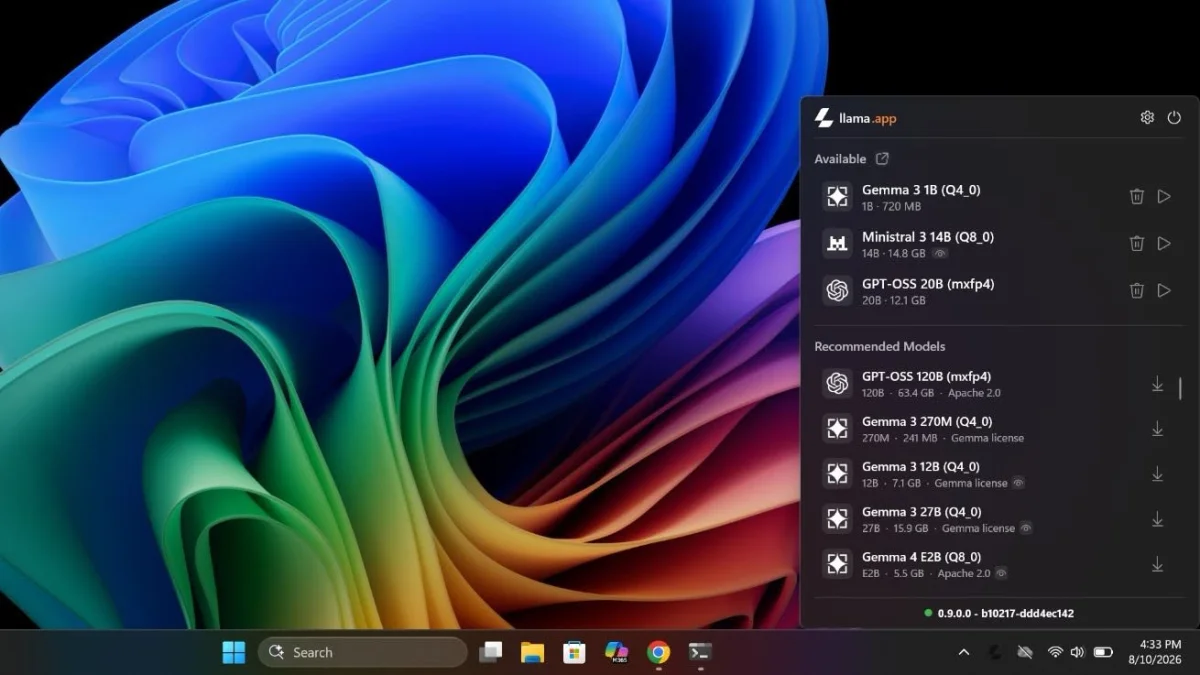
Decision models are making strides in AI development, offering agents the ability to make quick, automated decisions without profound reasoning intervals. With support for decision models now integrated into llama.cpp and Unsloth, RTX Spark users can facilitate rapid decision-making processes.
The new Windows application for llama.cpp simplifies local model management, eliminating the need for command-line interaction. This user-friendly interface supports easier interactions with local AI capabilities.
Gaming Ready: RTX Spark Launches with Extensive Title Support
Upon its release on October 16, RTX Spark will support numerous major game titles, ensuring gaming enthusiasts can immediately capitalize on its capabilities. Titles like CONTROL Resonant, Cyberpunk 2077, and NARAKA: BLADEPOINT are just the beginning, as the comprehensive library is bolstered by NVIDIA’s integration of full RTX technologies.
Enhanced gaming technologies include DLSS, Reflex, Remix, G-SYNC, and ray tracing, designed to elevate the gaming experience while maintaining fair play through collaborative anti-cheat measures.
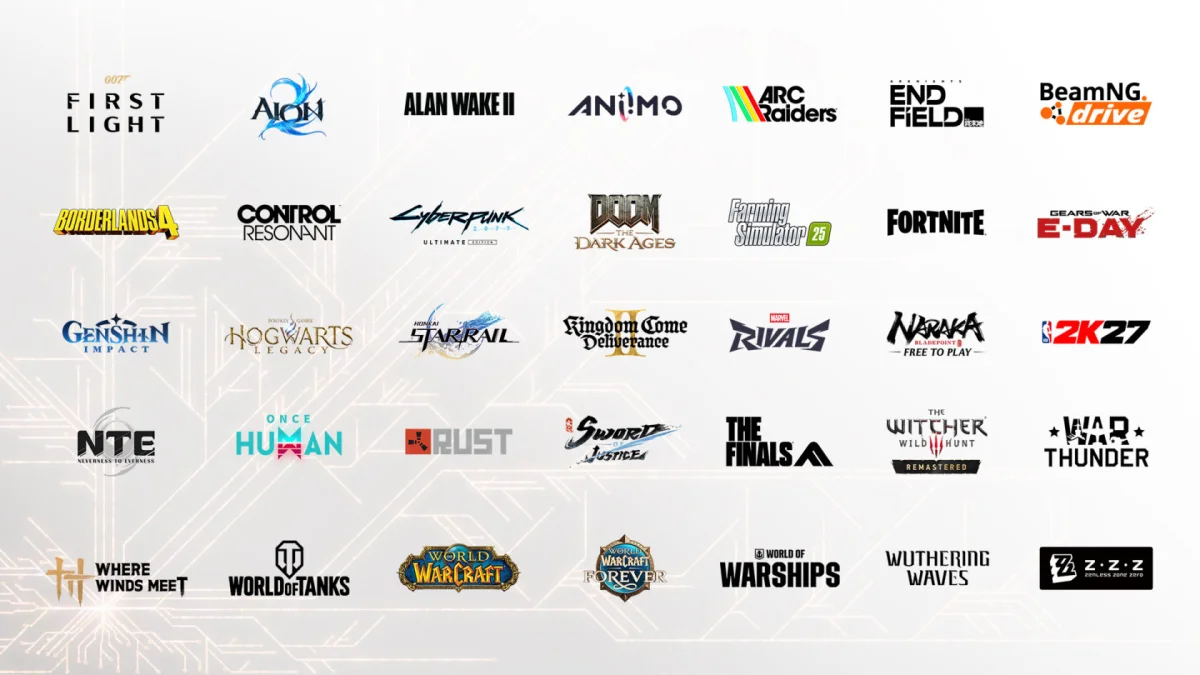
DLSS 5 and the Future of Gaming
Arriving on launch day, NVIDIA DLSS 5 ushers in a new advancement in neural rendering, utilizing AI to refine the visuals of game environments without undermining creative intent. The debut of a faster DLSS 5 AI model in titles like NBA 2K27 illustrates the potential for increasing frame rates significantly, enhancing overall performance.
Future releases of DLSS 5 will also enhance classic title remastering efforts in NVIDIA RTX Remix, allowing for better gameplay experiences in both contemporary and legacy titles alike.
Local AI Agents Revolutionizing In-Game Experiences
The third-generation SLM, Nemotron 3.5 Bolt E4B 4GB, enhances the NVIDIA ACE ecosystem, empowering developers to create interactive AI experiences within games. Early iterations demonstrate the model’s efficacy in player assist technologies and AI-enhanced gameplay.
Users can explore Nemotron's capabilities through platforms like SkyrimNET, which integrates local AI advancements into character interactions and quests for dynamically generated narratives. Nearby inference across models allows seamless switching between different AI capabilities within gaming environments.
The integration of the latest Nemotron models in SkyrimNET showcases impressive in-game interactions, enhancing gameplay depth and player immersion. Modding support will facilitate the rapid expansion of gaming experiences leveraging these local AI advancements.
Enhancing Modding in RTX Remix
NVIDIA's commitment to supporting modders is evident through streamlined updates to AI-powered texture generation tools slated for release with RTX Remix. The upcoming overhaul introduces an intuitive interface in the sidebar for easy access to AI tools, empowering modders to create more complex assets with minimal setup.
This level of integration and ease allows for an expansive evolution of gaming modding practices, unleashing creativity among developers and gamers alike.
Stay updated by subscribing to the NVIDIA Local AI newsletter, and follow NVIDIA RT Spark on X, Instagram, TikTok, and Facebook.
For further information regarding software products, refer to terms of service notices.


