NVIDIA and Microsoft Unite to Optimize AI Agents on Windows PCs
- Gate
- Machine Learning
- Departs
- Crew
- Gerardo Delgado
- Passengers
- 712
NVIDIA and Microsoft are enhancing Windows PCs with AI capabilities, unveiling RTX Spark laptops, Microsoft Execution Containers, and DGX Station for more efficient AI computing.
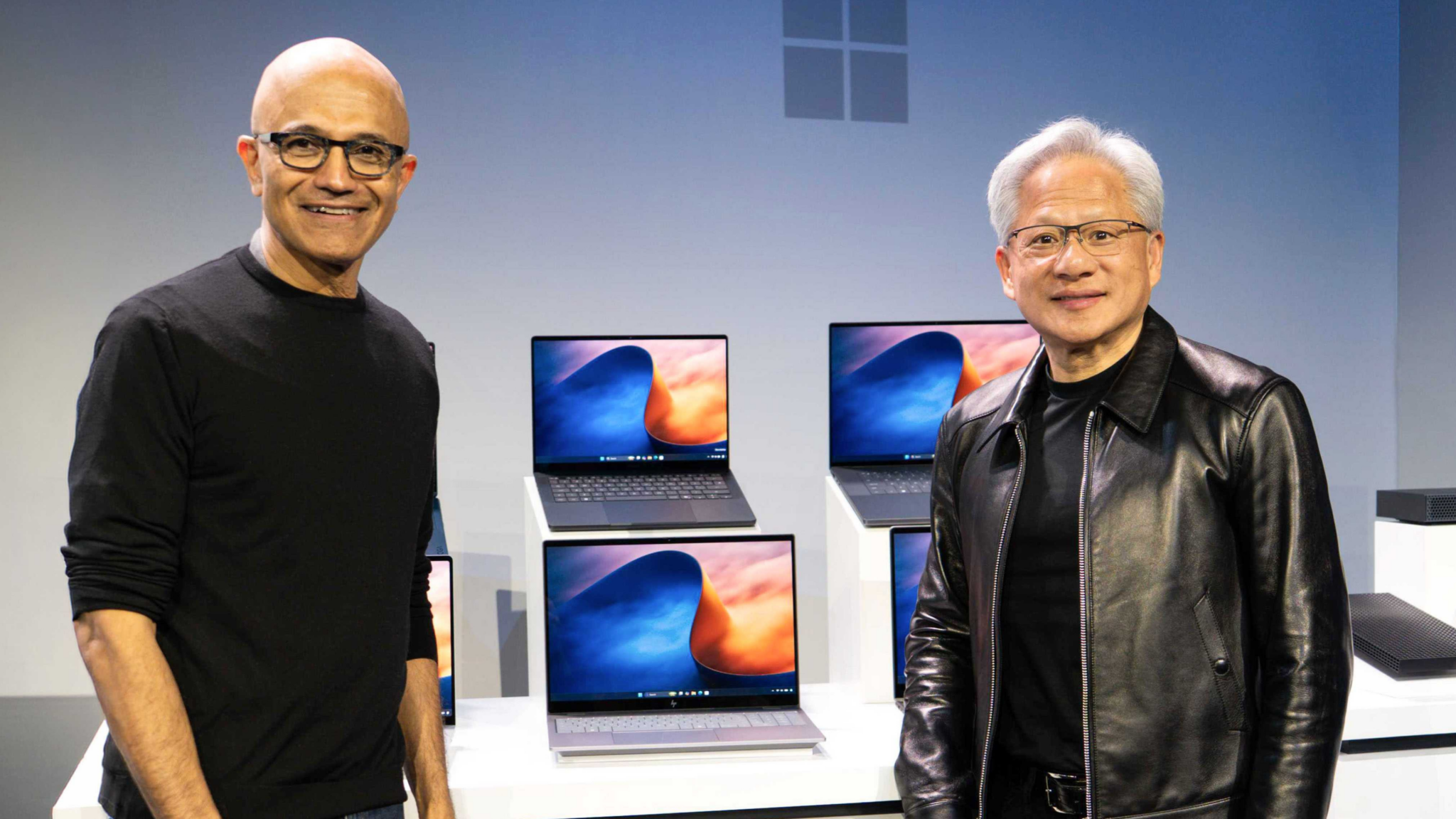
At a recent event in San Francisco, NVIDIA's founder and CEO Jensen Huang and Microsoft CEO Satya Nadella highlighted a significant collaboration aimed at integrating AI technologies into Windows PCs. This partnership focuses on the development of hardware and software solutions designed to facilitate the execution of AI agents, which promise to transform personal computing.
Huang pointed out that NVIDIA’s roots are deeply intertwined with Windows, stating, “If not for Windows there would be no GeForce.” He underscored this historical connection while envisioning a future rich with AI capabilities in personal computing. Nadella echoed this sentiment by recognizing Huang's consistent long-term vision for the evolution of AI in society and technology, remarking, “What Satya just said is going to be the foundation of the next generation of IT as we know it.”
Enhancements with Microsoft Execution Containers
The event introduced Microsoft Execution Containers (MXC), which provide an OS-level infrastructure aimed at securing and managing AI agents effectively in the background. Pavan Davuluri, Microsoft's executive vice president, explained that MXC is integral to making Windows the most secure platform for running these intelligent agents. This development is expected to enhance the safety, observability, and governance of AI agents operating on Windows.
The MXC framework is positioned to revolutionize the deployment of AI agents on personal devices, paralleling significant advancements made by Windows and DirectX in application development in the past. Huang noted that this foundational technology represents a shift in how AI agents will be built and deployed moving forward.
Cutting-Edge NVIDIA RTX Spark Technology
Among the chief announcements was the RTX Spark initiative, which integrates NVIDIA's complete AI stack into Windows laptops and compact desktops. Preorders for RTX Spark laptops commenced on the same day of the announcement, with general availability targeting October 16, and new compact desktops set to launch in November.
Microsoft's commitment to bringing local AI computing capabilities to everyday tasks is exemplified in the newly unveiled Surface Laptop Ultra, built specifically around the NVIDIA RTX Spark architecture. This laptop is equipped with up to 128GB of unified memory and boasts an impressive performance of up to a petaflop for AI computations, enabling the operation of complex AI models directly on the device without reliance on cloud resources.
RTX Spark systems will feature powerful hardware configurations, including an NVIDIA Blackwell RTX GPU with up to 6,144 cores paired with a 20-core NVIDIA Grace CPU, all interconnected for rapid data throughput at 600 GB/s. This setup allows for extensive memory and processing capacities, tailoring it well for demanding applications across various sectors including gaming, development, and creative production.
Addressing Diverse User Needs
The capabilities of the RTX Spark technology are designed with diverse users in mind. Developers can shift models and tools without needing to alter underlying code, ensuring a seamless transition between different hardware setups. For creators, the hardware supports advanced features like 5th-generation Tensor Cores for improved AI tasks, hardware-accelerated video encoding, and high-quality graphics with ray tracing.
Gamers benefit significantly as well, with RTX Spark enabling seamless AAA game experiences at high resolutions and frame rates. The compact desktop configurations, designed for continuous operation, leverage the same RTX Spark technology, promising a reliable, always-on AI system that enhances overall user experience by enabling persistent AI agent functionality.
NVIDIA DGX Station for Windows: A New Frontier for Enterprise AI
The event also showcased the NVIDIA DGX Station for Windows, which marks a pivotal transition by integrating a powerful AI supercomputer directly into the Windows ecosystem. This product allows organizations to conduct heavy AI computations locally, a task previously reliant on Linux-based environments. The change aims to streamline workflows for developers who typically juggle between operating systems to leverage AI capabilities.
NVIDIA’s DGX Station for Windows employs the GB300 Grace Blackwell Ultra Desktop Superchip, offering up to 20 petaFLOPS of FP4 AI compute and enabling the processing of extensive models up to a trillion parameters in size. This innovation allows AI developers and researchers to build sophisticated systems that connect seamlessly with existing Windows applications, facilitating a more integrated operational environment.
Additionally, teams at AI-focused enterprises and research institutions can leverage this technology to refine models without switching away from their primary Windows tools, as Linux toolchains remain accessible through Windows Subsystem for Linux (WSL) when necessary.
Overall, the collaboration between NVIDIA and Microsoft signals an important strategic move to enhance the capabilities of Windows PCs, enabling more powerful and secure AI applications while addressing the varying needs of developers, creators, and gamers alike. As these technologies become available, industry professionals will need to consider their implications on workflows and productivity, signaling a crucial pivot towards local AI processing on personal computing devices.
To learn more about the new offerings and stay updated on these developments, users can follow NVIDIA RTX Spark on various social media platforms and sign up for NVIDIA’s Local AI newsletter.


