Modal Enhancements: Support for New AI Models, Cost Control Features, and UI Updates
- Gate
- Machine Learning
- Departs
- Crew
- David Jones
- Passengers
- 317
Modal introduces support for new AI models, budget controls, improved dashboards, and more to enhance user experience and resource management.
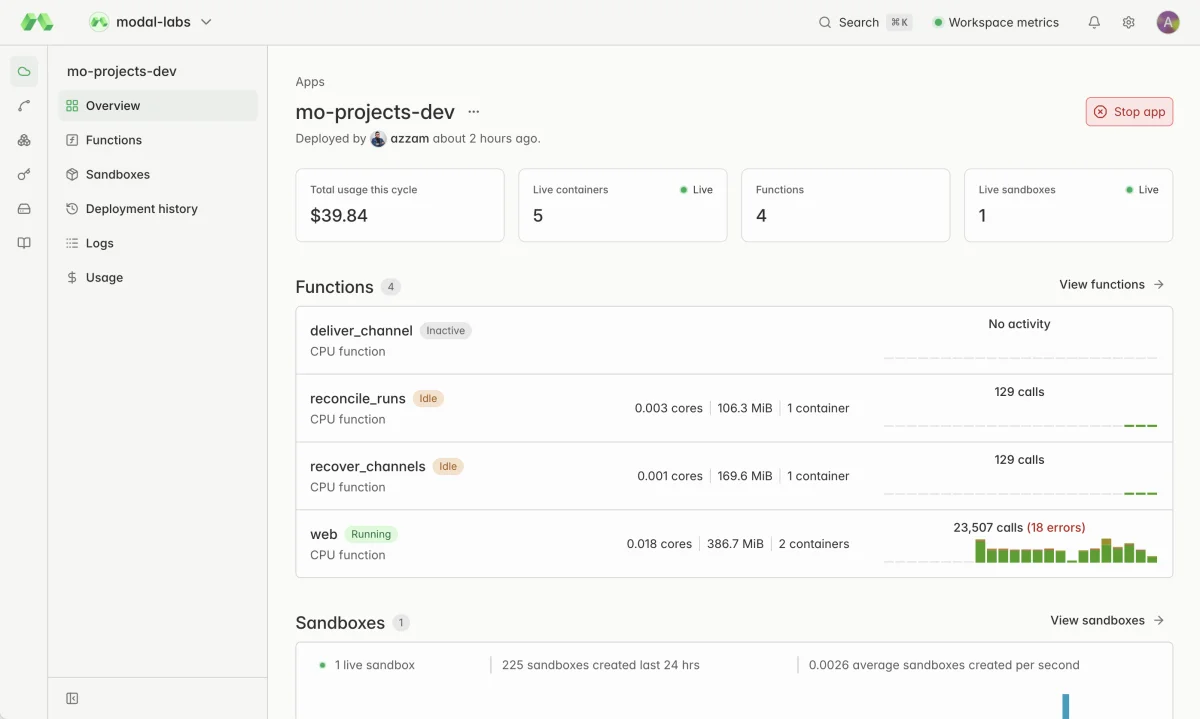
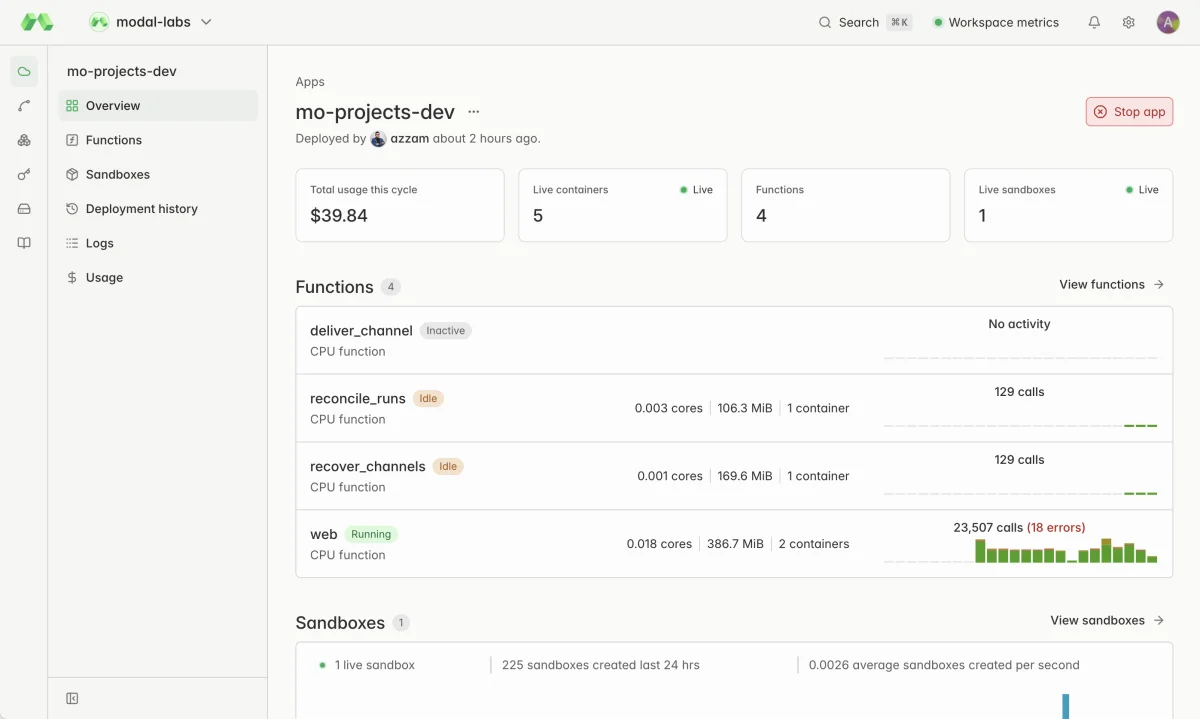
In August, Modal rolled out several significant updates including the introduction of new AI model support, features for improved cost control, and enhancements to user interfaces across their platform. Here’s a detailed look at the key enhancements made.
New Model Support: Kimi K3, Qwen 3.8, GLM 5.3, and GLM 5.3 Flash
Modal has added day-zero support for four advanced open-weight models, which can now be accessed via Modal Auto Endpoints. The new models include:
- Kimi K3: This multimodal model boasts 2.8 trillion parameters and features a 1 million-token context window.
- Qwen 3.8-2.4T-A95B: Designed as a text-only Mixture-of-Experts model, it activates 95 billion parameters per token, making it suitable for coding and long-horizon tasks. This model also utilizes the DFlash speculator.
- GLM-5.3: With 753 billion parameters, this model has a 1 million-token context window and is suited for complex coding and agentic tasks, allowing activation of 40 billion parameters per token.
- GLM-5.3-Flash: Another variant with 320 billion parameters, this natively multimodal model enhances visual understanding for coding workflows.
These models are accessible via Shared Endpoints utilizing token-based pricing or Dedicated Endpoints billed by GPU seconds, offering flexibility based on project needs.
Improved Cost Control Features
To enable better budget management, Modal introduced two key updates:
- Environment-level Budgets: Managers can now set specific compute usage budgets for each Environment, tracking usage in real-time. This feature allows teams to operate within set financial limits without the need to segment workspaces.
- Usage Limits UI Refresh: The updated user interface for billing and usage limits now presents information in a more coherent manner, facilitating easier adjustments and monitoring of limits.
Pricing Multiplier Adjustment
The pricing multiplier for broader region selection has decreased from 1.5x to 1.15x. This change affects regions including the US, EU, and APAC, improving cost efficiency while ensuring workloads are closer to end-users, thereby enhancing availability and performance.
Sandbox Enhancements
Private Environments and Default Roles
A new feature allows Workspace Owners to set a default role for Restricted Environments, establishing a No Access default that enables selective Viewer or Contributor access for specified members. This effectively ensures sensitive projects are secure within a shared workspace.
Sandbox Sidecars Enter Public Alpha
Sandbox Sidecars, now available in public alpha, allow the operation of additional containers alongside a main Sandbox. This offering facilitates custom network proxies and multi-container workloads, providing flexibility for various applications.
Better Observability for Sandbox Resources
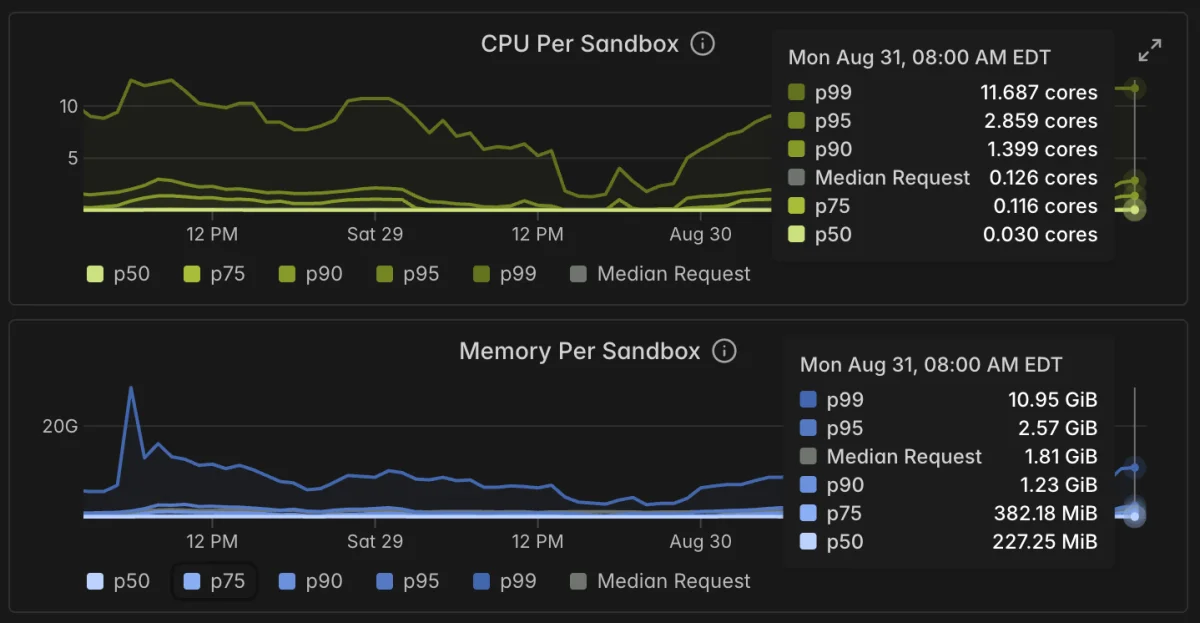
Modal has introduced graphical tools to help users monitor CPU and memory requests in Sandboxes. These graphs assist in setting precise resource requests, preventing out-of-memory issues or CPU contention without unnecessary costs.
VM Sandboxes Now in Public Beta
VM Sandboxes, which run a real Linux kernel, have entered public beta. This capability supports Docker container workloads and users requiring specific Linux features, enhancing the performance for I/O-sensitive applications.
General Availability of Sandbox Directory Snapshots and Filesystem API
Sandbox directory snapshots allow selective snapshots of directories, helping update system dependencies independently of application code. This accelerates the resumption of previous sessions and restores application states efficiently. The new Sandbox filesystem API, now generally available, offers improved reliability and performance for small file operations.
Regional Proxies for Better Control
Modal users can now choose a region for creating a Modal Proxy, providing static outbound IPs that ensure compliance with IP allowlist requirements. Proxies closer to essential resources improve traffic routing control and can reduce latency.
SDK Updates
Updates to the Python, JavaScript, and Go SDKs have been released. Version 1.5.5 of the Python SDK and version 0.10.0 of the JavaScript and Go SDKs include new logging APIs, faster file operations, and enhanced autoscaling configuration reporting. This keeps developers equipped with the latest capabilities to improve their integrations.
Performance Enhancements
Modal has revamped its scheduling system to support the rapid creation of concurrent Sandboxes. Tests revealed that the platform can now start one million Sandboxes in less than a minute while maintaining a median time to interactivity under 500 milliseconds.
The Function I/O path has also been accelerated, resulting in a latency reduction of approximately 80 milliseconds on the 50th percentile, optimizing the platform for responsive applications.
Modal invites developers and researchers to explore these advancements as the platform continues to evolve to meet varying demands. These updates collectively enhance user experience by improving capability, cost management, and operational fluency.


