Understanding Modal: An Overview of Its Computer-Like Functionality and Infrastructure
- Gate
- Machine Learning
- Departs
- Crew
- Joseph Smith
- Passengers
- 987
Modal is essentially a computer capable of running complex programs while providing an efficient architecture for processing and data management.
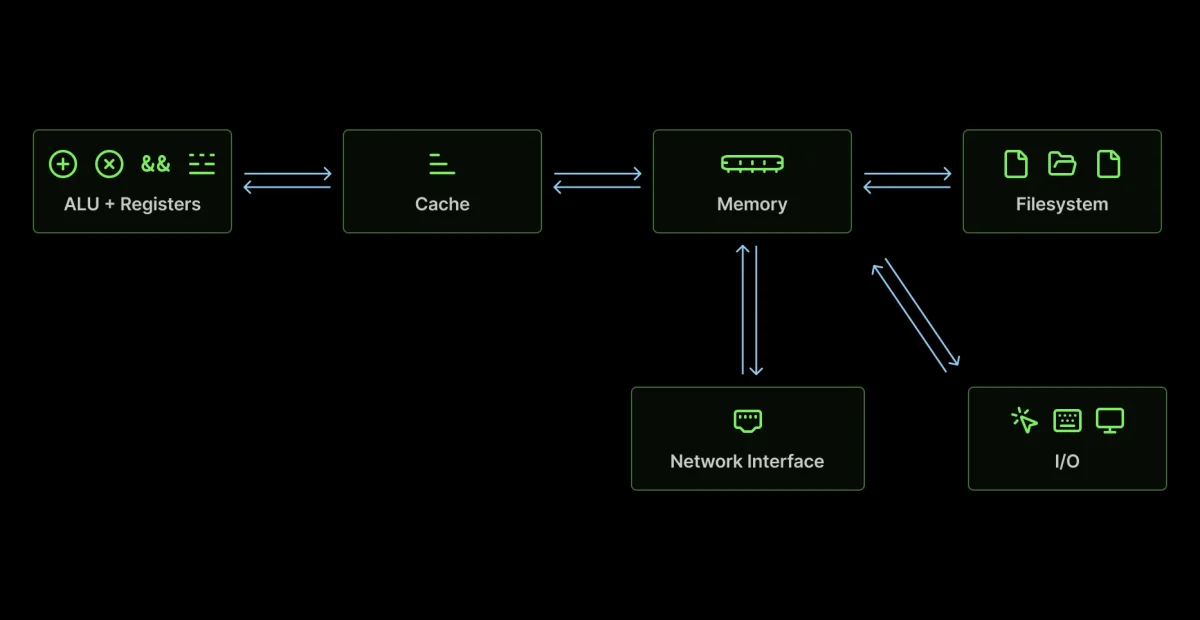
When trying to explain what Modal is, many analogies are thrown around, though they often miss the mark. While some might compare Modal to existing concepts like "Uber for compute" or "AI infrastructure," these labels can oversimplify or misrepresent Modal's true nature. At its core, the simplest description is straightforward: "Modal is a computer."
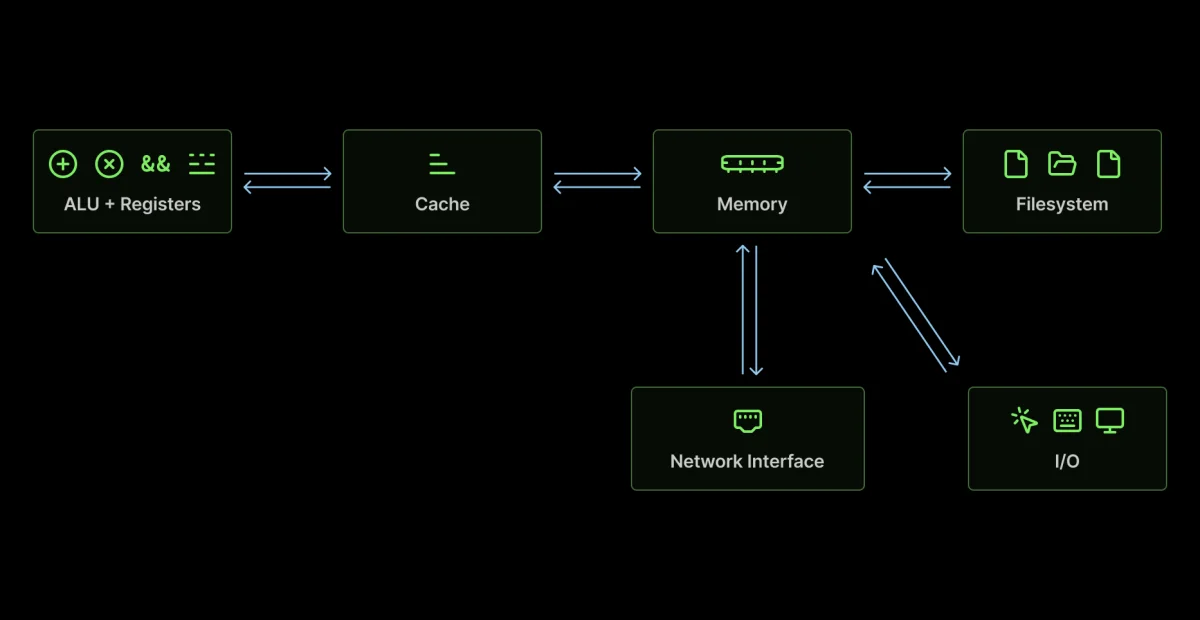
Defining a Computer
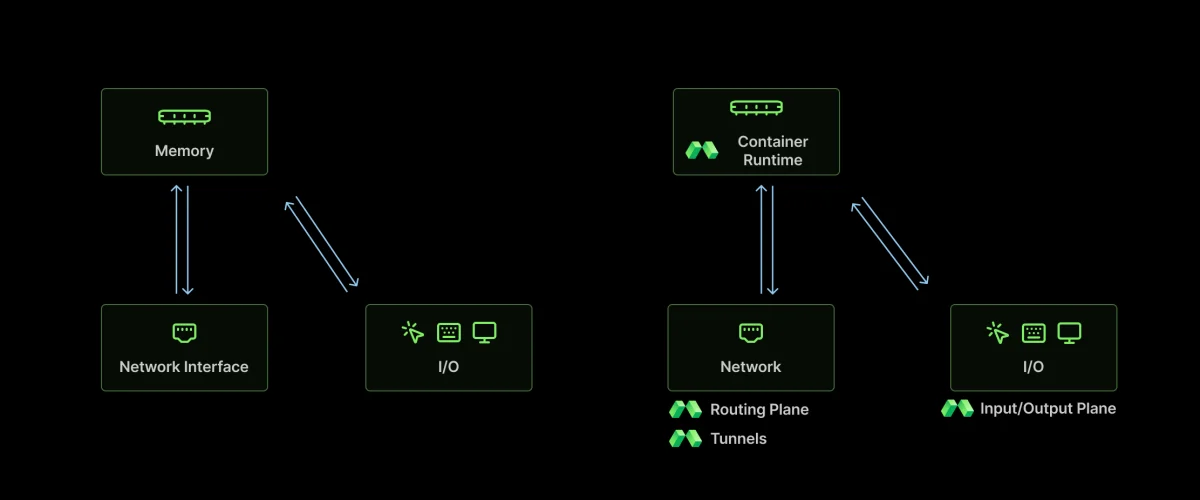
A computer is fundamentally a machine designed to execute arithmetic and logic operations on pieces of information. Such machines can vary in appearance and operation, but they share certain characteristics that define their utility. Information within a computer exists in a hierarchical structure, from registers in the arithmetic/logic unit (ALU) up to file system blocks on disk. Critical to this hierarchy is memory, which retains information as long as power is supplied. Any data entering or exiting a computer must first navigate through memory, including interactions with other systems via network interfaces.
What is Modal?
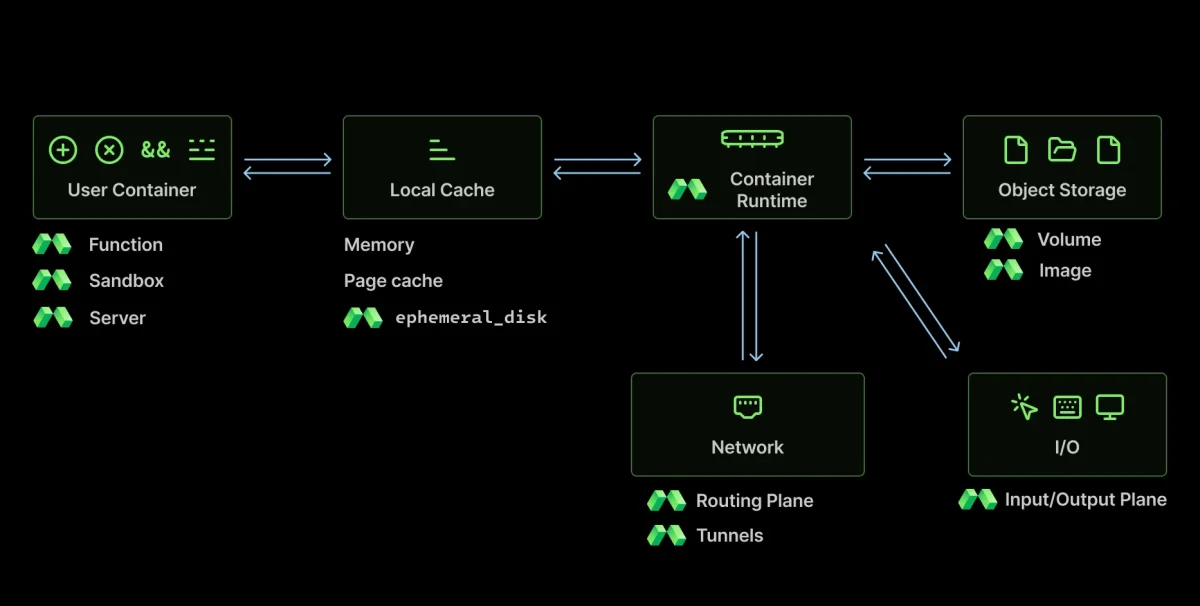
Modal functions as a computer does, running programs that perform arithmetic and logic operations on data. Visually and structurally, Modal shares similarities with traditional computers, while also boasting unique features suited for cloud-based environments. Information within Modal operates in a similarly tiered storage structure, conducive for tasks that require dynamic input and output during processing. In essence, the machine facilitates continuous interaction with data, enabling users to run computational tasks efficiently.
How Programs Operate on Modal
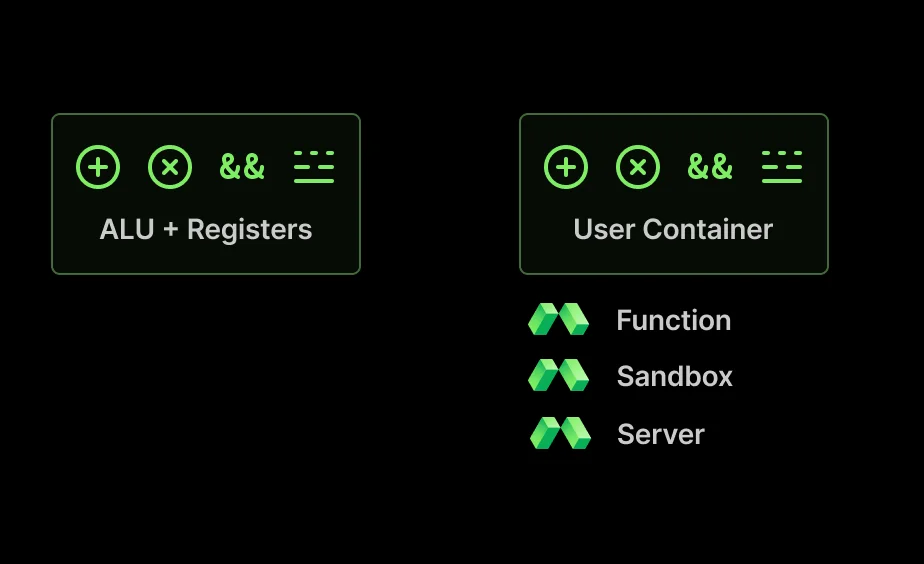
Programs in Modal operate at multiple levels. Like traditional computers where the ALU fetches inputs from memory to execute instructions, Modal manages tasks through a system of cores and containers. The container runtime interprets information inputs and applies relevant programs accordingly. Programs may vary; some are stateless functions in Python, while others operate more like traditional Linux processes complete with permission models.
Containers in Modal receive data through their runtime and execute the program. Some may function as stateless tools that generate outputs from inputs, while others could be specialized processes that listen for network-based queries. In either case, the infrastructure of Modal allows for efficient execution and retrieval of information.
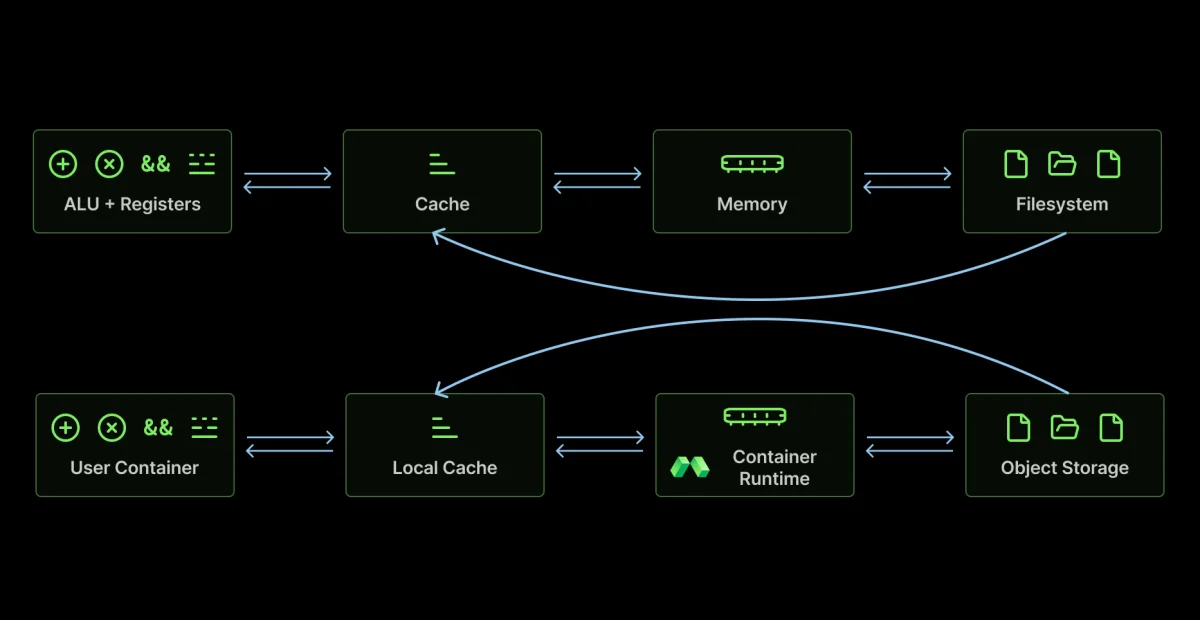
Launching Programs in Modal
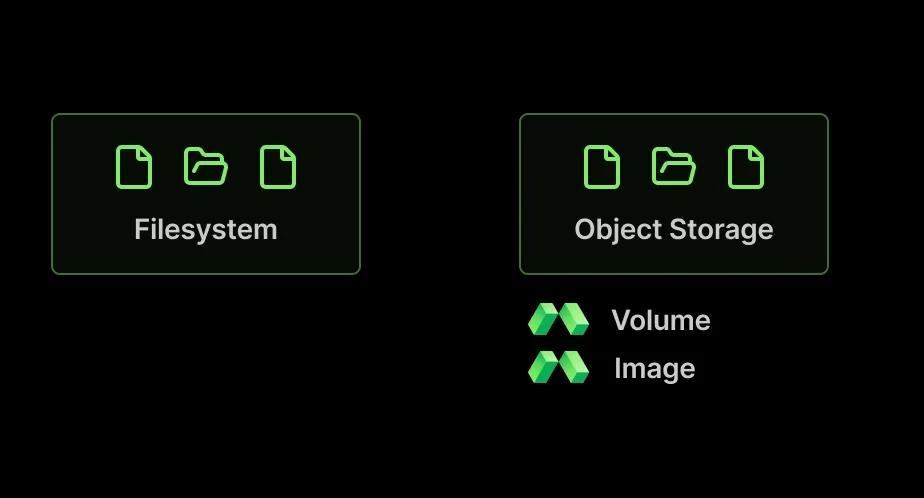
Before execution, programs are typically converted into a compiled format that can be executed by the system. This compilation process translates source code into object code, which is stored on disk and retrieved by the operating system when needed. In particular, Modal requires container images to be compiled into a filesystem before being transferred to object storage for later use. Efficiency is enhanced as multiple containers can share common files, improving resource utilization.
Storage Mechanisms in Modal
Information storage within Modal centers on both short-term and long-term data persistence. Inside Modal, information that needs immediate processing is maintained in memory. However, when memory limitations are reached, data is offloaded to an object storage architecture. The container runtime plays a critical role in managing caches, which serve to balance performance demands and storage capabilities.
Input and Output in Modal
Information flow in Modal occurs through specific channels. It primarily uses the Modal Input/Output Plane for communications and the Modal Routing Plane for HTTP-related interactions. These pathways involve routing logic and memory buffers that facilitate smooth exchanges between users and running containers, ensuring efficient processing of requests.
Why Choose Modal?
Critics might question the necessity of a platform like Modal, deeming it akin to existing computer systems. However, Modal stands apart by employing extensive virtualization strategies to maximize resource efficiency across diverse hardware from numerous cloud providers. This added layer of virtualization empowers Modal to aggregate and optimize computing resources, significantly enhancing performance capabilities against tight resource conditions in today's computing landscape.
Traditional cloud providers support similar functions, but they often present a cumbersome experience for engineering teams. Modal seeks to streamline this experience by offering a tailored platform aligned with engineering needs, enhancing productivity and allowing teams to focus on their core objectives without being burdened by low-level infrastructure management.
In summary, Modal presents a compelling solution for developers and teams looking for an efficient and powerful cloud-based computational environment that operates on a foundational understanding of what a computer fundamentally is.
For those interested in shaping the future of computing within this framework, Modal invites collaboration as it builds upon its vision of an advanced computational landscape.


