Understanding the Cost Dynamics of Serverless vs. Reserved GPUs
- Gate
- Machine Learning
- Departs
- Crew
- Charles Frye
- Passengers
- 519
Explore the economic implications of using serverless versus reserved GPUs, including cost models, demand prediction challenges, and practical benefits for AI development.
Introduction to GPU Economics
As the demand for artificial intelligence (AI) applications continues to rise, the operational costs associated with Graphics Processing Units (GPUs) have become a focal point for tech companies. GPUs, while critical for AI operations, are expensive. This situation leads to misunderstandings between finance departments seeking cost control and engineering teams focused on development. This article aims to clarify these dynamics and discusses a newly developed tool that estimates costs for both serverless and reserved GPU models.
Peak-to-Average Ratios: A Key Metric
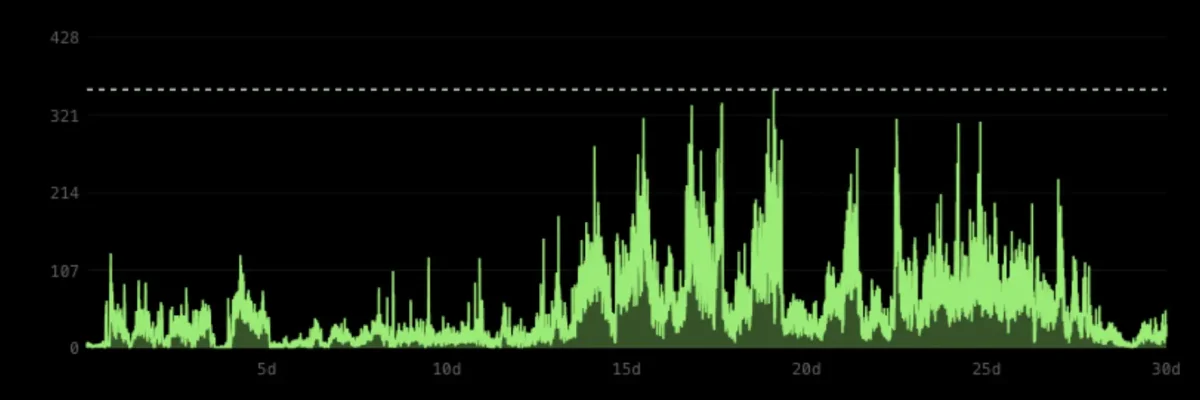
The cornerstone of understanding GPU costs lies in the concept of the peak-to-average ratio. This metric compares the number of GPUs required to meet peak demand against the average demand over time. Industries characterized by rapid growth or unpredictable user behavior often exhibit high peak-to-average ratios. For instance, workloads involving inference or training in AI systems typically have ratios exceeding 5:1, sometimes reaching 10:1. Such ratios can result in low allocation utilization and service-level objective (SLO) violations when relying solely on reserved GPUs.
The new tool developed allows users to select workloads based on empirical customer experiences or input personalized traffic patterns to visualize costs. By default, the model uses the current rates of a B200 GPU for serverless transactions and three-year reservations with major cloud providers.

Serverless GPUs vs. Reserved GPUs: Distinct Paradigms
The shift to serverless GPU access changes the economic landscape. With serverless models, organizations only pay for the GPUs they utilize, often leading to reduced expenditures compared to reserved GPU contracts. In a reserved model, a fixed quantity of GPU resources is purchased under long-term contracts, leading to potential inefficiencies due to overprovisioning or underutilization.
According to industry analyses, GPUs in reserved settings often see utilization rates below 30%, with many applications falling under 10% utilization. This inefficiency contributes to escalating costs and increased competition for resources among organizations.

Cost Model Comparison
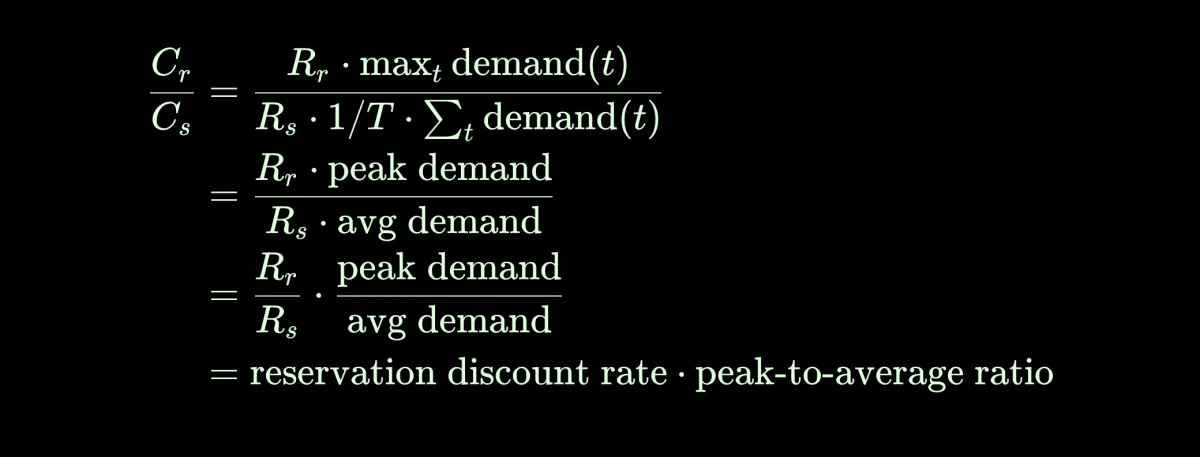
To compare the economic implications of serverless versus reserved GPU use, consider the total cost implications in both scenarios. For a serverless GPU model, where demand is instantaneously met, the total cost Cs is calculated as the serverless provider's rate Rs multiplied by the instantaneous demand.
Conversely, in a reserved GPU model, the total cost Cr depends on predicting peak demand and is calculated using the reservation provider's rate Rr multiplied by the maximum demand during the reservation term.

This comparison highlights that the economic advantage of one model over the other is highly contingent on the peak-to-average ratio. In practice, scenarios where peak demand is significantly higher than average usage heavily favor the cost-effectiveness of serverless options.
Operational Practicalities and Challenges
The assumptions governing this cost model merit scrutiny. For example, the “perfect prediction” of demand tied to SLOs favors reserved models. Miscalibrations in demand estimates can lead either to insufficient capacity, resulting in increased faults and jeopardized SLOs, or excess capacity, leading to wasted resources and higher spending.

Moreover, the model presumes instantaneous allocation and deallocation abilities, a reality that aligns with serverless paradigms, which are designed to accommodate scaling without overprovisioning. Modal’s commitment to expediting autoscaling ensures that complex applications can engage resources quickly, minimizing drag on development timelines.
Mismatched Strategies: The Mixed Approach
While this exploration focuses on serverless versus reserved models in isolation, organizations often aim for hybrid strategies — reserving resources to cover baseline loads while utilizing serverless capabilities for peak bursts. This segmentation allows companies to leverage the strengths of both approaches, given that peak demand bursts may exhibit even higher peak-to-average ratios, sometimes up to 100:1.
Beyond Cost: The Impact of Developer Efficiency
Cost is a crucial consideration; however, the complexities of GPU pricing models necessitate looking beyond surface-level metrics. Serverless GPUs often deliver accelerated development speed, creating a direct correlation to lower defect rates and reduced time-to-market. The capability to develop in environments similar to production ensures a smoother operational transition and heightened productivity overall.
Moving Forward: Practical Insights for GPU Management
When evaluating GPU procurement strategies, it’s essential to factor in both economic and operational aspects. The serverless GPU model proves particularly valuable for applications characterized by high peak demands, like inference and training tasks in AI. For organizations interested in exploring these options, a practical tool has been introduced to assess their GPU needs, expenses, and optimal allocation strategies efficiently.
If you plan to explore high-demand applications and contemplate serverless GPUs as a fitting solution, Modal offers a trial opportunity to engage with its platforms. The growing interest in mixed operational strategies also presents opportunities for companies looking to maximize their GPU efficiency further.


