NVIDIA Unveils Rubin Platform and Open Models for Advanced AI Integration at CES 2026
- Gate
- Machine Learning
- Departs
- Crew
- Brian Caulfield
- Passengers
- 336
At CES 2026, NVIDIA introduced the Rubin platform and the Alpamayo model family, aiming to enhance AI integration across sectors and reduce operational costs significantly.
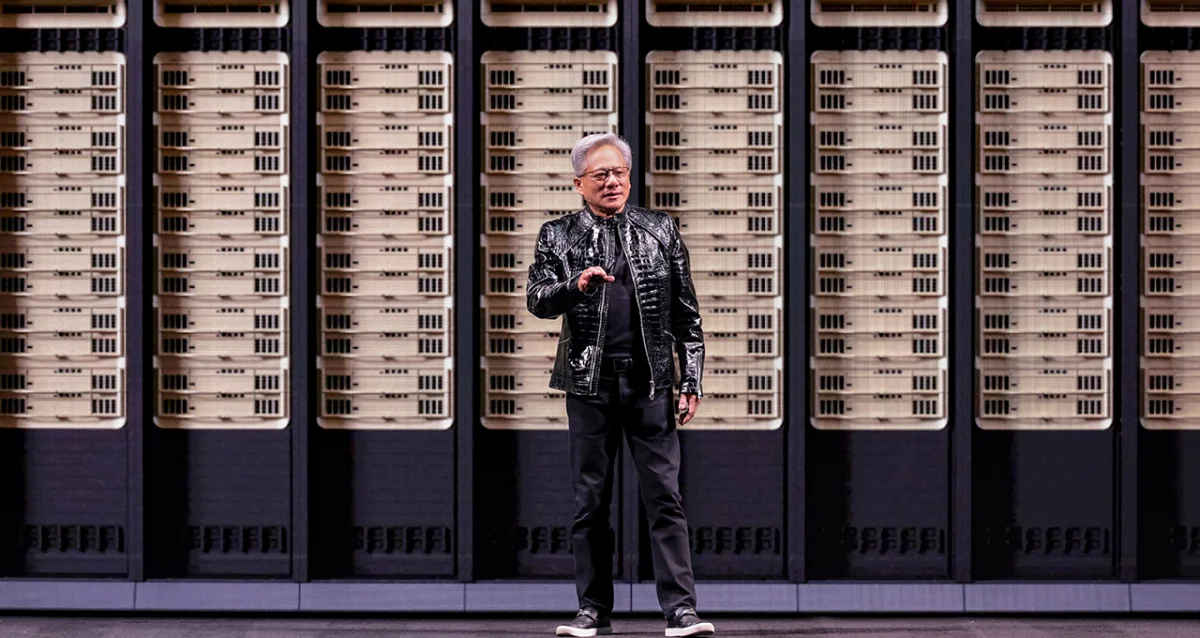
NVIDIA CEO Jensen Huang opened CES 2026 at the Fontainebleau Las Vegas, emphasizing the transformative role of AI across various domains. He stated that accelerated computing has revolutionized how technology operates, with approximately $10 trillion worth of computing over the past decade transitioning to AI-based methodologies.
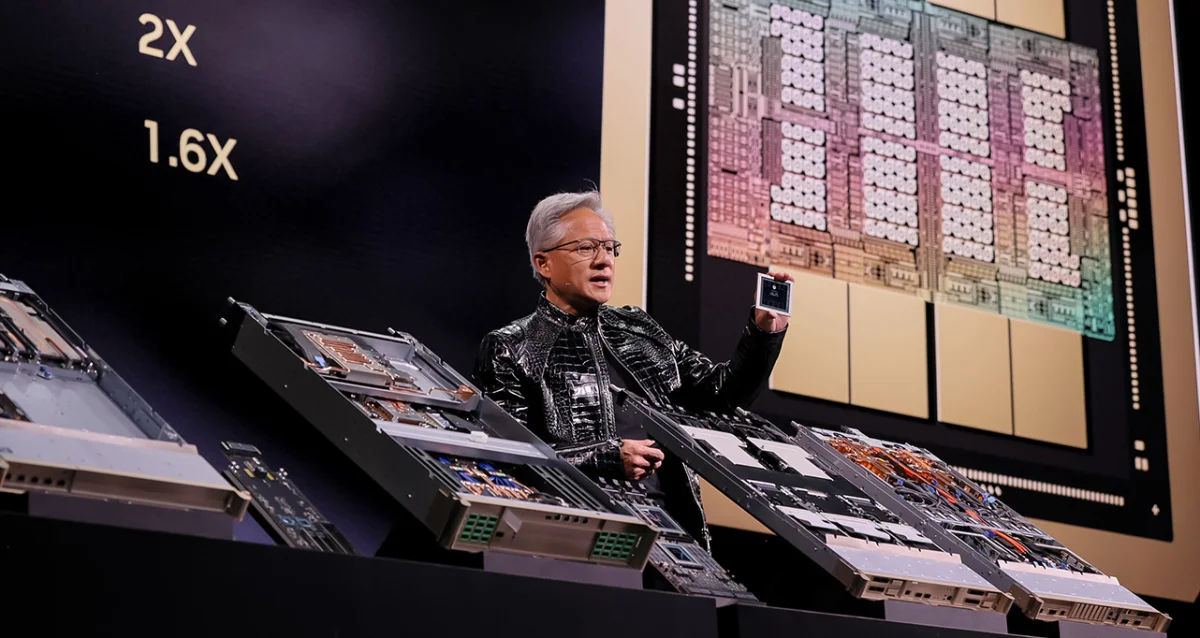
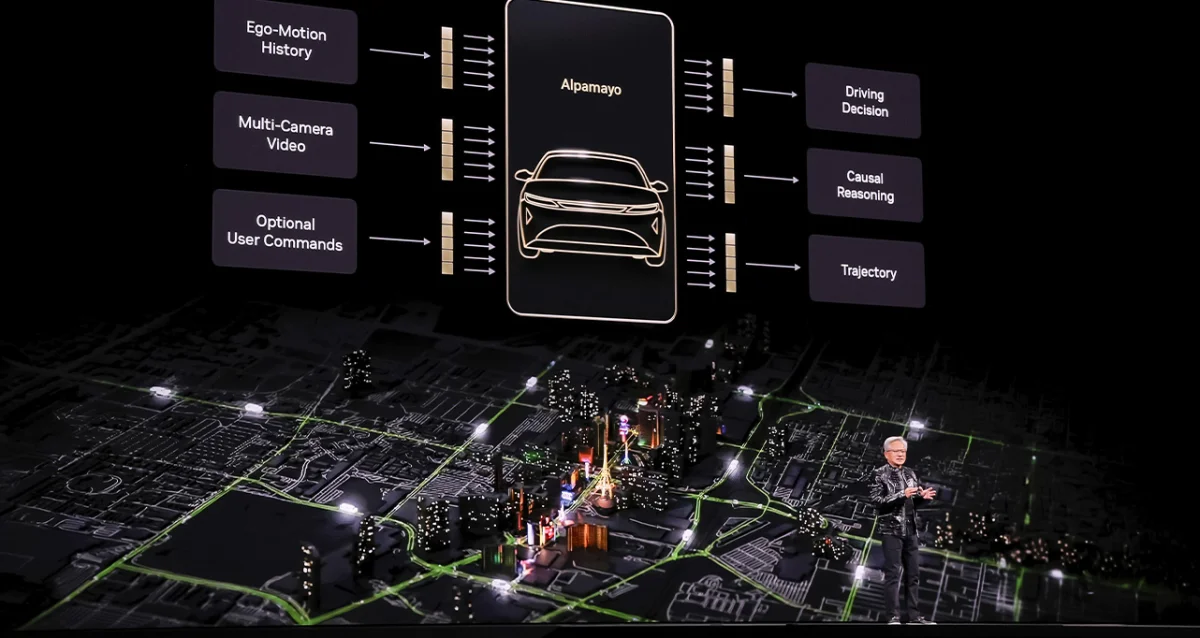
During his presentation, Huang introduced the Rubin platform, NVIDIA's first extreme-codesigned AI architecture featuring six chips, which is now fully operational. He also introduced Alpamayo, a suite of open reasoning models specifically designed for advancing autonomous vehicle capabilities.
Rubin Platform: A New Era in AI
Named after pioneering astronomer Vera Rubin, the Rubin platform symbolizes NVIDIA's commitment to high-performance AI computing. It follows the successful Blackwell architecture and is designed with six chips that feature:
- Rubin GPUs: Offering 50 petaflops of NVFP4 inference performance.
- Vera CPUs: Optimized for data movement and agentic processing.
- NVLink 6: A high-capacity networking solution.
- Spectrum-X Ethernet Photonics: Enhancing scale-out networking capabilities.
- ConnectX-9 SuperNICs: Advanced network interface cards.
- BlueField-4 DPUs: Processing units tailored for data operations.
This tightly integrated platform is designed for scaling AI to gigascale, minimizing delays and cutting training costs, as emphasized by Huang during the presentation.
Additionally, Huang introduced NVIDIA's AI-native storage solution, the Inference Context Memory Storage Platform. This enhances token retrieval efficiency, delivering five times the tokens per second while improving both power efficiency and cost-effectiveness simultaneously.
The Role of Open Models
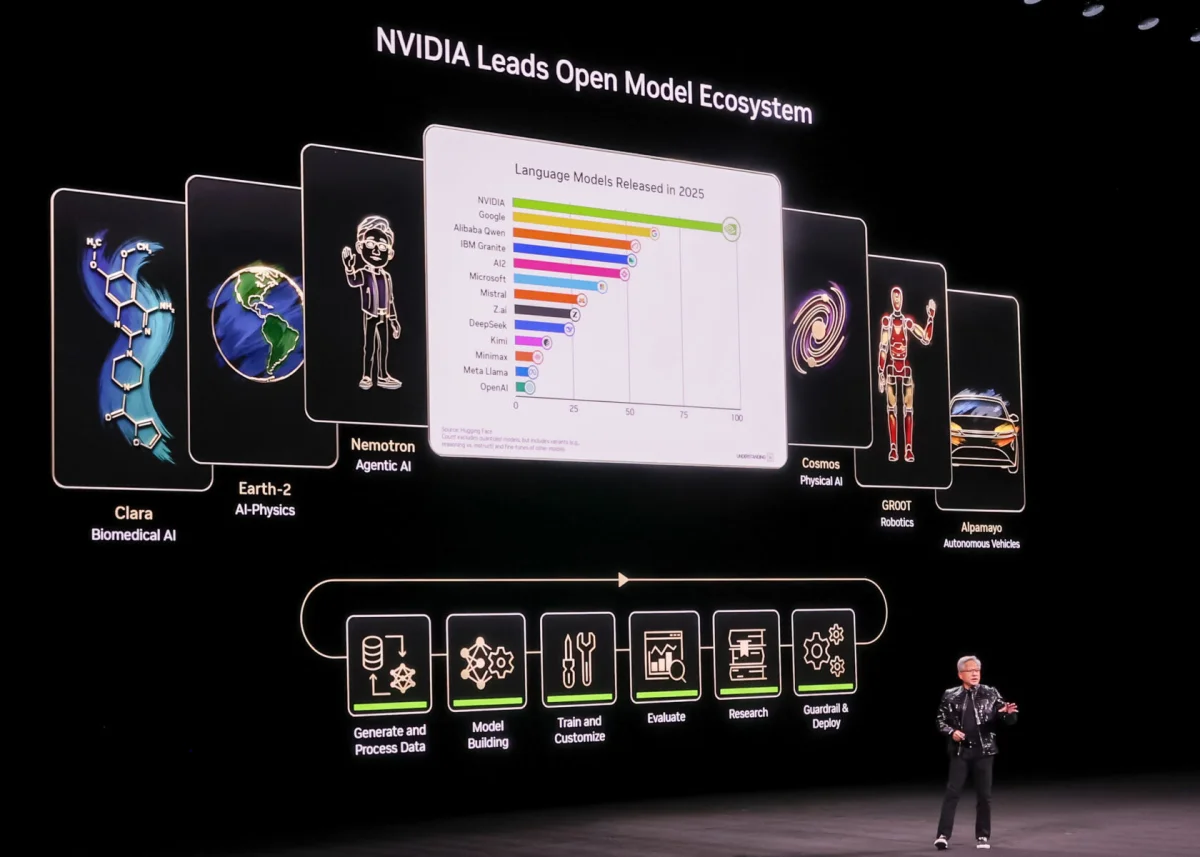
NVIDIA's open models, trained on the company's supercomputers, are pivotal in several fields, including healthcare, climate science, and robotics. Huang articulated that these models are made accessible to all industries and nations, enabling widespread innovation.
The diverse array of models include:
- Clara: Focused on healthcare innovations.
- Earth-2: Aiming to tackle climate science challenges.
- Nemotron: For reasoning and multimodal AI tasks.
- Cosmos: Targeted towards robotics and simulation.
- GR00T: For embodied intelligence applications.
- Alpamayo: Specifically for autonomous driving solutions.
Huang championed this open model strategy as a way to democratize AI capabilities globally. “You can create the model, evaluate it, guardrail it, and deploy it,” he stated.
Personalizing AI: Innovation in Desktop Solutions
Huang's vision extends AI beyond supercomputers to personal devices, illustrated through a demo utilizing the NVIDIA DGX Spark, showcasing a personalized AI agent. This agent, embodied in a Reachy Mini robot, showcases how open models and local execution can foster physical collaboration between humans and AI.
Huang highlighted the collaboration with major enterprises integrating NVIDIA's AI technology, naming companies like Palantir and Snowflake. He noted that systems powered by NVIDIA are evolving to normalize intelligent agent interfaces across industries.
During CES, it was announced that the DGX Spark can achieve up to 2.6 times the performance for large models; new support for image processing models was also revealed.
Embodied AI and Real-World Applications
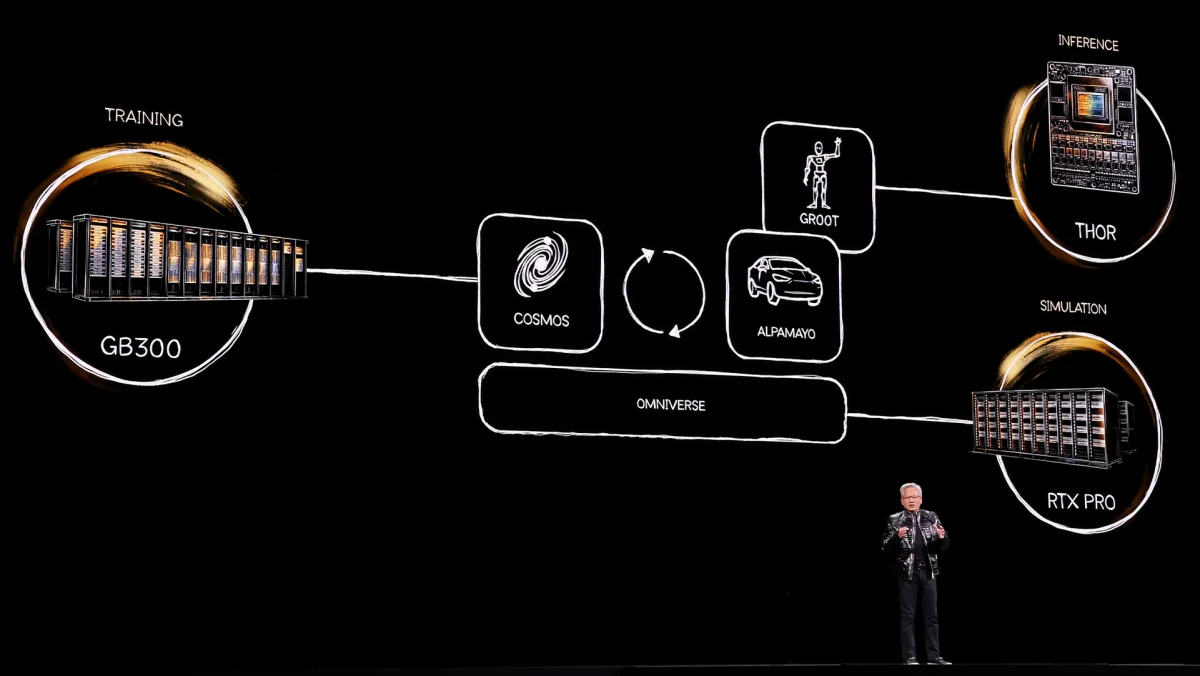
NVIDIA's physical AI initiatives make substantial advances in how AI interacts with the physical world, allowing for synthetic data training in controlled environments before real-world application. Huang presented the NVIDIA Cosmos model, capable of advanced tasks such as generating realistic videos and synthesizing complex scenarios. Cosmos highlights capabilities like physical reasoning, trajectory prediction, and interactive simulations.
The introduction of Alpamayo represents a significant step forward in enabling autonomous vehicles. This includes:
- Alpamayo R1: The first open reasoning VLA model tailored for autonomous navigation.
- AlpaSim: A comprehensive simulation platform for high-fidelity autonomous vehicle testing.
Huang showcased a video illustrating a vehicle leveraging these technologies to navigate complex traffic situations. The first passenger vehicle equipped with the Alpamayo model will debut in the all-new Mercedes-Benz CLA, which has earned a EuroNCAP five-star safety rating.
Future Vision in Automation
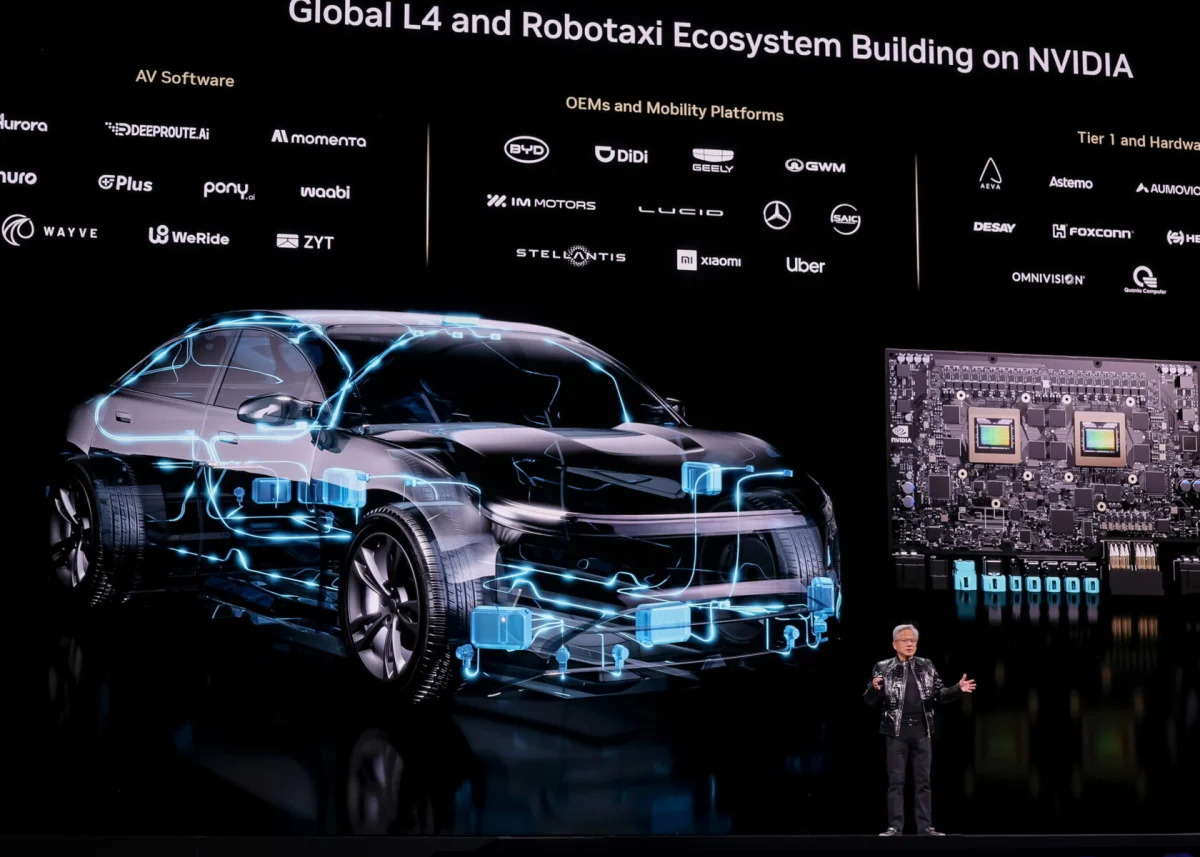
Emphasizing the broader impact of NVIDIA's technologies, Huang foresaw a future where every vehicle could be autonomous, signifying their commitment to advancing AI across mobility sectors. Their efforts are further bolstered by the growth of the Hyperion ecosystem, which has garnered interest from various automotive and robotics entities.
Touching on manufacturing automation, Huang remarked that factories would evolve into highly automated systems, built on NVIDIA’s solutions.
Gaming Innovations: DLSS 4.5 and Beyond
During the event, NVIDIA unveiled updates in the gaming space with DLSS 4.5, which incorporates a new dynamic frame generation mode and enhanced graphics capabilities. More than 250 games have adopted this technology, including notable titles scheduled for release this year.
Technologies like RTX Remix and NVIDIA ACE have been demonstrated for their capacity to enhance gaming experiences through dynamic effects and adaptive AI assistance. New G-SYNC Pulsar monitors elevate the gaming experience with high clarity and refresh rates, further asserting NVIDIA’s leadership in gaming technology.
As NVIDIA continues to expand its influence across sectors, it remains focused on fostering a collaborative environment where innovative applications can thrive through its technology stack.


