NVIDIA Expands Hyperion Ecosystem to Enhance Level 4 Autonomy for Automotive Partners
- Gate
- Machine Learning
- Departs
- Crew
- Mo Poorsartep
- Passengers
- 783
NVIDIA's Hyperion ecosystem is expanding with new partnerships, aiming to accelerate the development of level 4 autonomous vehicle technologies.
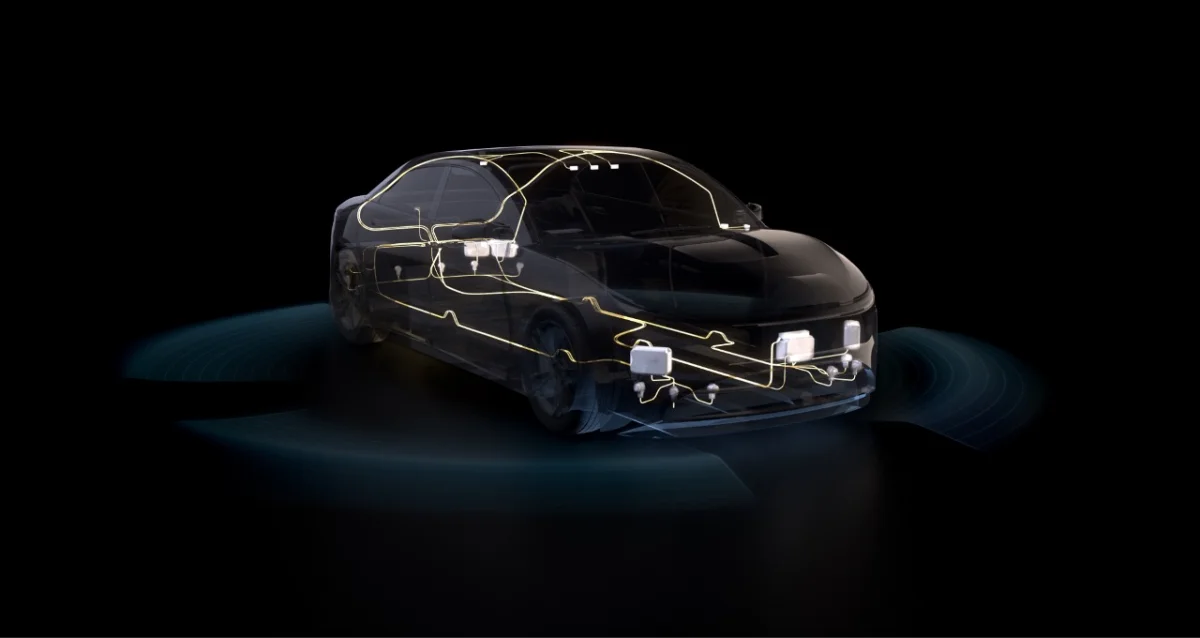
NVIDIA's recent announcements at CES in Las Vegas highlighted significant expansions to its Hyperion ecosystem, which now includes collaborations with several prominent tier 1 suppliers and sensor partners. Collaborators such as Aeva, Astemo, Bosch, and Sony are now integrated into this ecosystem, with the aim of advancing level 4 autonomous vehicle capabilities. This effort builds on previous collaborations announced at NVIDIA's GTC event in Washington, D.C., focusing on both passenger autonomous vehicles and long-haul freight transport using the same Hyperion platform.
According to Ali Kani, NVIDIA's Vice President of Automotive, “Everything that moves will eventually become autonomous, and Hyperion is the backbone that makes that transition possible.” By consolidating compute, sensors, and safety into a single open platform, NVIDIA seeks to facilitate faster market readiness for autonomous vehicles, ensuring reliability that meets the demands of mobility at scale.
A Cohesive Ecosystem for Development
The expanded ecosystem offers automotive companies confidence in their integration efforts. By ensuring that various sensing systems and hardware work seamlessly with the Hyperion architecture, NVIDIA aims to enhance reliability and performance while streamlining development processes. This integration can potentially reduce testing periods and lower development costs.
Several key players, including AUMOVIO, Bosch, and Quanta, are in the process of creating Hyperion-based electronic control units. Additionally, partners like Aeva and Arbe have aligned their sensor solutions, which comprise cameras, radar, lidar, and ultrasonic technologies. This integration allows automakers to build and validate perception systems specifically optimized for achieving level 4 autonomy.
The architecture behind Hyperion provides centralized computing and sensor fusion capabilities, enhancing real-time decision-making in safety-critical actions such as braking, steering, and suspension systems. This is crucial for sophisticated automated driving scenarios and is facilitated by NVIDIA's robotaxi-ready platform, which is designed to operate with low latency.
Achieving Level 4 Autonomy
NVIDIA Hyperion serves as a production-ready compute and sensor reference architecture, tailored to get any vehicle to level 4 readiness. With two NVIDIA DRIVE AGX Thor systems-on-a-chip built on the company's latest Blackwell architecture, Hyperion boasts over 2,000 FP4 teraflops, translating to around 1,000 trillion operations per second in INT8 format. This capacity effectively supports a full 360-degree sensor view, enabling advanced driving functions.
By applying this extensive computational power, Hyperion allows for sophisticated machine learning models, such as transformer-based perception systems and generative AI that can interpret complex driving scenarios in real-time. This emphasis on a unified compute and sensor foundation enables partners to innovate at the software level while still benefiting from NVIDIA’s extensive safety and technological infrastructure.
Safety and Certification Through NVIDIA Halos
Every deployment of Hyperion is fortified by NVIDIA Halos, a safety and cybersecurity framework designed to cover the entire journey from data center operations to vehicle performance. Halos is instrumental in providing tools for independent verification, system validation, and certification processes, which are essential for adhering to stringent automotive safety standards worldwide.
This combination of Halos and NVIDIA's simulation capabilities enables partners to undergo continuous testing through extensive virtual and real-world scenarios. The result is enhanced trust not just among developers, but also with regulatory bodies and end-users, as the system assures ongoing compliance with safety standards.
New Tools for Faster Development
In conjunction with the announcement of ecosystem expansions, NVIDIA unveiled a new suite of AI models and tools branded as Alpamayo. These models are tailored to improve accessibility for level 4 development within the automotive industry, enhancing real-time performance on the Hyperion platform.
By aligning these new tools with the overall Hyperion framework, NVIDIA is streamlining the process of developing and deploying autonomous systems across both passenger and commercial vehicle fleets. This holistic approach—encompassing high-performance computing, sensor integration, AI training, and simulation—underscores NVIDIA’s commitment to advancing the state of autonomous vehicle technology.
For those interested in deeper insights regarding these advancements, NVIDIA's sessions at CES can provide valuable context. Learn more by watching NVIDIA Live at CES.


