Modal Releases Key Updates: Enhanced Memory Snapshotting, Async Job Queues, and OIDC Integration
- Gate
- Machine Learning
- Departs
- Crew
- Thomas Davis
- Passengers
- 703
Modal's latest updates feature faster memory snapshotting, expanded async job queues, and OpenID Connect for improved authentication and integration.
📷 Enhanced Memory Snapshotting
Modal has introduced significant improvements to its memory snapshotting feature, which is currently in beta. This feature helps reduce cold start times significantly, particularly for elaborate models such as Stable Diffusion. The enhancements implemented aim to accelerate both the speed and consistency of this functionality, achieving up to a 50% reduction in cold start durations. This could greatly benefit workflows requiring quick model deployment or frequent model initialization.
The optimization of memory snapshotting is particularly pertinent as the demand for more efficient AI model operations grows. Cold starts can be a bottleneck in deploying machine learning applications, leading to delays in response times. By addressing this challenge, Modal positions itself as a more efficient option for developers needing rapid model access.
🕰️ Expansion of Async Job Queues
Another noteworthy upgrade is the extension of Modal's batch processing capabilities. Users will soon have the ability to queue up to 1 million inputs, a significant jump from the current limit of 2,000. This expansion caters to applications requiring extensive processing tasks, enabling better resource management and scalability during high-demand periods.
As organizations handle increasing amounts of data, robust batching capabilities become essential. By allowing users to queue a larger number of tasks, Modal aims to streamline operations for developers dealing with complex workflows, rewarding efficient coding practices and resource management. For those interested in testing this feature prior to the official release, an opportunity for beta testing is available by reaching out to Modal directly.
🔑 OpenID Connect (OIDC) Integration
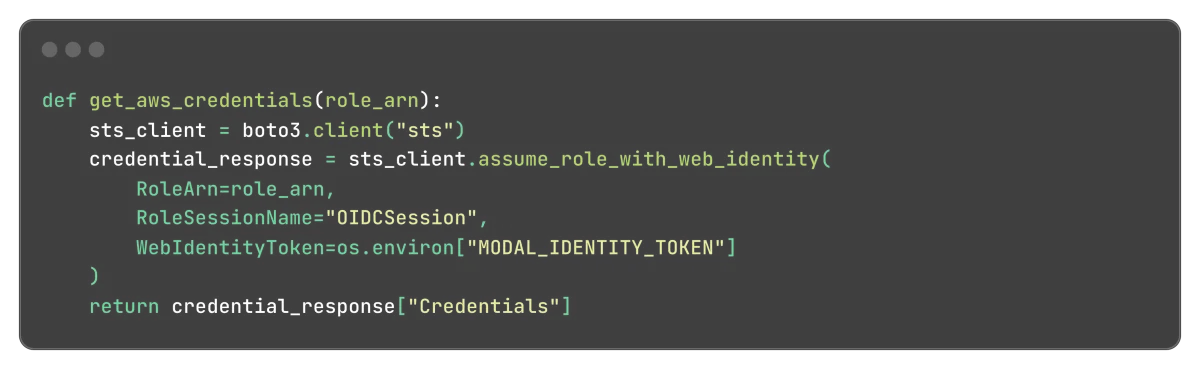
Another significant update is the implementation of OpenID Connect (OIDC), which enables the use of short-lived identity tokens for authentication against external resources, including S3 buckets and various secret managers. This feature allows developers to replace long-lived credentials typically stored in Modal Secrets, thus enhancing security protocols and reducing the risk of credential leakage.
By integrating OIDC, Modal opens up smoother pathways for secure interactions with various cloud services and databases while lowering the overhead related to managing secret keys. The transition toward more dynamic authentication methods, such as OIDC, is increasingly vital in securing cloud-native applications and minimizing attack vectors.
⭐ Faster Builds with eStargz
Modal now supports eStargz, a compression format that significantly accelerates image builds when pulling images from external registries like Amazon ECR and Docker Hub. This capability improves the overall efficiency of deploying services since builders can now download and unpack images faster.
Developers simply need to adjust their docker buildx build command with the correct flags to enable this feature. Given the growing need for swift deployment cycles, this enhancement is likely to minimize downtime and facilitate smoother transitions within various development environments.
👩💻 Client Updates: SDK Improvements
Modal has made several updates to its Software Development Kit (SDK). By running pip install --upgrade modal, users can access the latest modifications. Some highlights include:
- The CLI now supports a
--detachflag for themodal launchcommand, allowing applications to remain active post client disconnection. - Streaming output is now supported in the
execcommand, with addedtextandbufsizearguments to enhance functionality. - There are new parameters in the
execcommand, such astimeout,workdir, andsecrets, improving control over execution environments.
🚀 New Model Partnerships
Modal has also established collaborations to simplify running open-source models. Notable partnerships include:
- Genmo’s Mochi 1 - A leading text-to-video model that has recently been fine-tuned.
- Chai Discovery’s Chai-1 - This model specializes in predicting molecular structures.

🤝 AWS Partnership for GPU Accessibility
Modal has announced a strategic, multi-year partnership with AWS aimed at providing flexible and instantly accessible GPU resources. Users can now leverage Modal to utilize their AWS marketplace committed spend. This partnership indicates a concerted effort to connect users with cloud resources efficiently, facilitating smooth and immediate access to the computational power needed for demanding AI workloads.
📺 New Video Content
Modal has launched its own YouTube channel, providing various tutorials and resources for developers. A featured video demonstrates how to set up a vLLM inference server, aiming to help users navigate new features and enhancements effectively.
Check out their content [here](https://www.youtube.com/@ModalLabs).
🍭 Fun Tidbits
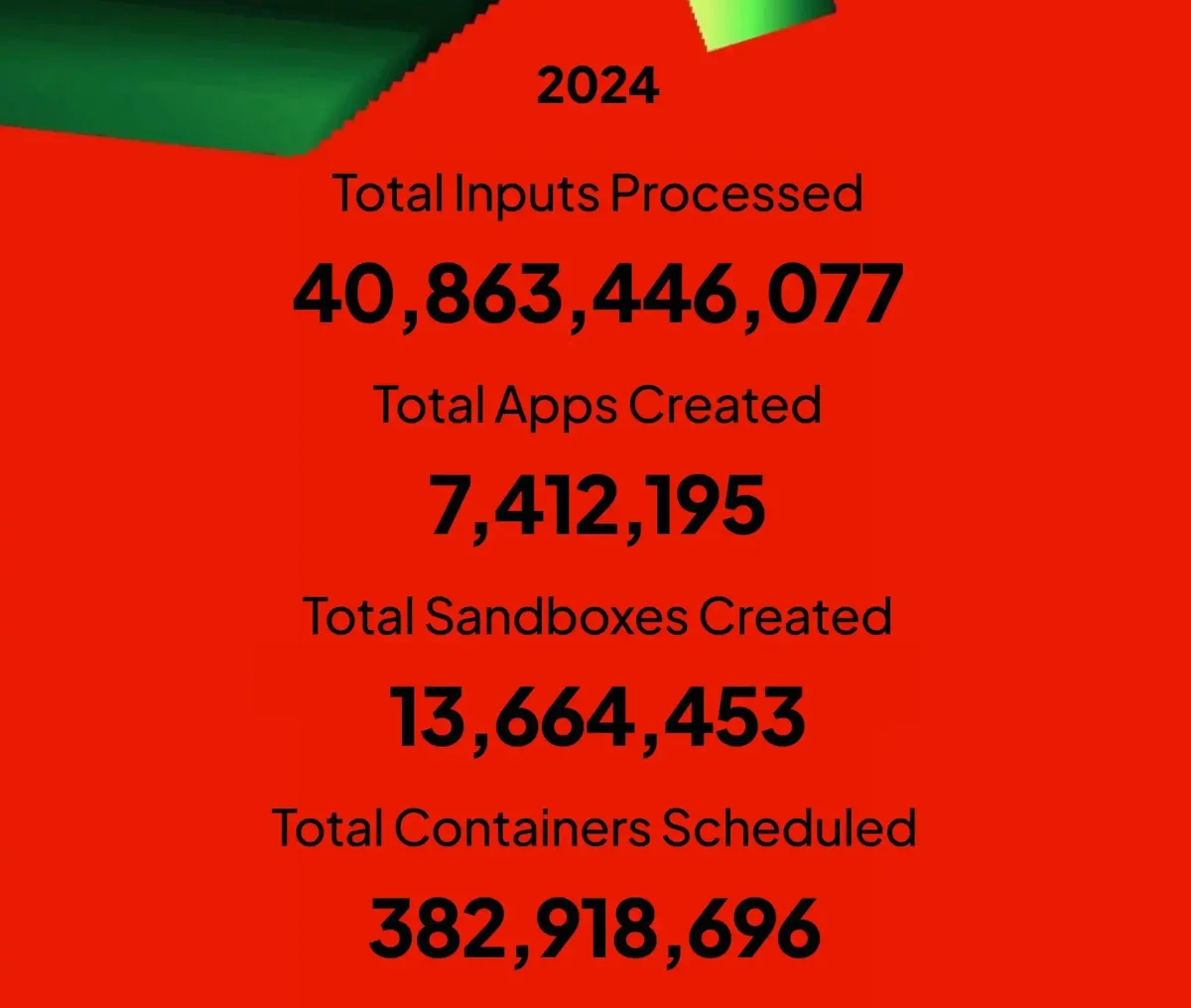
- According to "Modal Wrapped," the platform processed over 40 billion inputs across more than 7 million applications in 2024!
- Collaboration with Cometeer has led to branded coffee pod giveaways; stay tuned on Twitter for future promotions!