Corporate AI Claims: Analyzing the Numbers Behind Economic Impact
- Gate
- Machine Learning
- Departs
- Crew
- Azeem Azhar
- Passengers
- 900
A growing number of S&P 500 companies are quantifying their AI efforts, revealing insights into productivity, revenue impacts, and industry adoption rates.
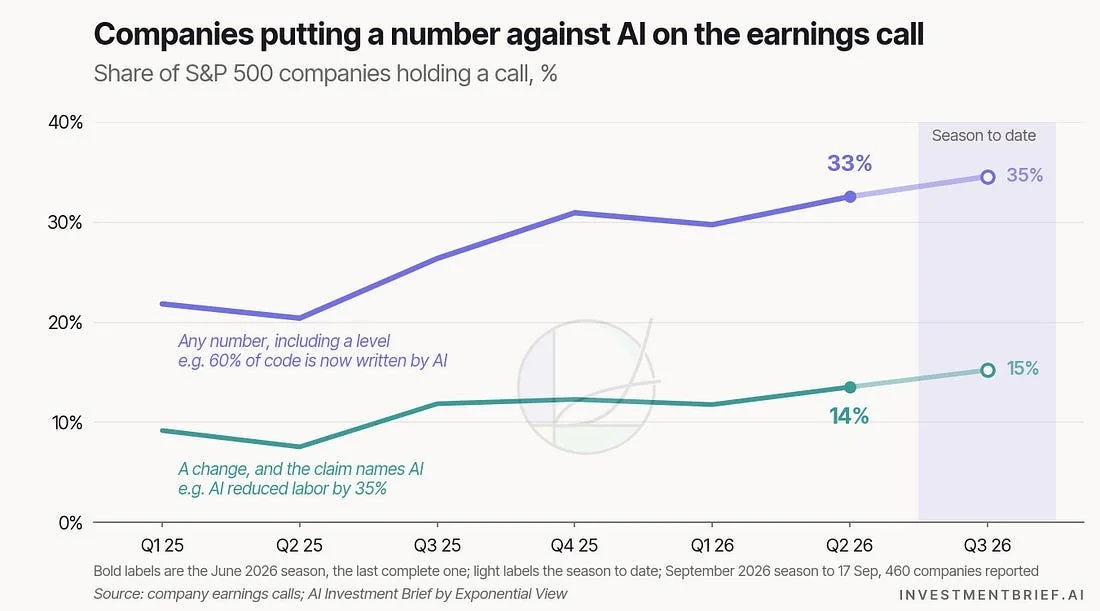
In recent discussions around artificial intelligence, corporations are starting to quantify their AI-related claims more rigorously. This shift in approach aims to provide clearer insights into AI's economic impact across various sectors. A deep dive into earnings calls from S&P 500 companies this quarter reveals notable trends and metrics suggesting how AI is being integrated into their business models and productivity enhancements.
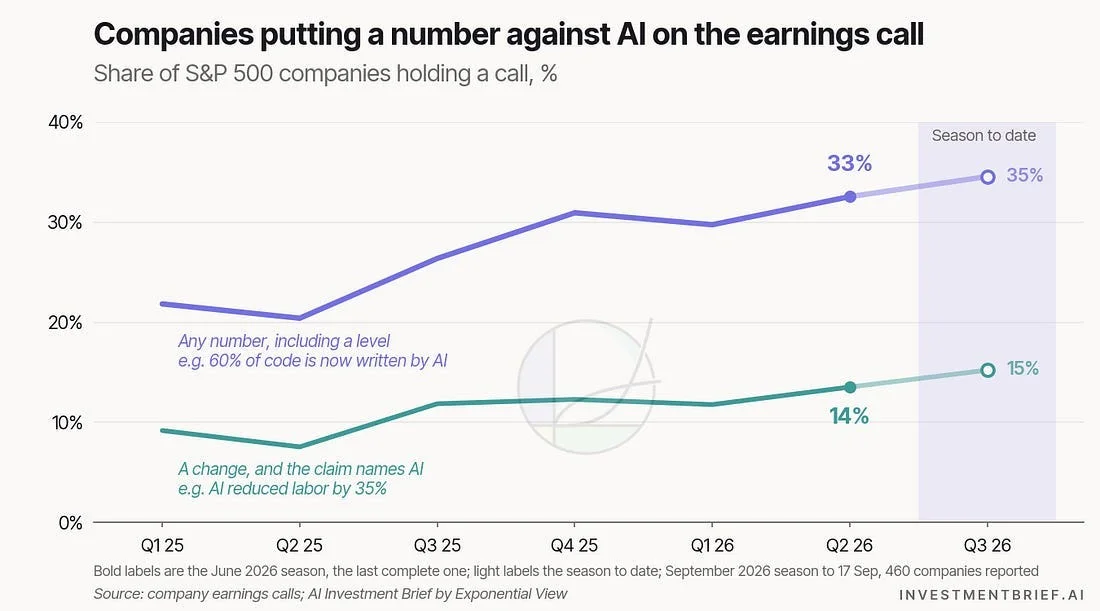
Increasing Quantification of AI Impact
During the June 2026 earnings season, approximately 33% of S&P 500 companies that participated in earnings calls presented quantifiable statements regarding their AI initiatives. This figure marks a significant rise from the previous year, with 35% of calls including measurable mentions of AI, an increase of around 10 percentage points year-over-year. Although this demonstrates a positive trajectory in AI adoption, only 15% of companies reported specific quantified claims reflecting AI's impact on their operations, which is only a modest rise from 9% at the start of the prior year. This indicates that while AI is making its mark, the vast majority of companies may still be in nascent stages of realizing measurable benefits.
Claims of Improvements and Their Nature
The claims being made range from efficiency gains to revenue impacts, shedding light on how AI is transforming corporate operations. For instance, one company reported that “overall ASV growth among clients using our AI solutions was 50% higher than for the rest of the book,” while another highlighted a reduction of “manual tickets by 70% and triage time down nearly 75%,” demonstrating the potential for AI to optimize workflows.
Moreover, some companies have noted drastic improvements in processing efficiency, with one organization stating it “cut the number of demand signals in half and reduced processing time by nearly 90% across 190 parts” through AI automation. While these examples showcase AI's capabilities, the slow growth in quantifying AI's impact suggests that many firms are likely still experimenting with these technologies before they can fully leverage and report on their benefits.
Varied Impact Claims: Cost vs. Revenue
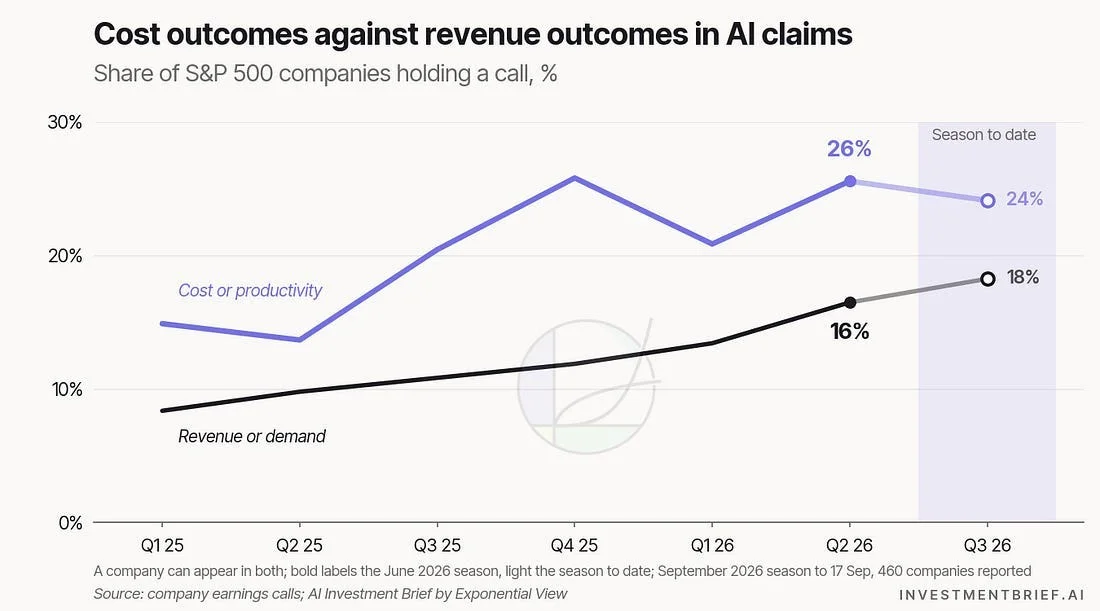
Among those making claims this quarter, it's interesting to note the distinction between cost/productivity outcomes and revenue impacts. Reports indicated that 26% of companies claimed cost or productivity results during the June 2026 season, while only 16% cited revenue improvements. Similar patterns emerged for the September season, with 24% and 18%, respectively. The balance between these metrics suggests that organizations are initially experiencing AI's impacts in operational efficiencies before seeing a direct correlation with revenue growth.
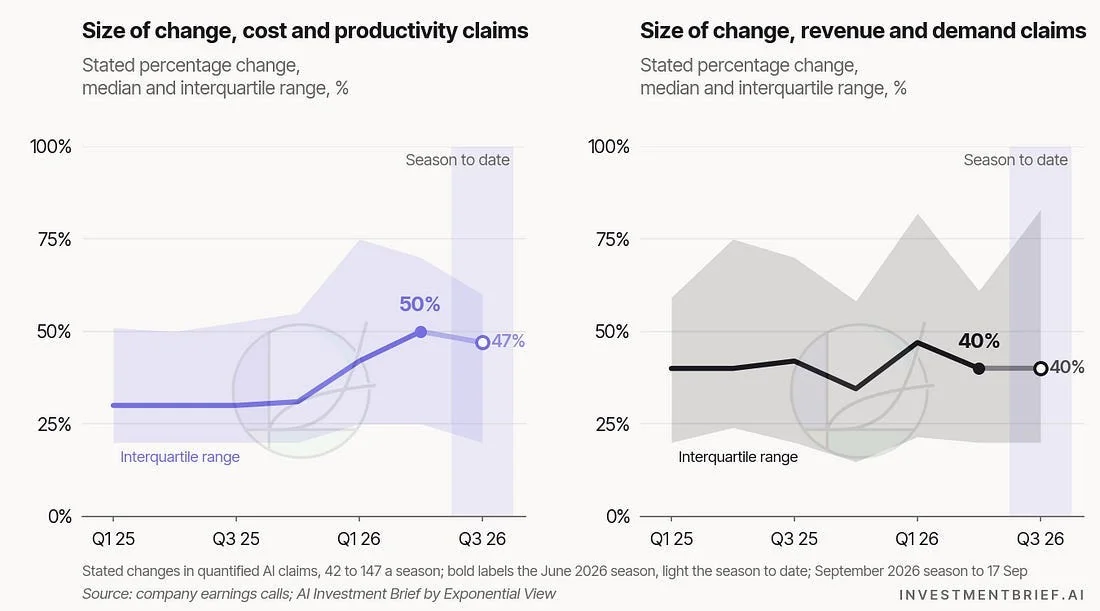
This is reflected in the average size of claimed improvements, with cost/productivity claims averaging around a 47% boost, whereas revenue impacts averaged 40%. The broader interquartile ranges — between 20-60% for cost/productivity and 20-83% for revenue/demand — indicate a notable level of uncertainty regarding the expected outcomes across different contexts.

Shifting Language Towards Deployment
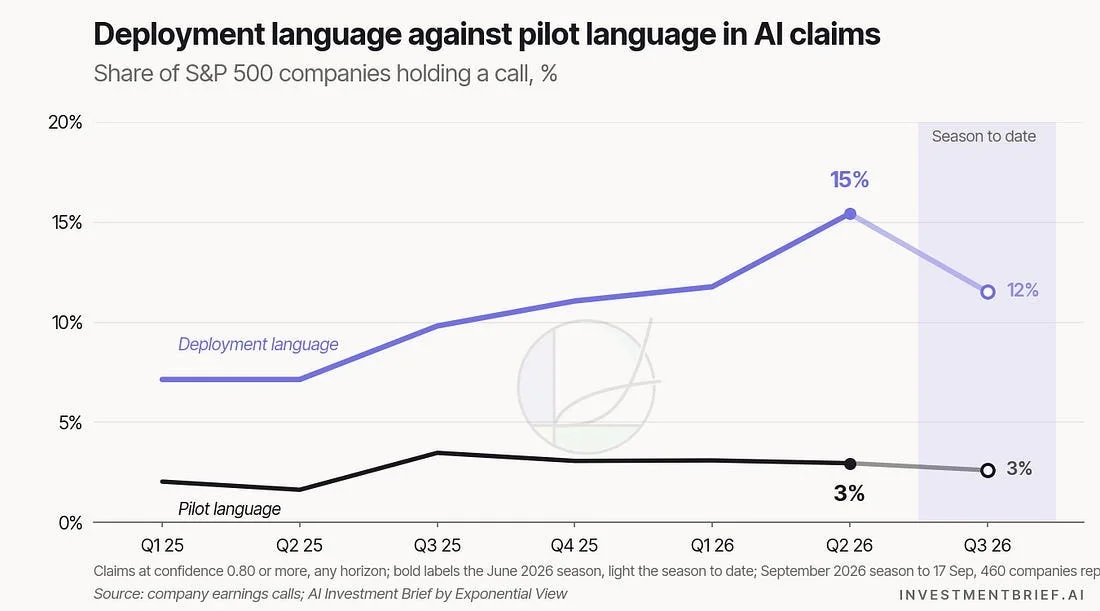
The lexicon employed by companies is also evolving. There has been a noticeable shift in the language used to describe their AI initiatives, with 15% using the term "deployment" in their discussions this quarter, compared to 3% describing their efforts as merely in the pilot phase. This increase, from 7% at the beginning of 2025 to 12%, highlights a growing trend towards full implementation, though this quarter shows a slight dip in deployment discussions.
The limited mention of pilots may hinder comprehensive assessments of the success of these initiatives, suggesting that while companies may be conducting experiments, they are choosing not to disclose these early-stage results in their communications. This opaqueness can impede external evaluations and understanding of how many companies are successfully integrating AI into their broader operations.
Shifts in AI Terminology
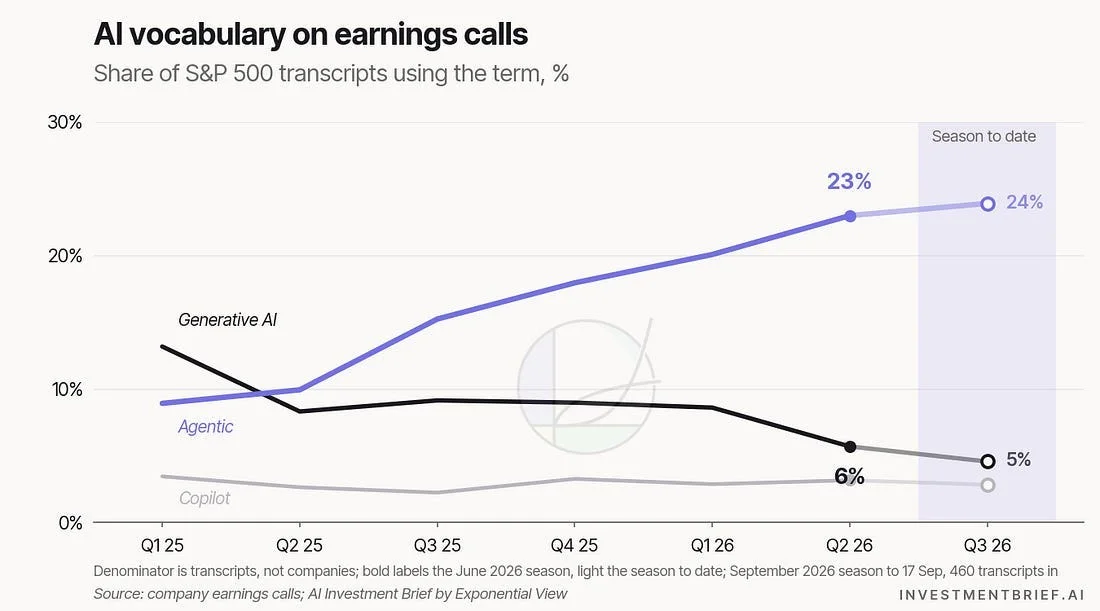
An examination of the vocabulary used in earnings calls reveals interesting trends as well. The term "agentic" was used in about 24% of calls this quarter, significantly up from just 9% in the first quarter of 2025. Conversely, mentions of “generative AI” have seen a decline, falling from 13% to 5% during the same period. Such shifts may reflect changing perceptions of what AI capabilities are prioritized or understood within corporate settings.
Conclusion: The Path Ahead
Overall, the data indicates that while corporate claims regarding AI's impact are becoming more prevalent and quantifiable, the actual measured results are still emerging. The trend towards deploying AI at scale, driven by efficiency-related claims, suggests potential for future growth in revenue impacts. However, companies remain cautious, and the nuanced understanding of these metrics is vital. Stakeholders will need to keep a close watch on how these developments unfold as more comprehensive, detailed analyses emerge in subsequent quarters.


