CUDA at 20: How GPU Computing Expanded From Science to AI
- Gate
- Machine Learning
- Departs
- Crew
- Brett Murray
- Passengers
- 487
Two decades of CUDA connect GPU programming to work in molecular biology, deep learning and protein research, supported by more than 1,000 CUDA-X libraries.
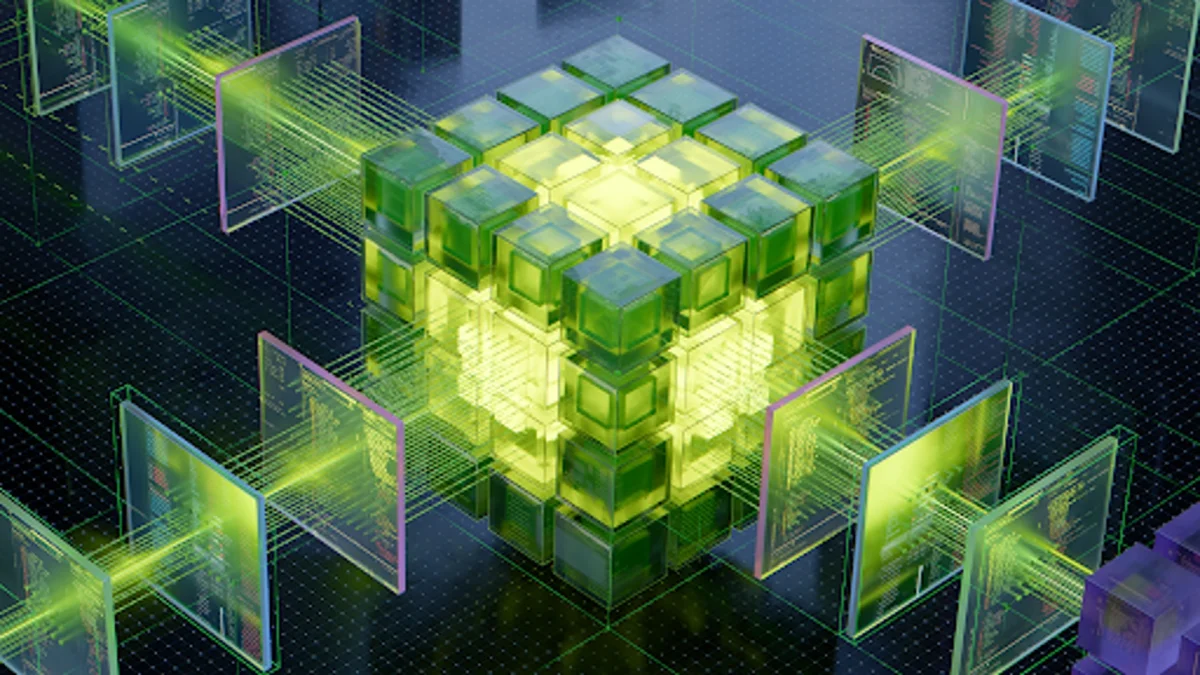
CUDA’s lasting impact is visible in the range of work that now runs on GPUs: molecular simulations, image recognition and protein structure prediction. NVIDIA introduced the platform in 2006, giving researchers a programming model for applying GPUs to computation beyond graphics. Twenty years later, the company says more than 11 million developers build with CUDA across the computing stack.
That history points to a practical shift in scientific computing. Researchers could use GPUs for demanding workloads through a familiar programming interface, then build software and tools that made the hardware useful to other fields. The platform’s reach has grown through those applications and the people who developed them, rather than through hardware alone.
From graphics hardware to scientific workloads
NVIDIA announced CUDA in November 2006 and introduced it to the scientific community at SC06. The programming model let developers direct GPU resources toward general computation, including science and simulation. That opened a path for teams to accelerate workloads that had previously depended heavily on other forms of computing.
The transition required more than moving code onto a GPU. Scientific programs often involve specialized data, algorithms and ways of checking results. Researchers and engineers had to adapt applications, create tools and establish workflows that made accelerated computing useful for their specific problems. CUDA’s development community became part of that work: its experiments and software helped expand the range of tasks GPUs could handle.
The results span fields with very different computational needs. CUDA has supported scientific applications on supercomputers, visual effects work for films and research associated with major scientific awards. Those examples show how a programming platform can matter across fields when it gives developers a shared way to use accelerated hardware.
Molecular simulation meets structural biology
At the University of Illinois Urbana-Champaign, biophysicist Klaus Schulten’s team helped connect GPU computing with molecular biology. Its Nanoscale Molecular Dynamics and Visual Molecular Dynamics tools support molecular simulation and visualization. Together, those capabilities help researchers work with molecular systems through computation and visual analysis.
In 2013, researchers from Illinois, the University of Pittsburgh and Vanderbilt University combined experiments with simulations to help resolve the atomic structure of the HIV capsid. Their work used Blue Waters, then one of the world’s most powerful supercomputers. The example captures a useful feature of GPU computing: simulations can contribute to a larger research effort alongside experimental evidence, rather than standing on their own.
That kind of work also shows why software matters. Hardware capacity becomes useful to a scientific team when it can run the methods researchers need and fit into their existing investigations. Molecular dynamics and visualization tools made GPU acceleration applicable to questions about biological structures, while access to supercomputer resources provided a setting for large-scale computation.
AlexNet put GPU training in the AI spotlight
A different milestone came from the University of Toronto. Researchers Alex Krizhevsky, Ilya Sutskever and Geoffrey Hinton used CUDA to train AlexNet on two NVIDIA GPUs. The image-recognition system won the 2012 ImageNet competition, helping demonstrate the potential of GPUs for deep learning.
AlexNet’s significance lies in the connection it made between a computational approach and a visible result. Training a deep learning system requires repeated calculations over data. GPUs can perform many calculations in parallel, and CUDA gave the researchers a way to use that capacity for model training. The result helped draw attention to GPU computing as a tool for AI research, extending a role that had already taken shape in scientific applications.
The account provided for AlexNet gives the hardware count—two GPUs—but doesn’t specify training time, cost or a performance comparison. Those details matter when teams assess whether a method will fit their own resources. The broader point is narrower: CUDA enabled this research team to train a system that won a major image-recognition competition, helping establish a connection between GPU programming and deep learning.
Protein prediction carries the thread forward
AlphaFold offers another example of the relationship between accelerated computing and scientific research. Demis Hassabis and John Jumper shared the 2024 Nobel Prize in Chemistry for protein structure prediction. The team’s publicly released AlphaFold 2 software uses CUDA for GPU execution.
Across these examples, the through line is not a single application or research method. It is the ability to put GPUs to work on problems that require substantial computation, supported by software that connects hardware to researchers’ workflows. Molecular simulation, image recognition and protein prediction ask different questions, but each illustrates how tools built for one generation of work can support the next.
A platform shaped by its tools and developers
NVIDIA says developers now have more than 1,000 CUDA-X libraries to work with. The library count reflects the software built around the platform, while the company’s figure of more than 11 million developers indicates its reported reach. Together, they offer a sense of the ecosystem that has accumulated since CUDA’s introduction. They don’t, by themselves, establish how well any particular application will perform or what hardware and resources it will require.
NVIDIA points to uses ranging from medicine and factory design to autonomous vehicles, financial modeling and quantum computing. Those areas span different workloads and deployment needs, so the practical case for CUDA depends on the tools, hardware and expertise available for a given task. The examples from molecular research, deep learning and protein prediction make the platform’s history concrete: GPU computing expanded as developers found ways to adapt it to consequential work.
Two decades after SC06, CUDA’s significance rests in that accumulated practice. Its next chapter will depend on whether developers can keep turning GPU capacity into useful, accessible tools for new research and applications.