NVIDIA Rubin HPC Targets Data Movement and Simulation for Scientific Workloads
- Gate
- Machine Learning
- Departs
- Crew
- Dan Ernst
- Passengers
- 760
Rubin HPC pairs more than 50,000 CUDA cores with sparse data acceleration and seventh-generation NVLink; availability is expected in 2028.
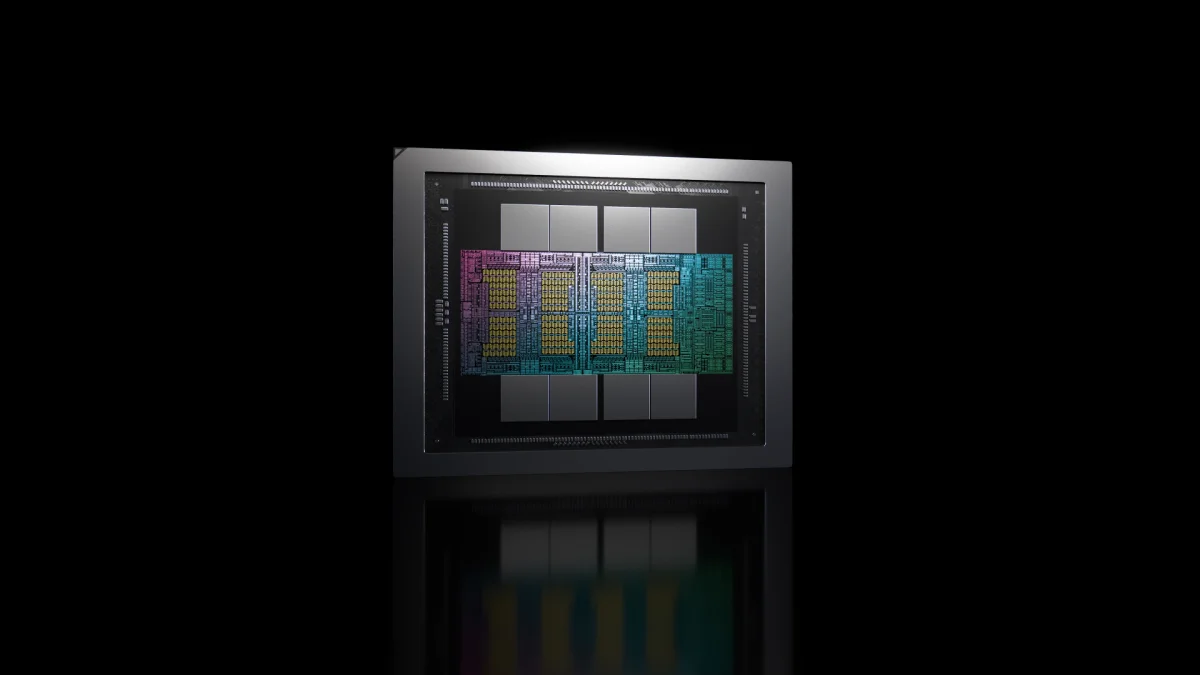
NVIDIA’s Rubin HPC GPU is designed around a problem that can limit scientific computing even when a system has substantial raw compute capacity: moving the right data to the processors quickly enough. Announced at SC26 as part of the NVIDIA Vera Rubin platform, the GPU is intended to accelerate simulation and data processing for science, engineering and analytics. NVIDIA says it will be available in 2028.
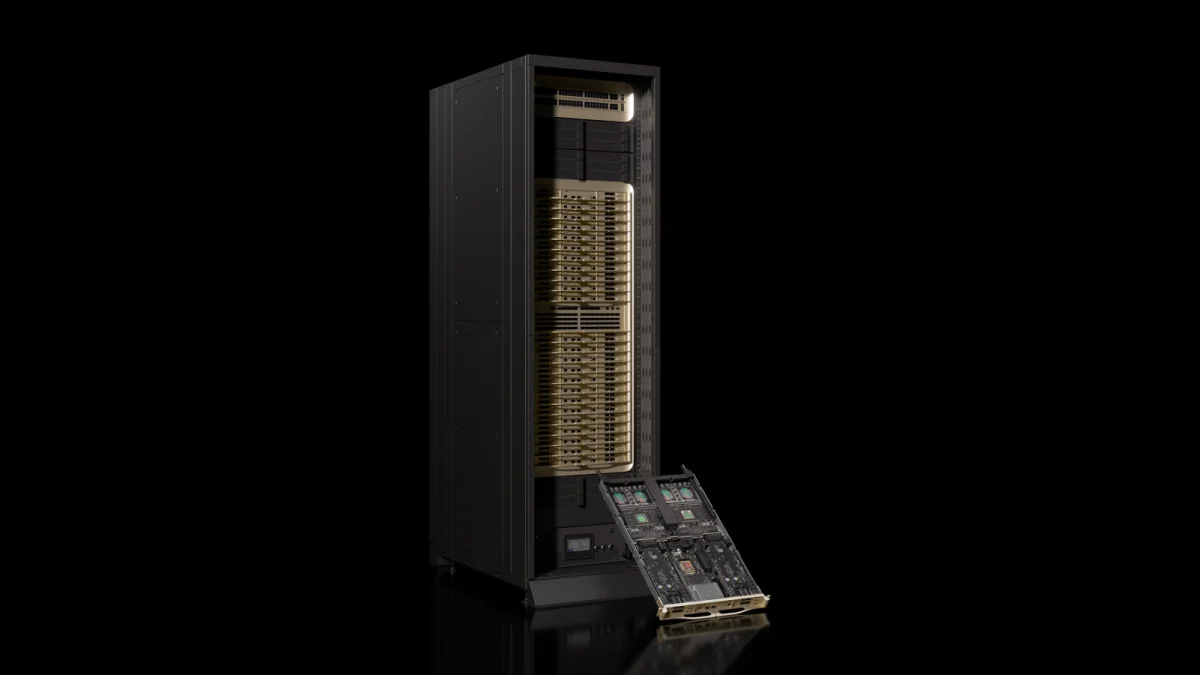
The hardware combines more than 50,000 CUDA cores on a single GPU with sparse data acceleration and seventh-generation NVIDIA NVLink connectivity. The announcement describes these features as a balanced design: increasing compute capacity while also addressing data movement within and between GPUs. It does not provide performance results, memory capacity, power figures, pricing or detailed system configurations, so the announcement establishes the target workloads and design priorities without showing how the GPU performs in specific applications.
Why data movement matters
Many simulation and analysis tasks repeatedly retrieve a small number of values from large datasets, perform a calculation and repeat the operation across many elements. That pattern appears in climate models, engineering simulations, genomic analysis and financial risk work, according to NVIDIA. Because the values an operation needs may be scattered through the data, a processor can spend time waiting for information instead of doing calculations.
Rubin HPC’s sparse data acceleration is intended to help with that kind of access. Paired with the GPU’s large CUDA core count, it aims to keep more of the available compute capacity supplied with data. The stated goal is to speed up recurring operations such as sparse matrix calculations, stencil computations, sorting and reductions. These are building blocks used across different scientific and analytical applications; the announcement does not claim one fixed improvement for every workload.
That distinction matters for teams assessing a new accelerator. A high core count alone does not establish how quickly an application will run. Performance depends on how its calculations map to the hardware, how much data must move, and whether the system can keep processors occupied. NVIDIA’s emphasis on balancing computation with data movement points to workloads where data access is a meaningful part of the runtime. Actual gains will need to be measured on representative applications and systems.
Simulation in agent-driven workflows
NVIDIA frames Rubin HPC in the context of agents that help scientists and engineers explore candidate materials, molecules and designs. In that workflow, an agent can propose or examine possibilities, while simulation tests them and informs the next step. Faster simulation could allow teams to receive feedback sooner and evaluate more candidates within a given research or design cycle.
The GPU is therefore positioned as infrastructure for a repeated loop: generate a hypothesis, simulate its consequences, then refine the next attempt. If simulation is a bottleneck, shortening that step can help people decide sooner which candidates deserve further investigation or physical testing. The announcement offers this as the intended benefit; it does not report a measured increase in candidate throughput or a demonstrated reduction in time to discovery.
Ian Buck, NVIDIA’s vice president of hyperscale and high-performance computing, said: “For agents tackling science and engineering, faster simulation means faster discovery.” He described Rubin HPC as accelerating the simulations agents use to test ideas and guide subsequent work. The practical value will depend on how well an agent’s software, simulation code and data pipeline use the GPU together. Faster hardware can shorten an iteration, but it does not by itself establish whether a proposed idea is scientifically sound.
Software and system questions
NVIDIA also points to its CUDA-X libraries, which provide optimized implementations of algorithms used in simulation and analytics. Libraries can reduce the work required to map common operations onto an accelerator, and their coverage can affect how quickly a team can adapt an existing workflow. The announcement describes these libraries as a complement to Rubin HPC, but does not specify which applications or library versions will support the GPU at launch.
For developers and research teams, the announcement leaves several practical questions open. It gives no benchmark comparisons with previous GPUs or competing systems, and no details about memory bandwidth, power consumption, system-level scaling or software availability. Those figures will be needed to judge performance per system, operating cost and the effort required to port existing workloads. The seventh-generation NVLink connection indicates an emphasis on GPU-to-GPU communication, but its real effect will depend on the configurations and applications tested.
Rubin HPC’s clearest claim is a focus on data-intensive simulation: more than 50,000 CUDA cores, sparse data acceleration and faster GPU-to-GPU connectivity are meant to work together. With availability expected in 2028, the next useful evidence will be application benchmarks and implementation details showing how those features perform on real scientific and engineering workloads.